KNOWLEDGE SHARING

Border citizens’ everyday life is rendered difficult by the proximity of the border, the inconveniences with the crossing, the legislative differences, the limited accessibility to services. Furthermore, for historical reasons, the mutual trust between the two border communities is usually very low, the development of cooperation is hindered by mutual suspicion and prejudices.

Based on our experiences, the shortages of information mean another barrier: ’What are we allowed to do there, what we are not? If we are enabled to act, how should we start? What are the frameworks of our activities? How can we be funded if we have a plan to act? What kind of experts do we need for cooperation? How could we have an access to these experts? How and where can our colleagues be trained so that they are enabled to coordinate cooperation?”

Local actors who are open to cross-border cooperation will face a mass of such questions. Since without them not only the direct regional cooperation is impossible but also the EU Cohesion Policy objectives are hard to be delivered, it is a key to provide these actors with as comprehensive and as reliable information as possible – in all fields their questions target.


CESCI TACKLES THIS ISSUE ACCORDINGLY. A LARGE PART OF OUR ACTIVITIES AND SERVICES ADDRESSES KNOWLEDGE TRANSFER, NAMELY:

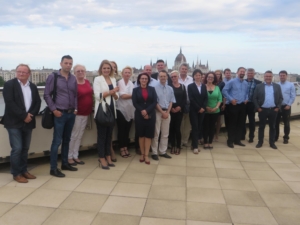
  • we regaularly organise professional events presenting good practices where stakeholders from both sides of the border are invited;
  • we develop the knowledge of the local stakeholders by international events on the EU level trends and policy initiatives;
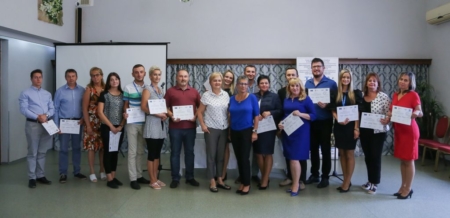
  • we organise trainings on theory and practice of CBC, in association with the Council of Europe’s and other institutions’ experts;
  • we work out and publish training materials;
  • we facilitate the delivery of appropriate information through printed publications, online information platforms, movies;
  • we publish our quarterly newsletter dedicated to our members and we organise study tours annually for them to successful European border regions;
  • we provide our consultancy for free in relationship with diverse professional issues and partnership building requests.

OUR KEY REFERENCES IN THIS FIELD

CROSSGOV

CROSSGOV

CESCI participates as a consortium partner in the pan-European ESPON project supporting better governance of cross-border functional areas ...
BorderLabs CE

BorderLabs CE

The BorderLabs CE project supported by the Interreg CENTRAL EUROPE programme aims to improve the level of integration of Central ...
Online course on European territorial cooperation

Online course on European territorial cooperation

CESCI, together with its partners, the Strasbourg University, Artois University, Thessaloniki University, MOT, Euro-Institut and the TEIN Network, developed the ...
For the Europeanisation of Ukrainian borders

For the Europeanisation of Ukrainian borders

With cross-border cooperation for the Europeanisation of Ukrainian borders In November 2020 the project called "With cross-border cooperation for the ...
Mentoring, knowledge sharing for EGTCs

Mentoring, knowledge sharing for EGTCs

Our association regularly supports the work of the EGTCs through the elaboration of maps, statistics, resource maps and distribution of ...
Leadership Academy of the Council of Europe at the Hungarian-Ukrainian border

Leadership Academy of the Council of Europe at the Hungarian-Ukrainian border

In the last years our association managed to establish a fruitful cooperation with the Centre of Expertise for Good Governance ...
CESCI 10 - International conference

CESCI 10 – International conference

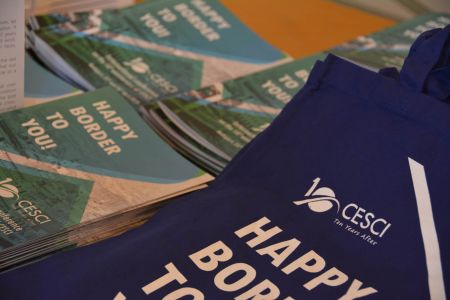
Happy Border to You! CESCI celebrated its 10th anniversary with a two-day international conference in 2019. Almost 150 participants from ...
Monošter Forum

Monošter Forum

Since 2015, CESCI, accompanied by the two embassies and the local municipality organises the Szentgotthárd / Monošter Forum annually in ...
Oradea Process

Oradea Process

Together with the association Initiatives France-Hungary (today: Initiatives France – Central and Eastern Europe) and the Metropolitan Zone of Oradea, ...

OUR LATEST NEWS IN THIS FIELD

CESCI’s participation in the CROSUSMOB project

CESCI’s participation in the CROSUSMOB project

As a contracted expert, CESCI had the opportunity to participate in the CROSUSMOB project, implemented within the framework of the Interreg Europe Programme. The primary objective of the project is to promote regional cross-border sustainable mobility by removing existing legal, ...
The results of the CROSSGOV ESPON project have been published

The results of the CROSSGOV ESPON project have been published

A noteworthy milestone in the life of CESCI is that our first significant partnership participation in a project implemented within the framework of an ESPON programme has been successfully completed. The aim of the CROSSGOV project is to develop a ...
Pálfi István EGTC 20 Memorial Conference

Pálfi István EGTC 20 Memorial Conference

On March 5, 2026, a memorial conference was held in Budapest focusing on one of the most important legacies of István Pálfi’s work: the role and operation of EGTCs (European Groupings of Territorial Cooperation). The event was organized through the ...
Annual Meeting of the European Network for Cross-Border Monitoring in Paris

Annual Meeting of the European Network for Cross-Border Monitoring in Paris

On 5–6 February 2026, the French National Agency for Territorial Cohesion (ANCT) hosted the 5th annual meeting of the European Network for Cross-Border Monitoring in Paris. Organised by the Federal Institute for Research on Building, Urban Affairs and Spatial Development ...
Report from the B-SHAPES Winter School in Halmstad

Report from the B-SHAPES Winter School in Halmstad

From 28 to 31 January 2026, the B-SHAPES Winter School “Inclusive Policy-Making in European Borderlands – Culture, Landscape and Minorities” brought together a small group of early-career and practitioner participants at Halmstad University in Sweden. The Winter School was designed ...

Honlapunk a Külgazdasági és Külügyminisztérium támogatásával készült.

Külgazdasági és Külügyminisztérium