BorderLabs CE study visit in the Meuse-Rhine Euroregion
BorderLabs + Knowledge sharing | 2026. April 27.
BorderLabs + Knowledge sharing | 2026. April 27.
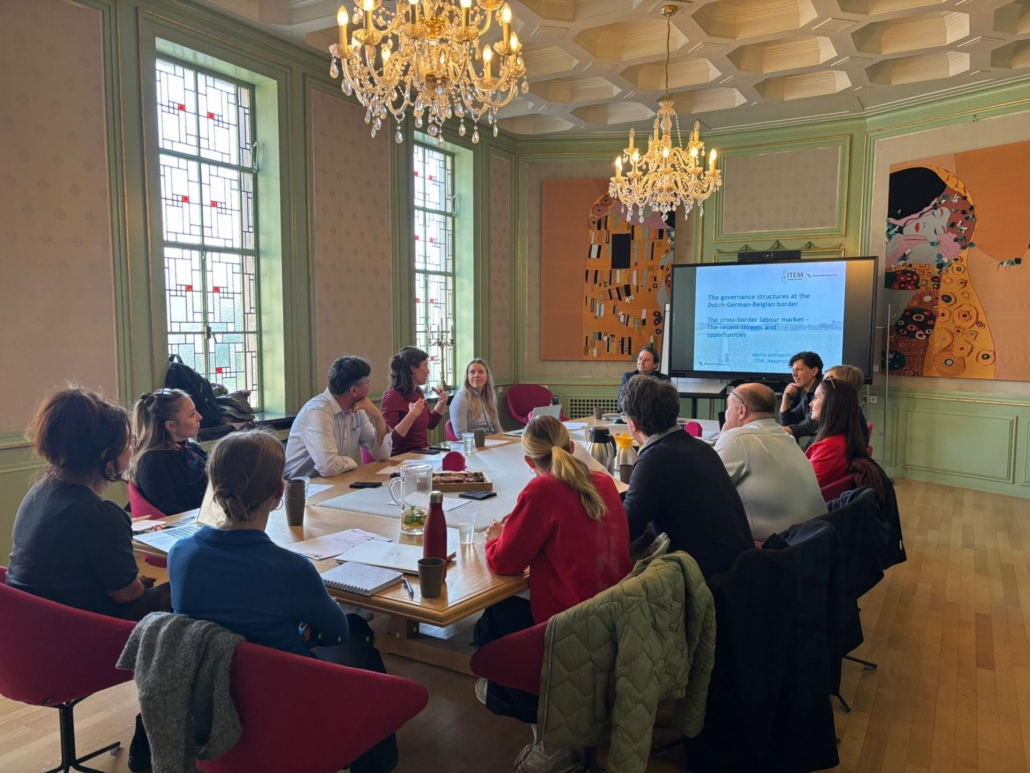
Between 15 and 16 April 2026, the partners of the BorderLabs CE project took a study trip to “the heart of Europe”, the trinational Meuse-Rhine Euroregion. Hosted by the Institute for Transnational and Euregional cross border cooperation and Mobility (ITEM) at Maastricht University and the Eurode Business Center, the tour provided a comprehensive overview of the complexity of the region, which is a real hub of cross-border cooperation, navigating three nations (the Netherlands, Germany, and Belgium), five regions, and several different governance levels.
The agenda of the first day of the study visit started with the presentations of the experts and researchers of ITEM together with an expert from the public transport association of the Aachen Region (AVV), featuring topics such as the cross-border labour market, healthcare and public transport on the Dutch-German-Belgian border. In their opening remarks, Martin Unfried (Director of ITEM) and Pim Mertens (Scientific Coordinator and Researcher of ITEM) pointed out that cross-border commuters in the Meuse-Rhine Euroregion account for approximately 8% of the total cross-border workforce within the European Union. This high level of mobility places the burden of resolving mismatched regulations in taxation, health insurance, and social security on the concerned states, as these issues are often too specific for general EU-level intervention. In this region, the core idea behind cross-border cooperation in the field of employment is to create a 360-degree labour market, based on the concept that a worker should be able to look in any direction and find a job, regardless of national borders. Illustrating this idea, the following map demonstrates the ‘360-degree’ reality of the region:
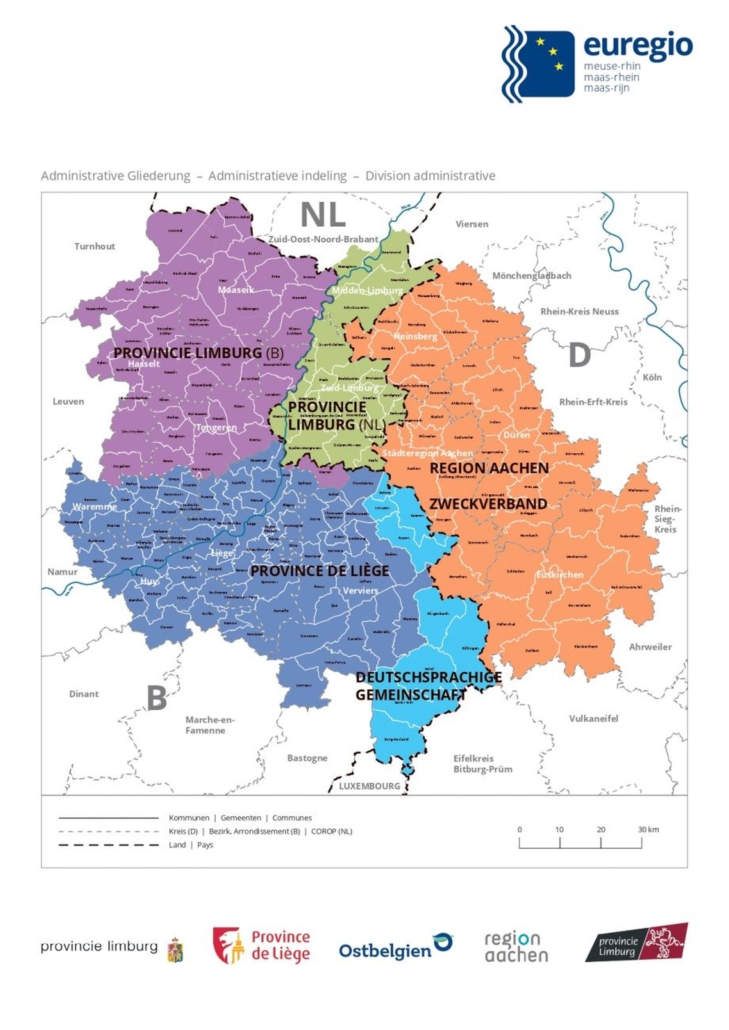
However, as they highlighted, harmonisation processes between the different administrative structures of the five regions – further complicated by language barriers – are a real challenge. They also explained how ITEM proactively tackles cross-border issues in many ways, for example, by conducting ex-ante impact assessments for the Dutch government to evaluate how new laws and regulations will affect the border regions, or via ex-post evaluations to determine whether existing policies effectively serve their purpose. Regarding specific obstacle management, they outlined the Schakelpunt initiative, which is a cross-border coordination point, handling systemic obstacles since September 2025, with a clear process starting from “quick scans” up to in-depth legal analyses and policy recommendations, covering multiple fields, ranging from waste management to employment or housing issues.
The line of presentations was continued by Susanne Sivonen (Researcher of ITEM), who gave an overview of cross-border healthcare services in the Meuse-Rhine Euroregion. She discussed the major legal obstacles the trinational region face, and underlined the mediator rule of ITEM in resolving such legal obstacles, like specific reimbursement issues related to medical treatments. Regarding emergency health services, she explained a certain discrepancy between practice and regulation, as the Benelux Treaty makes it possible for ambulances to cross the border and medical qualifications to be recognised between Benelux states, but practice does not always follow this legislation. For example, cross-border calls for ambulance cars and ambulance helicopters are not integrated into daily practice, regardless of the fact that no legal obstacles exist to prevent it. However, she highlighted some successful projects in this field, for example, the Euregio Meuse-Rhine Incident Response and Crisis Management (EMRIC), a cross-border partnership between emergency services of the region. Another innovative good practice of the euroregion is the EDEN-Medical project, testing drones for urgent medical logistics between hospitals, and the Hawkeye project, which focuses on cross-border crisis management, also with the involvement of drone technology. She also mentioned other cases of borderless healthcare, such as the Euregional Paediatric Surgery Center or exchanges of medical staff between hospitals.
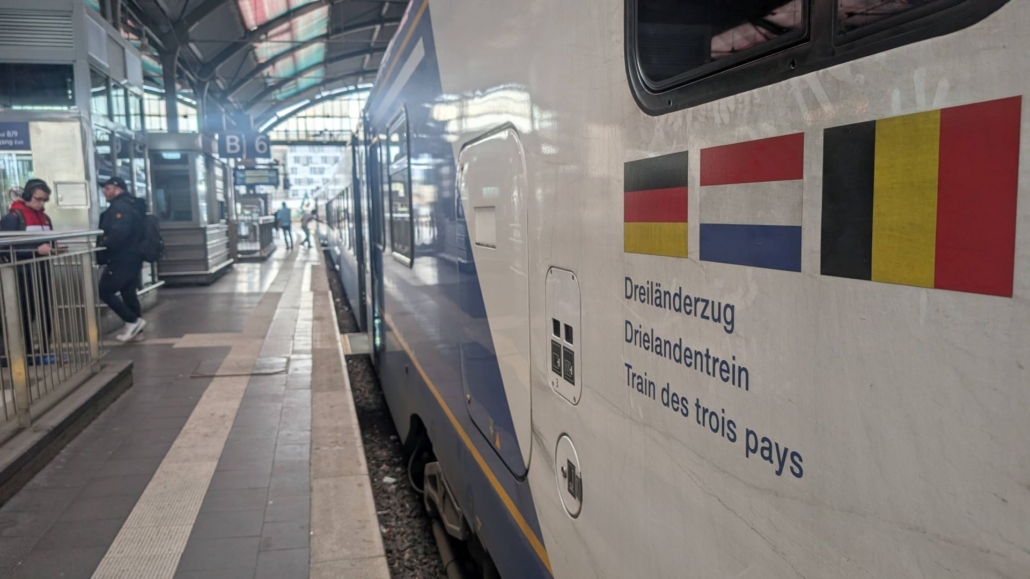
Regarding cross-border public transport, Dominik Elsmann (Head of Euregional Coordination Centre of Aachener Verkehrsverbund, AVV) presented the example of the Liège–Maastricht–Aachen trinational railway, a flagship project for the region. The cooperation of the transport authorities in the region provides a pragmatic approach in splitting the revenues meaning that income goes to the respective partner where the passengers bought the ticket in question. One of the greatest outcomes of the cooperation in cross-border public transport is the euroregional ticketing system, the daily pass in particular. Same prices are available for all customers, however, national VAT rates differ, consequently this model sometimes results in unequal profits, yet this is the most effective method for inter-country ticketing in the region, and could also serve as a blueprint for all cross-border regions across the European Union. He further touched on topics such as the allowance of cabotage, subsidised transport fares, and the importance of a pragmatic approach by piloting practical solutions to cross-border transport issues.
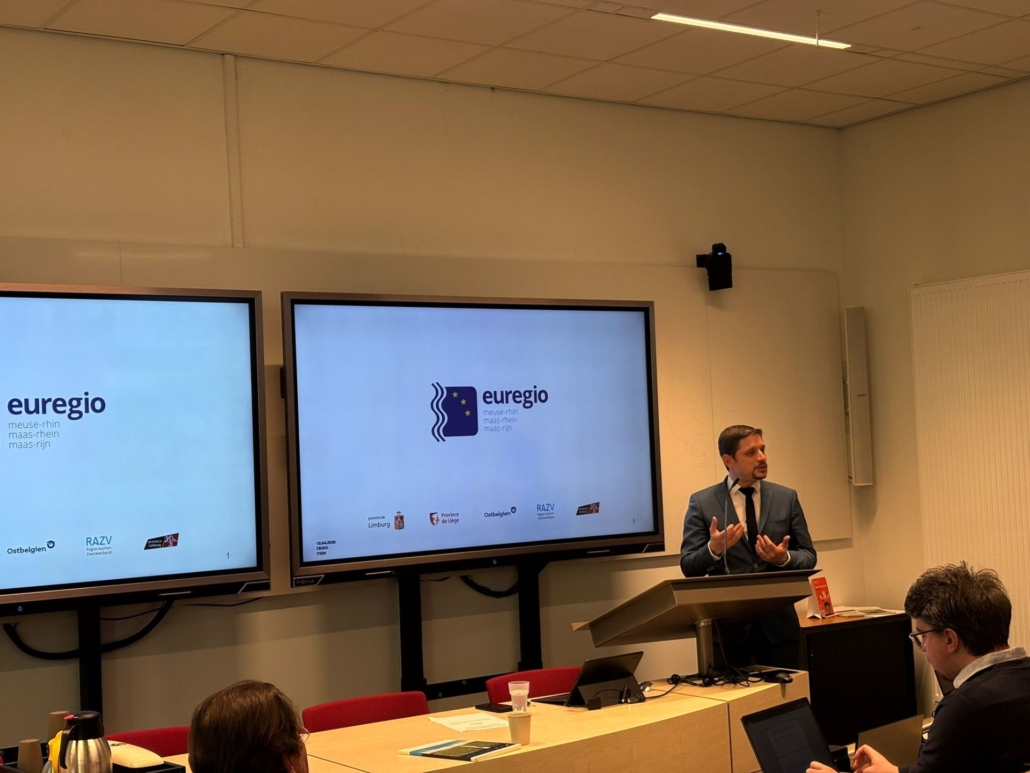
The afternoon session featured Michael Dejozé (Director of the Euregio Meuse-Rhine EGTC), who outlined the EGTC’s essential role in maintaining cooperation between the five different partner regions, offering the proper framework to manage the euroregion’s complexity. He introduced the region’s strategic goals while emphasising the importance of finding shared goals with enough willingness to implement them. This method transformed the EGTC’s ambitious Strategy 2030 into a more focused 2026 workplan that prioritises initiatives where all five partners demonstrate this collective will and common contribution. Moreover, he highlighted the euroregion’s success stories, such as the trinational railway, bilateral disaster management, cross-border firefighting, and the deployment of joint mobile flood barriers. Michael Dejozé also mentioned the issue of the funding gap that the EGTC might face after 2028/29, warning that the “Interreg gap” (i.e. missing Interreg support until the announcement of new calls from the upcoming programme period) could jeopardise the EGTC and broader regional cooperation. He urged moving beyond temporary, project-based initiatives and creating permanent, sustainable structures that stakeholders find essential to maintain, keeping them engaged even after finishing a shared project.
Concluding the series of presentations, Paul Hölsgens (Network Coordinator of Euregio Meuse-Rhine EGTC) introduced Connect’ED and CrossCircular projects focusing on cross-border career guidance and circular economy, while stressing the importance of fostering intercultural relations in the trinational area through native-language assistant programs and school “labels” that promote neighbouring languages. Last, but not least, Sem Jans (Researcher of ITEM) introduced the existing police cooperations in the euroregion, via projects like NeBeDeAgPol, the Euregional Police Information and Cooperation Centre (EPICC) or the Euregional Information and Expertise Centre (EURIEC), which aims to boost the cross-border administrative collaboration against organised crime between Belgium, Germany, and the Netherlands that happens via administrative loopholes. She further emphasised the best practice of GPTs (Grensoverschrijdende Politie Teams), which are binational police units that allow Dutch and German officers to patrol together, creating a more integrated security system in the German-Dutch border region.
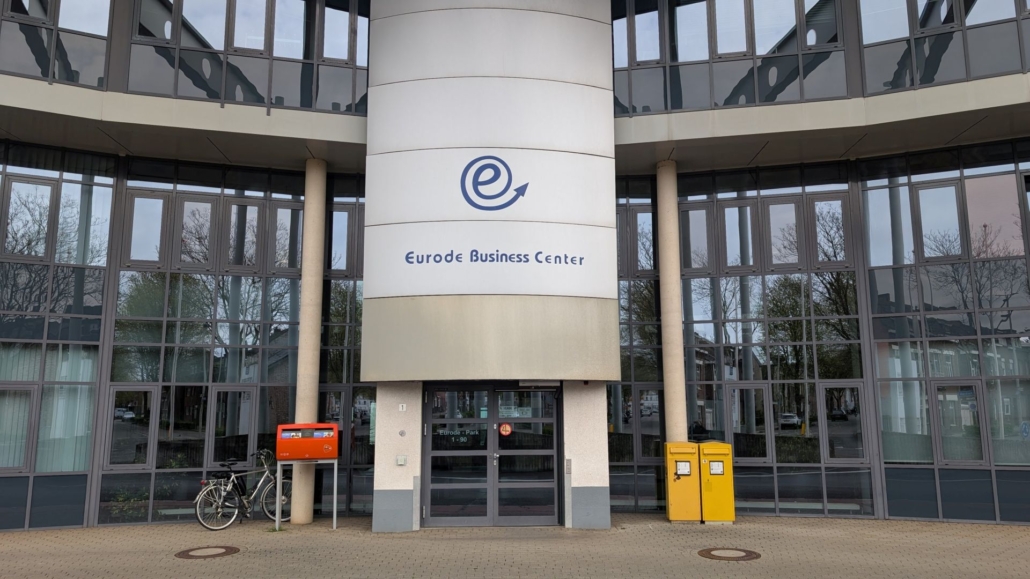
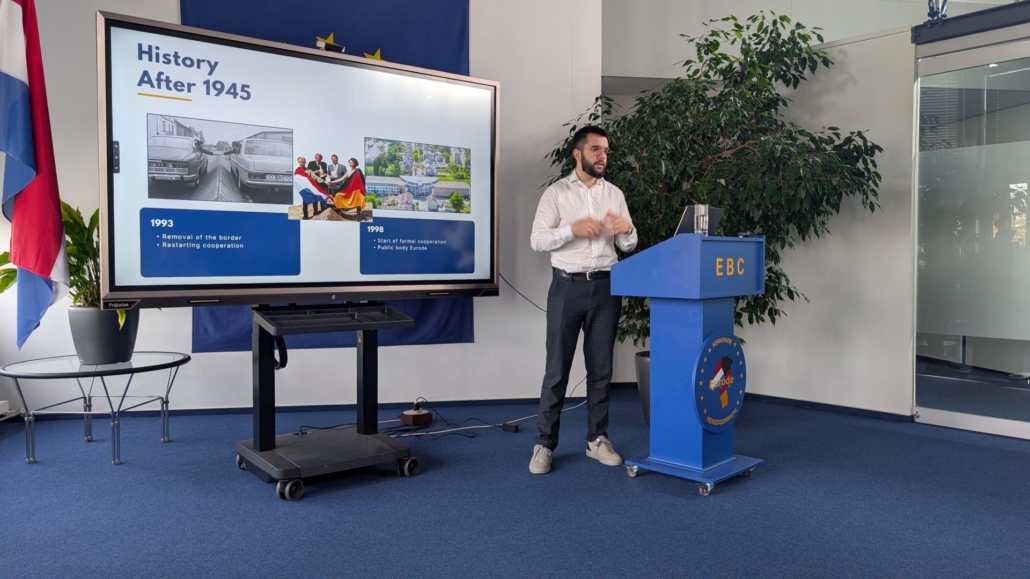
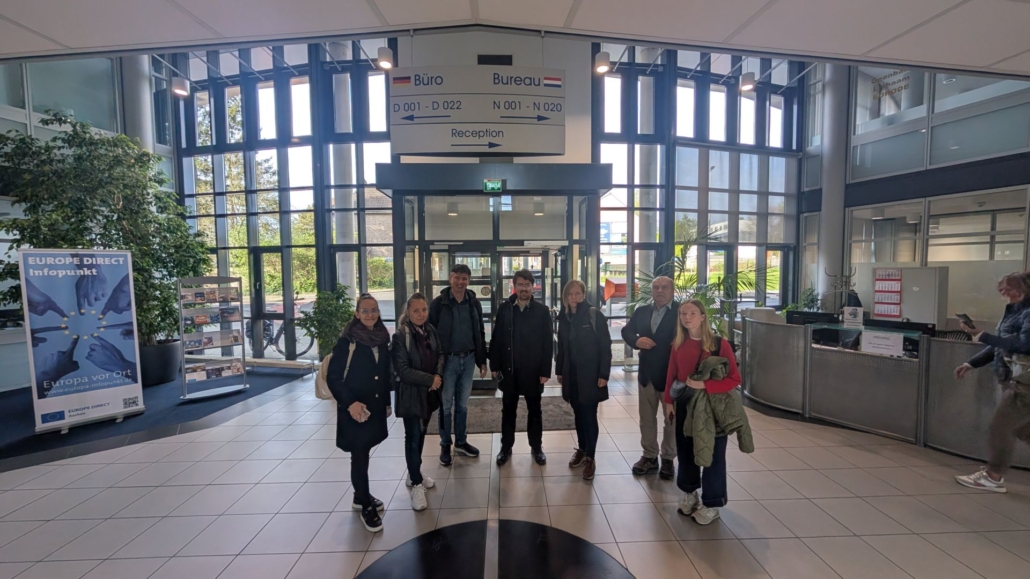
The second day of the study visit started at the Eurode Business Centre, a building situated right at the Dutch-German border between Kerkrade and Herzogenrath facilitating cross-border business relations. Sorush Brandenburg (Cross-border Cooperation Policy Officer of Kerkrade Municipality) Beyond infrastructure like shared bike paths and bilingual daycares, the Eurode cooperation fosters a unified “Knowledge Corridor” connecting the Universities of Aachen, Maastricht, and Cologne, emphasising the importance of academic cooperation in higher education. The cooperation is further amplified via local representative organs like Stadsregio Parkstad (municipality-level cooperation on the Dutch side of the border) and Städteregion Aachen (municipality-level cooperation on the German side of the border). Practical barriers are systematically tackled by the AG Charlemagne working group and specialised services like Grensarbeid, which focuses on cross-border labour market assistance, job mediation being the most relevant, and Grensinfo, a specialised office that provides information on specific border-related life events, including complex tax and social security cases, and helps cross-border commuters to identify the specific legislation applicable to their individual cases. This model of localised support has proved so successful that the initial information point has expanded into a network of 15 Grenzinfopunkt (GIP) locations along the Dutch-German border, facilitating cross-border mobility for citizens in the region.
The study visit concluded with a joint border walk along the Neustraße/Nieuwstraat, a street where the border runs directly down the centre, connecting the Netherlands and Germany.

 CESCI at the Beyond Borders Breakfast of the Commission