
to the local stakeholders for the developmend and implementation of their integrated cross-border projects and
Classic cross-border projects are developed in a way that the eligible applicants – having knowledge on the recent publication of the cross-border call – take into account those local development needs which can be fulfilled thanks to the funds of the cooperation programme – considered as an additional financial resource. Then they quickly seek a potential partner from the other side of the border who also would like to resolve their local problems. The result is a project with a very weak cross-border character. Even more, the partnership cannot be sustained for a longer perspective. However, the European Union’s territorial cooperation programmes are dedicated to something different: to lessen the separating effects of the borders, to create long-term partnerships between the local stakeholders of the borderland and to start developing the peripheral border areas along the objectives of joint plans. In order to fulfil these objectives, there is a need for a new approach applied during the preparation and the implementation of these projects.
First of all, the borderlands need integrated cross-border strategies which can broaden the time-perspective of the developments. At the same time, it is a frequent phenomenon that the strategy is written for the account, it is not used and the document and the energy spent to make it prove to be useless. In parallel, local stakeholders – as presented above – prepare and implement their ad-hoc tenders based on the published calls. This phenomenon very often stems from the shortages of human capacities but in many cases, further professional assistance would also be necessary.
THEREFORE, CESCI PROVIDES ITS ASSISTANCE
OUR KEY REFERENCES IN THIS FIELD
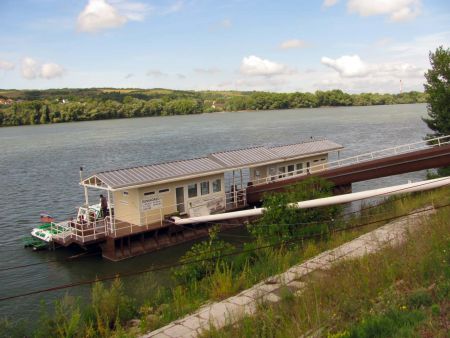
Cooperation without borders. Partnership for better border crossing
Thanks to the project developed by CESCI with the involvement of an expert group, a passenger ferry contact was established ...
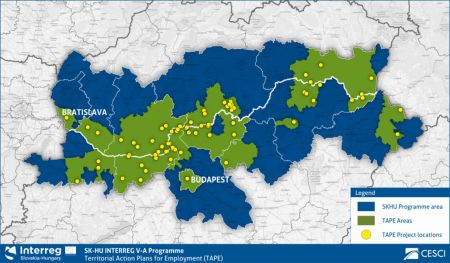
Territorial Action Plan for Employment
Territorial Action Plan for Employment (TAPE) tool developed with the assistance of the CESCI team within the framework of the ...
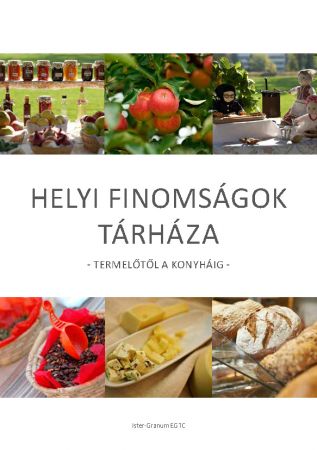
The local product program of the Ister-Granum EGTC
The program initiated by CESCI was launched by involving local and national experts. Within the framework of the project several ...
OUR LATEST NEWS IN THIS FIELD
A new territorial vision for Central Europe? – Closing workshop of the BorderLabs CE project
Experts and stakeholders from 9 Central and South-East European countries convened in Budapest on 7 October at the closing event of the BorderLabs CE project. The closing workshop was, in parallel, a launch event of a network of experts working ...
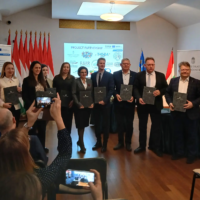
Opening Conference of the Bridge2EastCE Project
The Research Institute for National Strategy hosted the opening conference of the “Bridge2EastCE – Bridge to the East” project in Budapest, implemented with the support of the Interreg CENTRAL EUROPE Programme. CESCI was also represented at the event ...
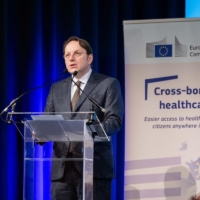
Patients’ rights and cross-border health care: High-level closing conference at the DG SANTÉ
Based on the results of the 2022 evaluation of the Cross-border Health Directive, the European Commission decided to organise a series of national workshops throughout Europe to increase visibility of the directive and the patients’ rights to cross-border care it ...

Advancing Cross-Border Trade for Local Producers
On 2 February, Ister Granum EGTC held its 3rd Regional Stakeholder Group (RSG) meeting in Štúrovo, bringing together key actors involved in supporting the cross-border sale of local products ...

Cross-Border Forestry Dialogue held in Bad Leonfelden
Representatives from Austrian and Czech forestry, veterinary, emergency and administrative authorities met to strengthen cross-border cooperation along the Upper Austrian–South Bohemian border. The meeting highlighted that cooperation already works well in some regions, while in others—particularly in the Freistadt district—clear ...

Honlapunk a Külgazdasági és Külügyminisztérium támogatásával készült.
