BorderLabs CE
Participatory cross-border governance for transition management
in central European cross-border regions

This project is supported by the Interreg CENTRAL EUROPE Programme with co-financing from the European Regional Development Fund.
For more information visit https://www.interreg-central.eu/projects/borderlabs-ce/.
As a consequence of progressing EU integration, nearly half a million citizens commute across central European borders, and several tens of thousands inhabitants have chosen municipalities beyond the border as their residence. However, public administration and policies are not yet sufficiently addressing the needs of cross-border communities. There is need to enhance the capacity of local and regional administrations in cross-border functional areas in central Europe to properly manage cross-border integration processes, adequately addressing civil communities’ needs.
The partners of BorderLabs CE teamed up to

Within the project new governance models and solutions in the fields of integrated cross-border strategy development, participatory governance, cross-border development of sustainable and slow tourism, cross-border marketing of local products and reduction of border obstacles will be piloted and evaluated, and transnational learning and exchange will be facilitated. In the effect of the project, cross-border cooperation governance in participating cities and regions – from the twin-city level to the regional one – will be substantially improved. All results and findings will be made available for the central European cross-border cooperation community via multimedia platform, enabling the implementation and mainstreaming of solutions. As a result of the project, not only models will be developed for integrated cross-border participatory governance but also a Charter for more integrated central Europe will be drafted and signed.
SMIL - Saxon State Ministry for Regional Development
Address: Archivstraße 1, 01097 Dresden, Germany
Website: https://www.landesentwicklung.sachsen.de/
The Saxon State Ministry for Regional Development (SMIL) is part of the government of the Free State of Saxony. The fields of responsibility of the Ministry are state and regional development, geological survey, structural change in the lignite mining region, urban development, construction, housing and innovation.
SMIL is the coordinator of the project and will ensure the successful achievement of the overall and specific project objectives through solid project and financial management, acting at the same time as link between the programme authorities and the project partnership. The activities realised in the project will be implemented by the Division for European Spatial Planning and Regional Development in the Department for Territorial State Development and Geological Survey. This department plays a pivotal role in crafting territorial planning strategies, integrating them into state and regional frameworks, and aligning them with European strategies for regional development. SMIL will spearhead the pilot action on developing an integrated cross-border strategy in partnership with the Regional Planning Association Upper Lusatia-Lower Silesia, IRT, ER Nisa, and EGTC NOVUM. A special emphasis will be placed on mapping “mental bridges” in the Three-Country Area, fostering unity and understanding across borders. SMIL will collaborate with the State Government of Upper Austria to tackle border obstacles, promoting joint management and cooperative solutions that benefit all stakeholders involved.
CESCI - Central European Service for Cross-Border Initiatives
Address: Teréz krt 13, 1067 Budapest, Hungary
Website: https://budapest.cesci-net.eu/en
The Central European Service for Cross-Border Initiatives (CESCI) was established with the mission of decreasing the separating effects of the borders and promoting cross-border cooperation in Central Europe. CESCI is at the forefront of fostering cross-border collaboration in the region through a variety of impactful activities. It operates a multidisciplinary research group based in Budapest, focusing on innovative approaches to cross-border cooperation, played a pivotal role in preparing the Interreg A Cross-border Cooperation Programmes for Slovakia-Hungary during the 2014-2020 and 2021-2027 periods. Additionally, it contributed to the evaluation of Interreg A and ENI CBC programmes, ensuring their effectiveness and relevance. In 2016, CESCI launched the “Legal Accessibility” initiative, a key policy effort aimed at identifying and resolving legal and administrative barriers to cross-border cooperation along Hungary and the Visegrad region. The organisation actively supports the development of cross-border projects and initiatives, driving progress and fostering collaboration in border regions.
As communication coordinator of the project, CESCI will ensure the successful achievement of the project communication objectives through solid communication management, providing the partners with targeted support. With its professional expertise, CESCI will coordinate and facilitatate the identification of challenges and needs in border regions, will guide the process of transnational learning and exchange, and will provide content-related support for the mid-term evaluation of pilot activities and conduct thorough reviews of final pilot action reports to ensure high-quality outcomes. As the organization responsible for the development of a multimedia learning platform, CESCI will create a hub for knowledge sharing, capacity building, and the dissemination of best practices. The organisation will lead the elaboration and implementation of the Charter for Participatory Cross-Border Cooperation Governance, a framework to promote inclusive and effective cross-border governance.
Lower Silesian Voivodeship – Institute for Territorial Development
Address: Dawida 1a, 50-527 Wrocław, Poland
Website: https://www.irt.wroc.pl/
The Institute for Territorial Development (IRT), representing Lower Silesian Voivodeship, is a key partner in regional planning and development. As a consultative body for the Self-Government of Lower Silesia, the IRT delivers critical territorial knowledge, monitors regional policies, and engages in applied research to support informed decision-making and public participation. The IRT has significantly shaped Lower Silesia’s policies, including transport strategies, green infrastructure projects in Wrocław, and regional bicycle and landscape policies. Its extensive experience includes transnational projects like HealingPlaces, which promotes sustainable environmental management in Central Europe. By combining expertise and collaboration, the IRT ensures sustainable growth and impactful development across Lower Silesia and beyond.
As regional consultative body and think-tank for the territorial policy of the Lower Silesia Voivodeship, the IRT will coordinate the implementation of the pilot action on integrated cross-border strategy development in close cooperation with SMIL, ER Nisa and EGTC Novum. The IRT will be responsible for the elaboration of the cross-border application of “planning ideas” in the Three-Country Area, including the exchange of spatial data and the elaboration of the glossary of terms. Additionally, the IRT will cooperate with EGTC GO on the cross-border development of sustainable and slow tourism. The IRT is committed to creating a citizen-focused vision for trilateral development and ensuring impactful regional and cross-border policies.
Euroregion Nisa
Address: U Jezu 525/4, 46001 Liberec
Website: https://ern.cz/
Founded in 1991, the Euroregion Neisse-Nisa-Nysa unites parts of Germany, Poland, and the Czech Republic to foster development through cross-border cooperation. Representing municipalities and districts in the tri-border area, it focuses on collaboration in transport, economy, tourism, environment, energy, risk management, and culture. Key achievements include numerous cross-border projects and active Euroregional expert groups (EUREX). The Euroregion plays a vital role in creating conditions for cooperation, connecting partners, and advocating for legislative and international agreements to support its mission.
As representative of local authorities and cross-border communities in the Neisse-Nisa-Nysa Euroregion, the ER Nisa will cooperate for the implementation of the pilot action on integrated cross-border strategy development in cooperation with the SMIL, IRT and EGTC NOVUM. The ER Nisa will be responsible for the elaboration of the joint strategy framework for successful transition of the Three-Country Area and facilitate the cooperation with the Regional Authority of the Liberec Region. Committed to creating a shared vision for the region’s future, ER Nisa is working with decision-makers to implement strategies that prioritize collaboration and citizen-oriented development.
City of Frankfurt (Oder)
Address Marktplatz 1, 15230 Frankfurt (Oder)
Website: https://www.frankfurt-oder.de/
Located on the German-Polish border along the Oder River, Frankfurt (Oder) and Słubice have been closely cooperating since 2003, forming a “European Double City” since 2010. Their partnership, built on shared decision-making structures, is a model of cross-border governance. Key bodies such as the Joint Assembly of City Councils and the Cooperation Center, established in 2011, drive joint strategies, goals, and projects. Frankfurt-Słubice Action Plan, which spans from 2020 to 2030, focuses on priorities such as education, infrastructure, economic development, and citizen participation. With institutions like the European University Viadrina and the Leibniz Institute for High-Performance Microelectronics, the cities also stand as a renowned hub for education and research.
A cross-border twin-city in the German-Polish border region, with a long record of cross-border cooperation Frankfurt (Oder) and Słubice are spearheading the pilot action on participatory governance for transition management in twin-cities, in collaboration with EGTC GO. The cities will host twin-city dialogue labs leading to a joint action plan for participatory governance and community dialogue, involving a network of cross-border twin-cities across Central Europe and beyond. Through this initiative, the city aims to promote local decision-making and community involvement, ensuring the long-term success of participatory governance across twin-cities.
EGTC GO
Address: Via Cadorna 36, 34170 Gorizia, Italy
Website: https://euro-go.eu/en/
EGTC GO is an Italian public authority formed by the municipalities of Gorizia, Nova Gorica, and Šempeter-Vrtojba, promoting collaborative projects across Italy and Slovenia. The organisation fosters joint initiatives in tourism, culture, economy, education, and infrastructure to enhance local economies, attract investments, and improve citizens’ lives. By overcoming administrative barriers, EGTC GO enables the development of cross-border projects that benefit all three cities. Notably, EGTC GO has successfully managed the Integrated Territorial Investment (ITI), which includes the Isonzo-Soča and Salute-Zdravstvo projects under the Interreg A Cross-border cooperation programme. Additionally, EGTC GO is playing a pivotal role in the nomination of Nova Gorica and Gorizia as the European Capital of Culture for 2025.
EGTC GO is addressing key challenges such as cross-border urban mobility, limited accommodation for tourists, language barriers, and the organisation of joint cultural events. These issues require coordinated efforts from local and regional institutions, stakeholders, and tourism operators. To address these challenges, EGTC GO is leading a pilot project on sustainable and slow tourism development, collaborating with the IRT, ER Nisa, and EGTC NOVUM. The project will create a draft model for cross-border tourism development, which will be refined through a participatory process with stakeholders. The outcomes will include a tourism model, that will help ensure the long-term success of cross-border cooperation in the region, benefiting both local communities and visitors.
Ister-Granum EGTC
Address: Széchenyi tér 1, 2500 Esztergom
Website: https://istergranum.eu/
Established in 2008, the Ister-Granum EGTC connects 46 Hungarian and 36 Slovak municipalities. It was Hungary’s first EGTC and Europe’s second. Since its founding, Ister-Granum EGTC has been involved in diverse activities such as tourism, economic development, transport, and environmental management. A key initiative has been developing a local product network, including the IG Heritage – Territorial Action Plan for Employment (TAPE) and the CB_Brand project, which promotes cross-border cooperation among local producers. The network has already registered 43 local producers under a trademark scheme. Other notable projects include a ferry construction initiative between Neszmély (HU) and Radvaň nad Dunajom (SK), increasing border crossing points, and the “Mária Valéria Bike” initiative, the public cross-border bicycle-sharing system in Esztergom and Štúrovo.
The Ister-Granum EGTC, representing local authorities and communities along the Hungarian-Slovak border, will lead the pilot action on cross-border marketing and promotion of local products. In collaboration with ER Nisa and Upper Austria, the EGTC will develop a guide to support local products and implement an integrated cross-border approach for expanding a local product network. Additionally, Ister-Granum EGTC will collaborate with the City of Frankfurt (Oder) on participatory governance for transition management in twin cities, involving Esztergom (HU) and Štúrovo (SK). The EGTC will ensure the continued development of the local product network and support cross-border governance through local and regional decision-makers.
NOVUM EGTC
Address: 1 Maja 27, 58-500 Jelenia Góra
Website: https://www.euwt-novum.eu/
The European Grouping of Territorial Cooperation (EGTC) NOVUM brings together the key regional players from both Poland and the Czech Republic. Its members include the Lower Silesian Voivodeship, Glacensis Euroregion, Euroregion Nisa, and several Czech regions such as Liberec, Královéhradecký, Pardubice, and Olomouc. EGTC NOVUM focuses on a wide range of regional development areas, including transport, infrastructure, tourism, culture, health protection, education, environmental protection, and energy. The organization fosters cross-border cooperation, promotes joint use of resources, and supports research, technological innovation, and social integration. With a strong track record in transnational cooperation, EGTC NOVUM has been involved in several projects aimed at capitalising on territorial cooperation, most recently participating in the BOOSTEE-CE project, which enhances energy efficiency in Central European cities.
The task of the organisation in this project is working on the pilot action for integrated cross-border strategy development, collaborating closely with the IRT, ER Nisa, and the SMR. This includes facilitating the creation of a citizen-oriented vision for trilateral development and promoting the exchange of spatial data, leveraging experience from the BOOSTEE-CE project. EGTC NOVUM also contributes to other pilot activities, including sustainable and slow tourism development. With a focus on fostering local and regional decision-making, EGTC NOVUM supports the implementation of a collaborative governance model and promotes a sustainable vision for the future of the border region.
State Government of Upper Austria
Address: Bahnhofplatz 1, 4021 Linz
Website: https://www.land-oberoesterreich.gv.at/
The State Government of Upper Austria, through its Department for Spatial Planning, plays a pivotal role in managing and coordinating cross-border cooperation programs. As the seat of the Managing Authority (MA) and Joint Secretariat (JS) for the Interreg A Cross-border Cooperation Programme Bavaria-Austria 2021-2027, the department brings valuable expertise from previous programming periods. Upper Austria’s Department for Spatial Planning is deeply involved in European cohesion policy, supporting local and regional development. Additionally, the department collaborates closely with Regionalmanagement OÖ to promote regional development, particularly in the border areas, further contributing to the success of cross-border projects.
The Government of Upper Austria is set to lead a pilot action focused on the joint management of border obstacles between Austria, Germany, and the Czech Republic, in collaboration with the SMIL and ER Nisa. The initiative will involve a comprehensive analysis of existing border obstacles, laying the foundation for a participatory governance process aimed at reducing these obstacles. In addition to this, Upper Austria will contribute to the development of a cross-border strategy and support the marketing and promotion of local products, using its vast network of regional stakeholders.
Address: Archivstraße 1, 01097 Dresden, Germany
Website: https://www.landesentwicklung.sachsen.de/
The Saxon State Ministry for Regional Development (SMIL) is part of the government of the Free State of Saxony. The fields of responsibility of the Ministry are state and regional development, geological survey, structural change in the lignite mining region, urban development, construction, housing and innovation.
SMIL is the coordinator of the project and will ensure the successful achievement of the overall and specific project objectives through solid project and financial management, acting at the same time as link between the programme authorities and the project partnership. The activities realised in the project will be implemented by the Division for European Spatial Planning and Regional Development in the Department for Territorial State Development and Geological Survey. This department plays a pivotal role in crafting territorial planning strategies, integrating them into state and regional frameworks, and aligning them with European strategies for regional development. SMIL will spearhead the pilot action on developing an integrated cross-border strategy in partnership with the Regional Planning Association Upper Lusatia-Lower Silesia, IRT, ER Nisa, and EGTC NOVUM. A special emphasis will be placed on mapping “mental bridges” in the Three-Country Area, fostering unity and understanding across borders. SMIL will collaborate with the State Government of Upper Austria to tackle border obstacles, promoting joint management and cooperative solutions that benefit all stakeholders involved.

Address: Teréz krt 13, 1067 Budapest, Hungary
Website: https://budapest.cesci-net.eu/en
The Central European Service for Cross-Border Initiatives (CESCI) was established with the mission of decreasing the separating effects of the borders and promoting cross-border cooperation in Central Europe. CESCI is at the forefront of fostering cross-border collaboration in the region through a variety of impactful activities. It operates a multidisciplinary research group based in Budapest, focusing on innovative approaches to cross-border cooperation, played a pivotal role in preparing the Interreg A Cross-border Cooperation Programmes for Slovakia-Hungary during the 2014-2020 and 2021-2027 periods. Additionally, it contributed to the evaluation of Interreg A and ENI CBC programmes, ensuring their effectiveness and relevance. In 2016, CESCI launched the “Legal Accessibility” initiative, a key policy effort aimed at identifying and resolving legal and administrative barriers to cross-border cooperation along Hungary and the Visegrad region. The organisation actively supports the development of cross-border projects and initiatives, driving progress and fostering collaboration in border regions.
As communication coordinator of the project, CESCI will ensure the successful achievement of the project communication objectives through solid communication management, providing the partners with targeted support. With its professional expertise, CESCI will coordinate and facilitatate the identification of challenges and needs in border regions, will guide the process of transnational learning and exchange, and will provide content-related support for the mid-term evaluation of pilot activities and conduct thorough reviews of final pilot action reports to ensure high-quality outcomes. As the organization responsible for the development of a multimedia learning platform, CESCI will create a hub for knowledge sharing, capacity building, and the dissemination of best practices. The organisation will lead the elaboration and implementation of the Charter for Participatory Cross-Border Cooperation Governance, a framework to promote inclusive and effective cross-border governance.

Address: Dawida 1a, 50-527 Wrocław, Poland
Website: https://www.irt.wroc.pl/
The Institute for Territorial Development (IRT) is a unit of the Lower Silesian Voivodeship, responsible for tasks in the field of development policy and spatial planning. The IRT team consists of interdisciplinary experts who provide reliable knowledge about the region and monitor public policies related to territorial development. The Institute’s motto is Knowledge – Cooperation – Development.
The key activities of the Institute include developing policies, strategies, plans, programs, reports, analyses, studies, and concepts in the areas of regional development and spatial planning. IRT also plays a significant role in cross-border cooperation, particularly with Saxony and the Czech Republic. The Institute took part in international projects such as HealingPlaces, MORO, Smart Integration, and others. By combining expert knowledge with broad collaboration, IRT contributes to sustainable development and effective transformative actions both in Lower Silesia and beyond its borders.
As a regional advisory body on spatial policy for the Lower Silesian Voivodeship, the Institute coordinates pilot activities related to the integrated cross-border strategy development, implemented in cooperation with international partners: SMR, ER Nisa, and EGTC Novum. It is responsible for developing the application of planning ideas in the Three-Country Area, including spatial data exchange and the creation of a glossary of pro-development terms. Additionally, it collaborates with EGTC GO on the development of sustainable and slow cross-border tourism. IRT is involved in creating a citizen-oriented vision for future trilateral development and successful transition of the Three-Country Area. It also ensures effective regional and cross-border policies, thereby supporting the region’s sustainable development.

Address: U Jezu 525/4, 46001 Liberec
Website: https://ern.cz/
Founded in 1991, the Euroregion Neisse-Nisa-Nysa unites parts of Germany, Poland, and the Czech Republic to foster development through cross-border cooperation. Representing municipalities and districts in the tri-border area, it focuses on collaboration in transport, economy, tourism, environment, energy, risk management, and culture. Key achievements include numerous cross-border projects and active Euroregional expert groups (EUREX). The Euroregion plays a vital role in creating conditions for cooperation, connecting partners, and advocating for legislative and international agreements to support its mission.
As representative of local authorities and cross-border communities in the Neisse-Nisa-Nysa Euroregion, the ER Nisa will cooperate for the implementation of the pilot action on integrated cross-border strategy development in cooperation with the SMIL, IRT and EGTC NOVUM. The ER Nisa will be responsible for the elaboration of the joint strategy framework for successful transition of the Three-Country Area and facilitate the cooperation with the Regional Authority of the Liberec Region. Committed to creating a shared vision for the region’s future, ER Nisa is working with decision-makers to implement strategies that prioritize collaboration and citizen-oriented development.

Address Marktplatz 1, 15230 Frankfurt (Oder)
Website: https://www.frankfurt-oder.de/
Located on the German-Polish border along the Oder River, Frankfurt (Oder) and Słubice have been closely cooperating since 2003, forming a “European Double City” since 2010. Their partnership, built on shared decision-making structures, is a model of cross-border governance. Key bodies such as the Joint Assembly of City Councils and the Cooperation Center, established in 2011, drive joint strategies, goals, and projects. Frankfurt-Słubice Action Plan, which spans from 2020 to 2030, focuses on priorities such as education, infrastructure, economic development, and citizen participation. With institutions like the European University Viadrina and the Leibniz Institute for High-Performance Microelectronics, the cities also stand as a renowned hub for education and research.
A cross-border twin-city in the German-Polish border region, with a long record of cross-border cooperation Frankfurt (Oder) and Słubice are spearheading the pilot action on participatory governance for transition management in twin-cities, in collaboration with EGTC GO. The cities will host twin-city dialogue labs leading to a joint action plan for participatory governance and community dialogue, involving a network of cross-border twin-cities across Central Europe and beyond. Through this initiative, the city aims to promote local decision-making and community involvement, ensuring the long-term success of participatory governance across twin-cities.

Address: Via Cadorna 36, 34170 Gorizia, Italy
Website: https://euro-go.eu/en/
EGTC GO is an Italian public authority formed by the municipalities of Gorizia, Nova Gorica, and Šempeter-Vrtojba, promoting collaborative projects across Italy and Slovenia. The organisation fosters joint initiatives in tourism, culture, economy, education, and infrastructure to enhance local economies, attract investments, and improve citizens’ lives. By overcoming administrative barriers, EGTC GO enables the development of cross-border projects that benefit all three cities. Notably, EGTC GO has successfully managed the Integrated Territorial Investment (ITI), which includes the Isonzo-Soča and Salute-Zdravstvo projects under the Interreg A Cross-border cooperation programme. Additionally, EGTC GO is playing a pivotal role in the nomination of Nova Gorica and Gorizia as the European Capital of Culture for 2025.
EGTC GO is addressing key challenges such as cross-border urban mobility, limited accommodation for tourists, language barriers, and the organisation of joint cultural events. These issues require coordinated efforts from local and regional institutions, stakeholders, and tourism operators. To address these challenges, EGTC GO is leading a pilot project on sustainable and slow tourism development, collaborating with the IRT, ER Nisa, and EGTC NOVUM. The project will create a draft model for cross-border tourism development, which will be refined through a participatory process with stakeholders. The outcomes will include a tourism model, that will help ensure the long-term success of cross-border cooperation in the region, benefiting both local communities and visitors.

Address: Széchenyi tér 1, 2500 Esztergom
Website: https://istergranum.eu/
Established in 2008, the Ister-Granum EGTC connects 46 Hungarian and 36 Slovak municipalities. It was Hungary’s first EGTC and Europe’s second. Since its founding, Ister-Granum EGTC has been involved in diverse activities such as tourism, economic development, transport, and environmental management. A key initiative has been developing a local product network, including the IG Heritage – Territorial Action Plan for Employment (TAPE) and the CB_Brand project, which promotes cross-border cooperation among local producers. The network has already registered 43 local producers under a trademark scheme. Other notable projects include a ferry construction initiative between Neszmély (HU) and Radvaň nad Dunajom (SK), increasing border crossing points, and the “Mária Valéria Bike” initiative, the public cross-border bicycle-sharing system in Esztergom and Štúrovo.
The Ister-Granum EGTC, representing local authorities and communities along the Hungarian-Slovak border, will lead the pilot action on cross-border marketing and promotion of local products. In collaboration with ER Nisa and Upper Austria, the EGTC will develop a guide to support local products and implement an integrated cross-border approach for expanding a local product network. Additionally, Ister-Granum EGTC will collaborate with the City of Frankfurt (Oder) on participatory governance for transition management in twin cities, involving Esztergom (HU) and Štúrovo (SK). The EGTC will ensure the continued development of the local product network and support cross-border governance through local and regional decision-makers.

Address: 1 Maja 27, 58-500 Jelenia Góra
Website: https://www.euwt-novum.eu/
The European Grouping of Territorial Cooperation (EGTC) NOVUM brings together the key regional players from both Poland and the Czech Republic. Its members include the Lower Silesian Voivodeship, Glacensis Euroregion, Euroregion Nisa, and several Czech regions such as Liberec, Královéhradecký, Pardubice, and Olomouc. EGTC NOVUM focuses on a wide range of regional development areas, including transport, infrastructure, tourism, culture, health protection, education, environmental protection, and energy. The organization fosters cross-border cooperation, promotes joint use of resources, and supports research, technological innovation, and social integration. With a strong track record in transnational cooperation, EGTC NOVUM has been involved in several projects aimed at capitalising on territorial cooperation, most recently participating in the BOOSTEE-CE project, which enhances energy efficiency in Central European cities.
The task of the organisation in this project is working on the pilot action for integrated cross-border strategy development, collaborating closely with the IRT, ER Nisa, and the SMR. This includes facilitating the creation of a citizen-oriented vision for trilateral development and promoting the exchange of spatial data, leveraging experience from the BOOSTEE-CE project. EGTC NOVUM also contributes to other pilot activities, including sustainable and slow tourism development. With a focus on fostering local and regional decision-making, EGTC NOVUM supports the implementation of a collaborative governance model and promotes a sustainable vision for the future of the border region.

Address: Bahnhofplatz 1, 4021 Linz
Website: https://www.land-oberoesterreich.gv.at/
The State Government of Upper Austria, through its Department for Spatial Planning, plays a pivotal role in managing and coordinating cross-border cooperation programs. As the seat of the Managing Authority (MA) and Joint Secretariat (JS) for the Interreg A Cross-border Cooperation Programme Bavaria-Austria 2021-2027, the department brings valuable expertise from previous programming periods. Upper Austria’s Department for Spatial Planning is deeply involved in European cohesion policy, supporting local and regional development. Additionally, the department collaborates closely with Regionalmanagement OÖ to promote regional development, particularly in the border areas, further contributing to the success of cross-border projects.
The Government of Upper Austria is set to lead a pilot action focused on the joint management of border obstacles between Austria, Germany, and the Czech Republic, in collaboration with the SMIL and ER Nisa. The initiative will involve a comprehensive analysis of existing border obstacles, laying the foundation for a participatory governance process aimed at reducing these obstacles. In addition to this, Upper Austria will contribute to the development of a cross-border strategy and support the marketing and promotion of local products, using its vast network of regional stakeholders.
Title: Participatory cross-border governance for transition management in central European cross-border regions
Acronym: BorderLabs CE
Project duration: 01.06.2024 – 30.11.2026
Programme: Interreg Central Europe
Lead partner: Saxon State Ministry of Regional Development (Germany)
Partner countries: Germany, Austria, Italy, Poland, Czech Republic, Hungary
Partner Budget: € 342.826,98 (ERDF € 274.261,58)
Budget for the call: € 1.710.608,72 (ERDF € 1.368.486,97)
Project partners:



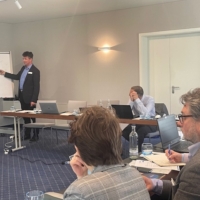
![“Do not look at European space […] as if it were covered seamlessly by state territories.” - Closing conference of the BorderLabs CE project](https://budapest.cesci-net.eu/wp-content/uploads/2026/06/PXL_20260610_074236408-200x200.webp?x45800)





The following procurement is not a public procurement procedure. The call is complete and valid with the attached tender form and reference letter.
Subject of the procurement: Production of audiovisual content for the BorderLabs CE project
Title of the procurement: BorderLabs-Video
Purpose of the procurement: the Central European Service for Cross-border Initiatives is seeking external expertise for the production of audiovisual content related to its project “Participatory cross-border governance for transition management in central European cross-border regions”, abbreviated as “BorderLabs CE”, code number “CE0200537”, supported by the Interreg Central Europe programme.
The BorderLabs CE project explores cross-border cooperation in Central Europe along three technical aspects (1. cross-border strategic planning; 2. participatory cross-border governance; 3. addressing cross-border legal and administrative obstacles). New cooperation models and solutions will be developed and tested in five pilot sites related to the three technical aspects. In order to support capacity development of the cross-border cooperation communities in Central Europe, the professional information and knowledge gathered under the project will be shared by the project partners through a multimedia learning platform. The aim of the videos to be produced under the procurement is to produce attractive videos useful for knowledge sharing and training on the multimedia learning platform.
Download (documents available in Hungarian): Call for Proposals, Call for Proposals (signed), Tender Form, Statement of References
Call date: 22 April 2025.
Deadline for receipt of tenders: 29 April 2025, 15:00 (CET).
How to submit a tender: by e-mail to the main email address of the contracting authority (cesci@cesci-net.eu) with the subject line “BorderLabs-Videó [AJÁNLAT]”
Key information related to the call for tenders (see call for more details)
Bids for the following cost items will be required on the bid form:
In order to ensure comparability of the quotations, please include all other fees incurred in each cost item!
The maximum amount available for the project is HUF 24 000 000 gross. If no valid tender is received for the requested technical content within the specified amount, the Contracting Authority will consider the call for tenders to be invalid.
The main contact for the assignment will be CESCI, however, the working language for the communication with the pilot partners will be English.
The expected completion date for the audiovisual products is 31 December 2025.
