Legal accessibility
5. Milestone
In 2020, the 5th milestone of the Legal accessibility initiative was designed to focus on two topics:
Regarding the two topics, we planned to realise three activities in 2020:
Coronavirus pandemic overrode our original plans: we cannot organise the Brussels event in person. What is more, we were not able to hold the ambulances’ seminar even in online format due to the overload of the health care capacities. We had to modify the project: we postponed its closing deadline and made content-wise amendments, too. As a new activity, we included the analysis of the impacts of the pandemic on border regime.
More detailed description of the separate activities are available at the links below:
The European Grouping of Territorial Cooperation (EGTC) as an EU legal tool
The draft regulation on EGTC was drafted in 2004. The Regulation itself was adopted in 2006 with the assistance of a Hungarian member of the European Parliament, István Pálfi who passed away in a tragically young age in 2006. Not only he actively participated in the preparation of the regulation but he also informed the Hungarian border municipalities on the coming act. By doing this, he actively contributed to the fact that today Hungary is the country hosting the highest number of EGTCs and that nearly one third of all registered groupings have Hungarian members. Therefore, the experiences of the application of this legal tool are valuable for the whole European Union.
The legal instrument created by the EC Regulation No 1082/2006 brought about radical novelty compared to every earlier form of cooperation in that the EGTC has a full legal capacity in each of its members’ countries – within the confines of their competencies. This mere fact has offered earlier unknown perspectives in terms of the realisation of integrated cross-border cooperation and development: EGTCs are allowed to hire staff, to establish institutions and public undertakings on either side of the border and to define the tariffs of the services thereof.
Hungary was among the first ones to adopt the domestic EGTC legislation and the Regulation amended in 2013. The EGTC program coordinated by the Ministry of Foreign Affairs and Trade is an exemplary model in the EU which includes the professional and financial support of the groupings operating in Hungary. Mostly thanks to this support, since 2008, 24 Hungarian EGTCs have been implementing projects amounting to approximately EUR 100 million, employing more than 60 persons and involving 426 local and regional authorities as members.
In 2020, within the framework of the Legal accessibility initiative, we wanted to provide a kind of summary of the 15-year old EU tool in a volume. The studies give a comprehensive picture on the EGTC tool and its application.
Ocskay, Gy (ed) (2020):
15 years of the EGTCs. Lessons learnt and future perspectives.
Central European Service for Cross-border Initiatives (CESCI), Budapest.
ISBN 978-615-81265-1-9.
 |
We invited those professionals from all over Europe being experts of the topic who contributed to the volume with the following chapters:
The book was published in English, in 250 copies. Redaction was made by CESCI. The volume is also available online.
Cross-border cooperation of ambulance services
Since 2017 cross-border rescue is one of the prioritised topics of the Legal accessibility initiative. Accordingly, in 2019 we organised the second meeting of the ambulance services of Hungary and neighbouring countries. Thanks to our initiative, the experts have been increasing their professional exchanges and further ideas of cooperation took shape between Hungarian, Austrian and Slovak ambulance services. In order to keep the processes alive we organised a series of bilateral meetings and a study tour for the interested parties.
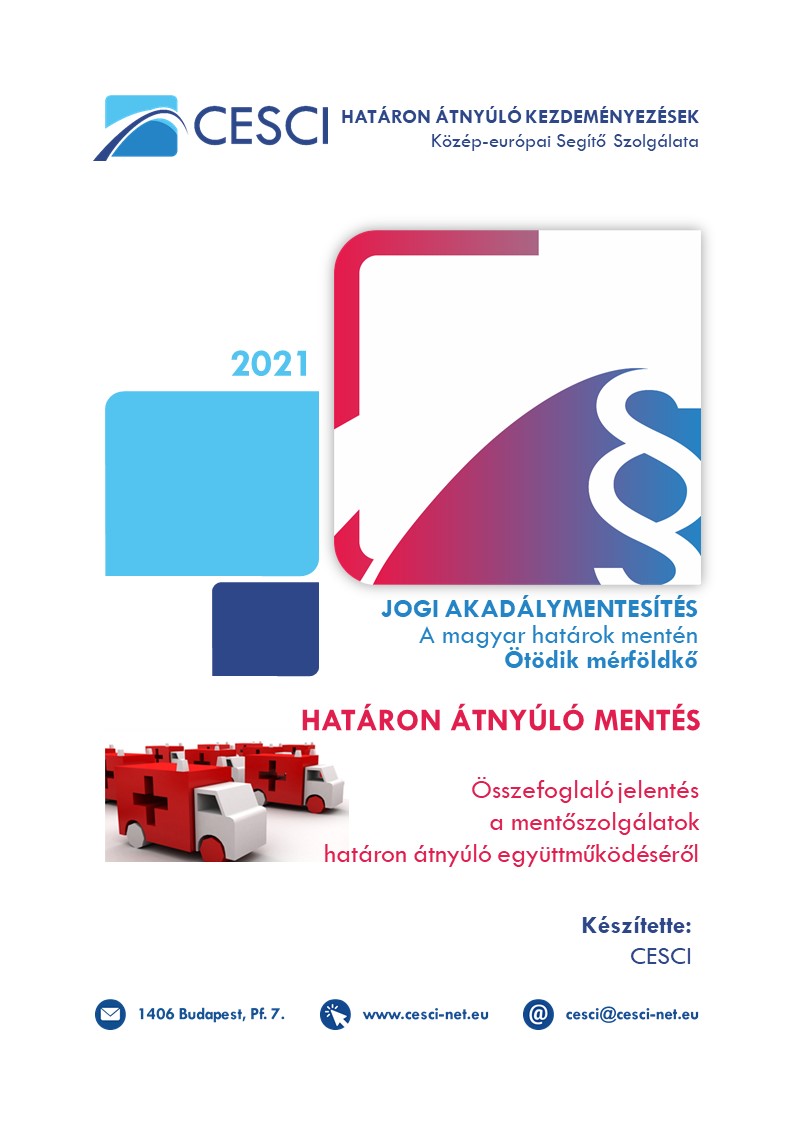
The summary report of these activities can be downloaded by clicking on the cover below.
Impacts of the COVID-19 pandemic on Hungarian border regime
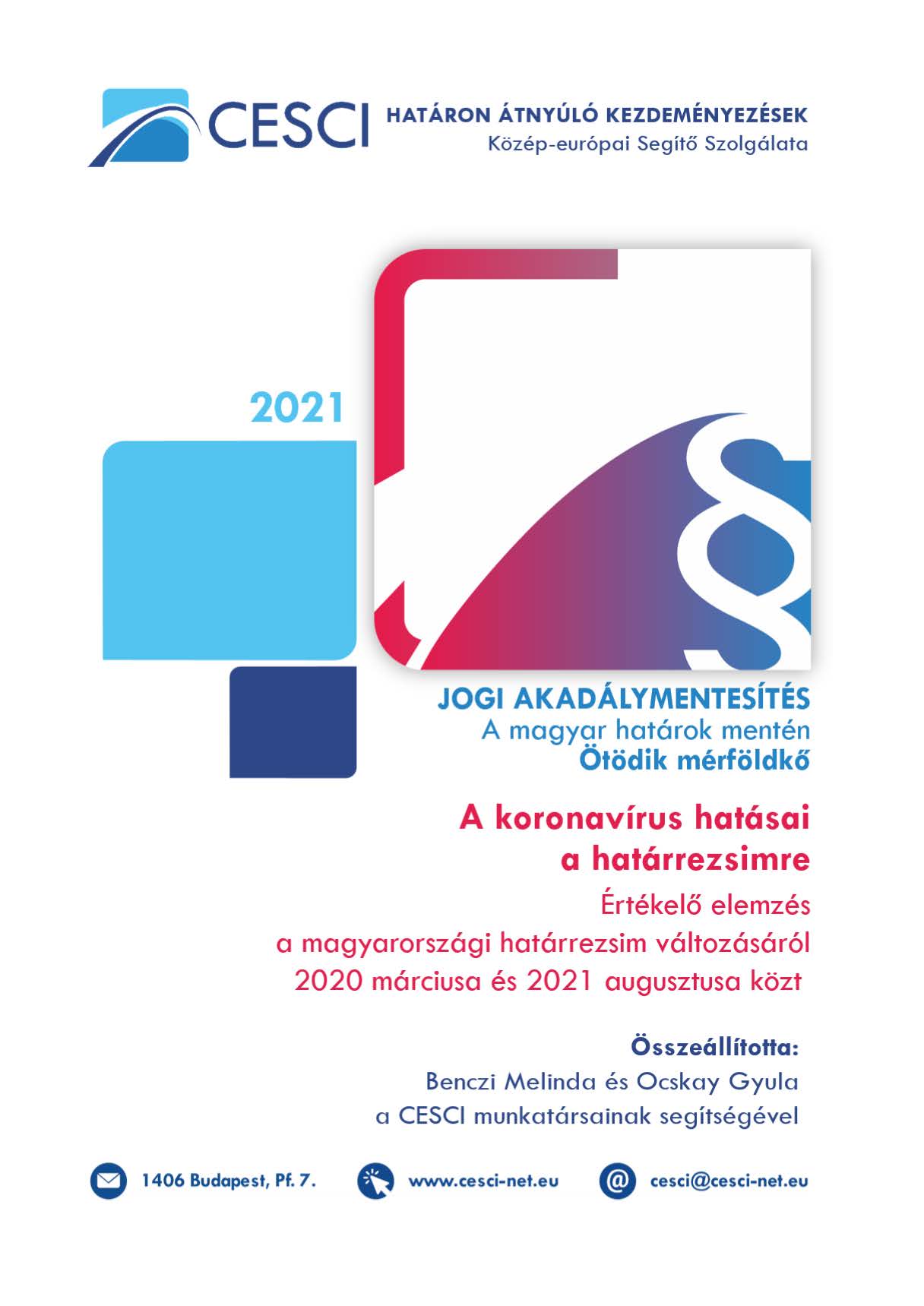
First wave of coronavirus pandemic generally caused border closures in the world – in most of the cases even without informing beforehand the neighbouring countries. These measures then caused serious problems to health service provision and economic performance of the given countries. During the second wave, there were rarely any examples of total sealing but the governments still made difficult the free movement by adopting diverse provisions. This phenomenon was challenging especially in the EU where cross-border integration has remarkably progressed, based on the principle of the four freedoms. The objective of our study is to document and analyse the changes along the Hungarian borders – with special emphasis on potential long-term impacts.
The study (in Hungarian) can be read after clicking on the cover below:
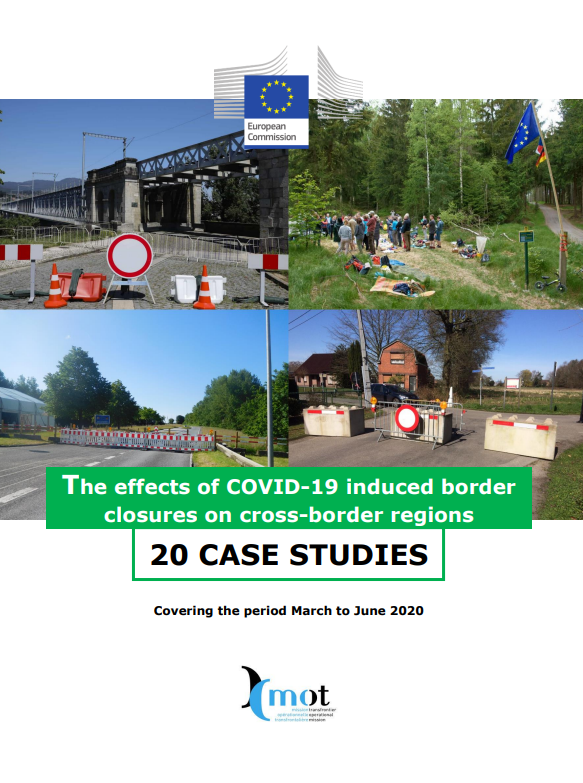
The Mission Opérationnelle Transfrontalière (MOT) carried out a study on behalf of DG Regio and in collaboration of CESCI and AEBR on the effects of the restrictions imposed by governments in the first wave of the pandemic (March-June 2020) on the inhabitants of border regions.
The study, entitled “The effects of COVID-19 induced border closures on cross-border regions” comprises two volumes, the first focusing on mapping of the measures taken on national borders both during the lockdown phase and the easing of the lockdowns; an analysis of the very concrete impacts of these measures on the daily lives of the inhabitants of border regions in several areas; an analysis of the role of cross-border structures and agreements during the pandemic; and lessons to be learned from this crisis that has penalised border territories, and recommendations for the future. The second volume consists of a collection of 20 case studies on 20 different borders. Particular attention is given to citizens’ acceptance of the restrictions.
 |
 |
The project was funded by the Ministry of Justice.
The project documents and the conclusions and recommendations contained therein do not necessarily reflect the official position of the Promoter.