Legal accessibility
1. Milestone
The consultation process of the Cross-Border Review project launched by the Commissioner of Regional Policy of the European Commission, Ms Corina Creţu lasted from September 2015 until the end of 2016. The main goal of the consultation process was to get as comprehensive picture as possible on the legal and administrative obstacles still existing along the internal borders of the EU Member States.
Central European Service for Cross-Border Initiatives submitted an application to the call of DG Justice half a year before the starting date of the EU level project with a view to identifying the obstacles existing in Central Europe. After the proposal had been refused by the DG, CESCI addressed the Hungarian Ministry of Justice with the project idea. The experts of CESCI implemented the project called Legal accessibility between February and September of 2016 with the support of the Ministry of Justice, in parallel and using the synergies common with the EU level project but applying different methodology. The objective of the project was to identify the legal and administrative obstacles making cross-border cooperation and daily life in border areas difficult. At the same time, the CESCI’s project went further than the EU project when drafting concrete, sometimes textual recommendations in order to eliminate these obstacles.
The first Legal accessibility project ended with succes in the second half of 2016: the experts of CESCI unfolded the background of 39 legal or administrative obstacles in total and drafted the recommendations for solutions – based on European best practices. The documentation running to some 600 pages treated four thematic areas (cross-border mobility, health-care, labour mobility and short supply chains – local products) with special emphasis and it tackled also two horizontal issues facilitating the systematic (non ad-hoc) treatment of the problems: the first targeted the potential institutional background of legal accessibility; the second envisaged the elimination of the shortages in access to information.
Due partly to the Cross-Border Review, the Hungarian project received a positive feedback at European level and at professional circles. This good resonance means that the topic is relevant and it is worth dealing with it in the future. At the same time, it is important also from the point of view of the future of the population and the local municipalities of the border areas to find solution to the unfolded problems.
Project activites
The following activities were implemented in the framework of the project:
The workflow and logic of the project are presented by the following figure.
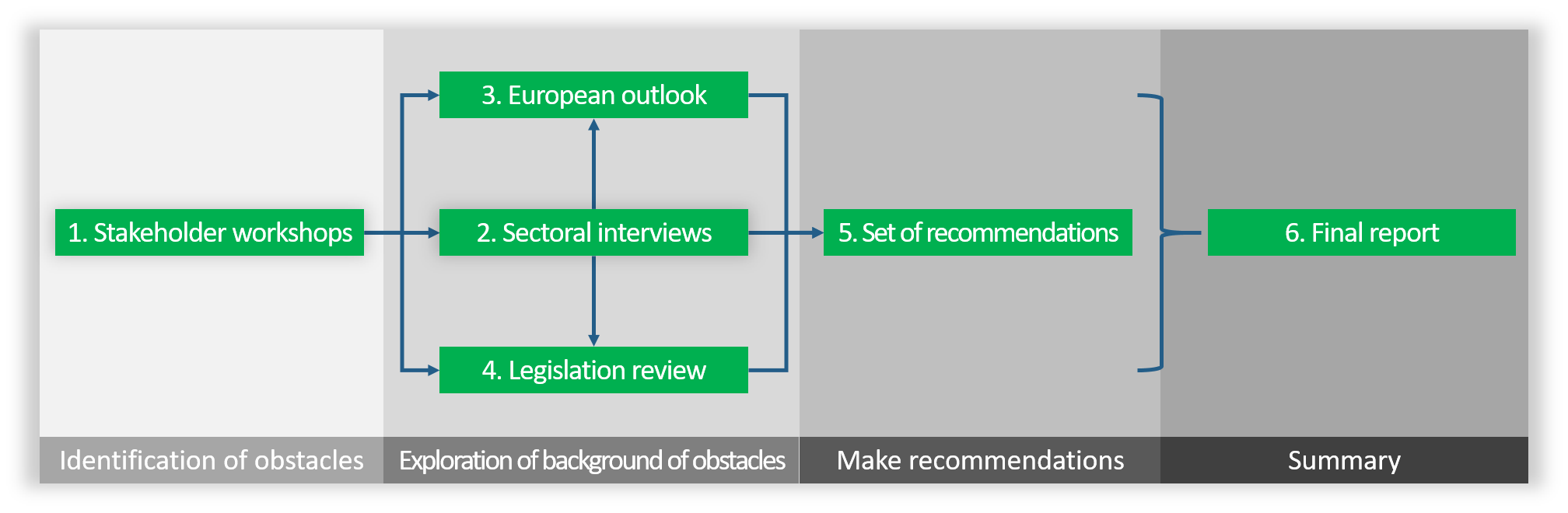
The first activity of the project “Legal Accessibility” was the series of so called stakeholder workshops organized in the Hungarian border areas (altogether 9+1 workshops). All the local participants involved in cross-border cooperation were invited to these stakeholder workshops. Roundtable discussion was used at the workshops to collect information about those obstacles that were experienced by the invited local participants. The primary purpose of the roundtable discussion was to identify problems on a territorial basis. Subsequently, an inventory of the problems articulated by the local actors was compiled. In the next phase of the project, sectoral interviews were performed with experts. During these sectoral interviews, we revealed the legal and administrative dimensions of the articulated problems.
At the same time, a research in the field of European best practices on cross-border cooperation and identified obstacles was started. The legal inventory of the identified obstacles was further developed and specified through valuable information received during the sectoral interviews and through profound desk research. We have articulated legal and policy recommendations with the intention to dissolve the identified obstacles by using the sectoral interviews, the European outlook and results of the legislative research.
In order to download our summary report on the stakeholder workshops in English, please click on the image below:
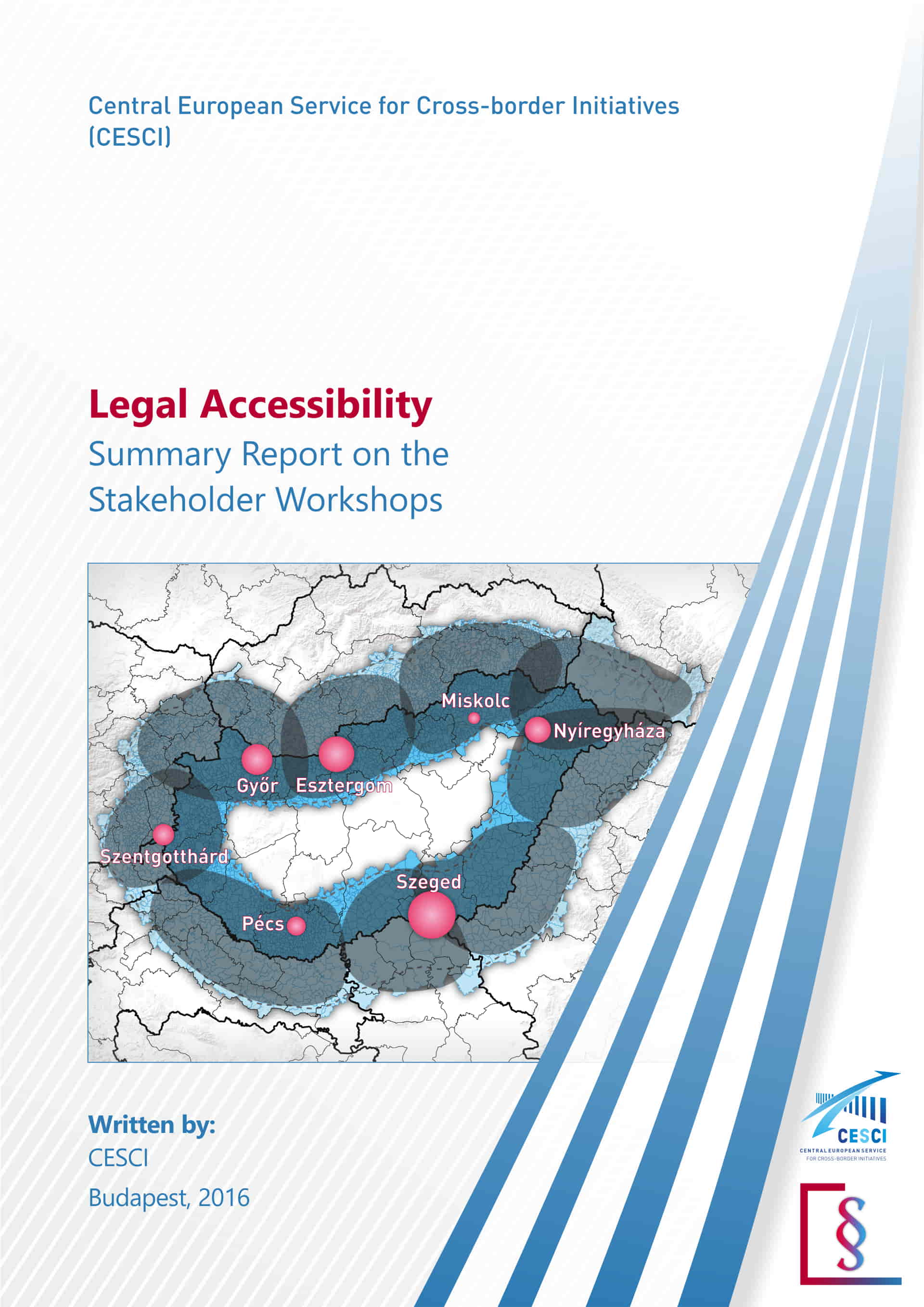
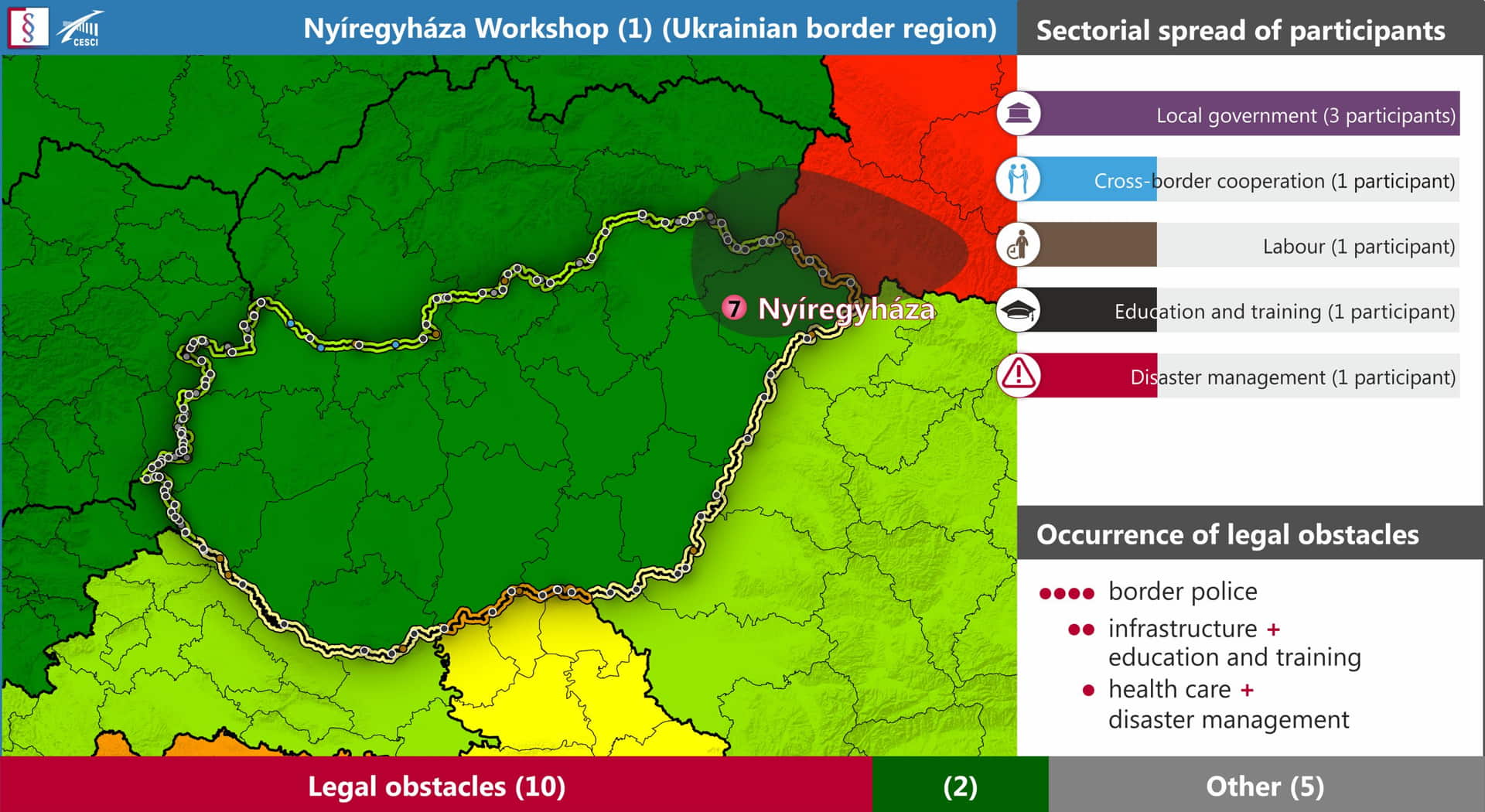
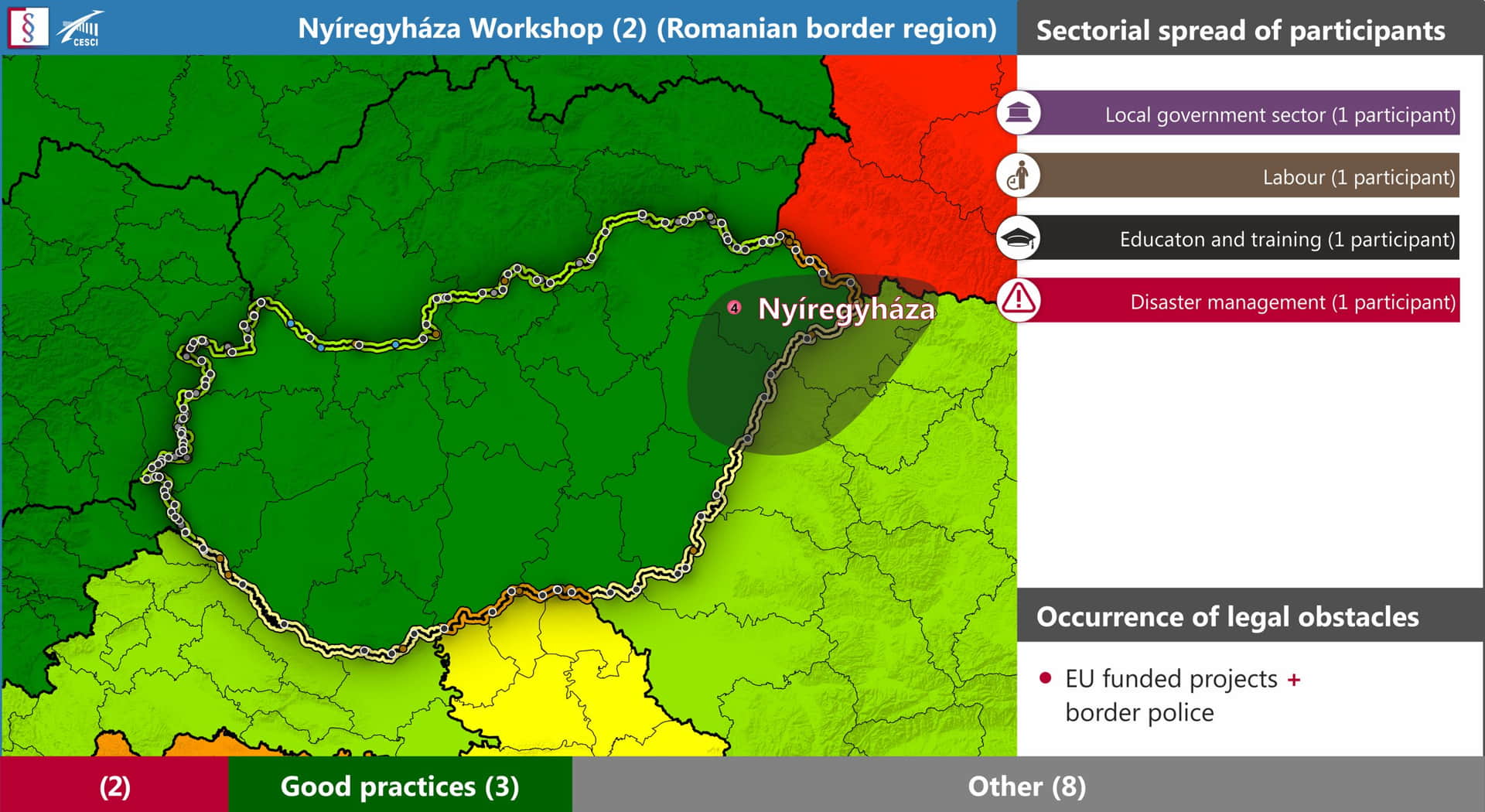
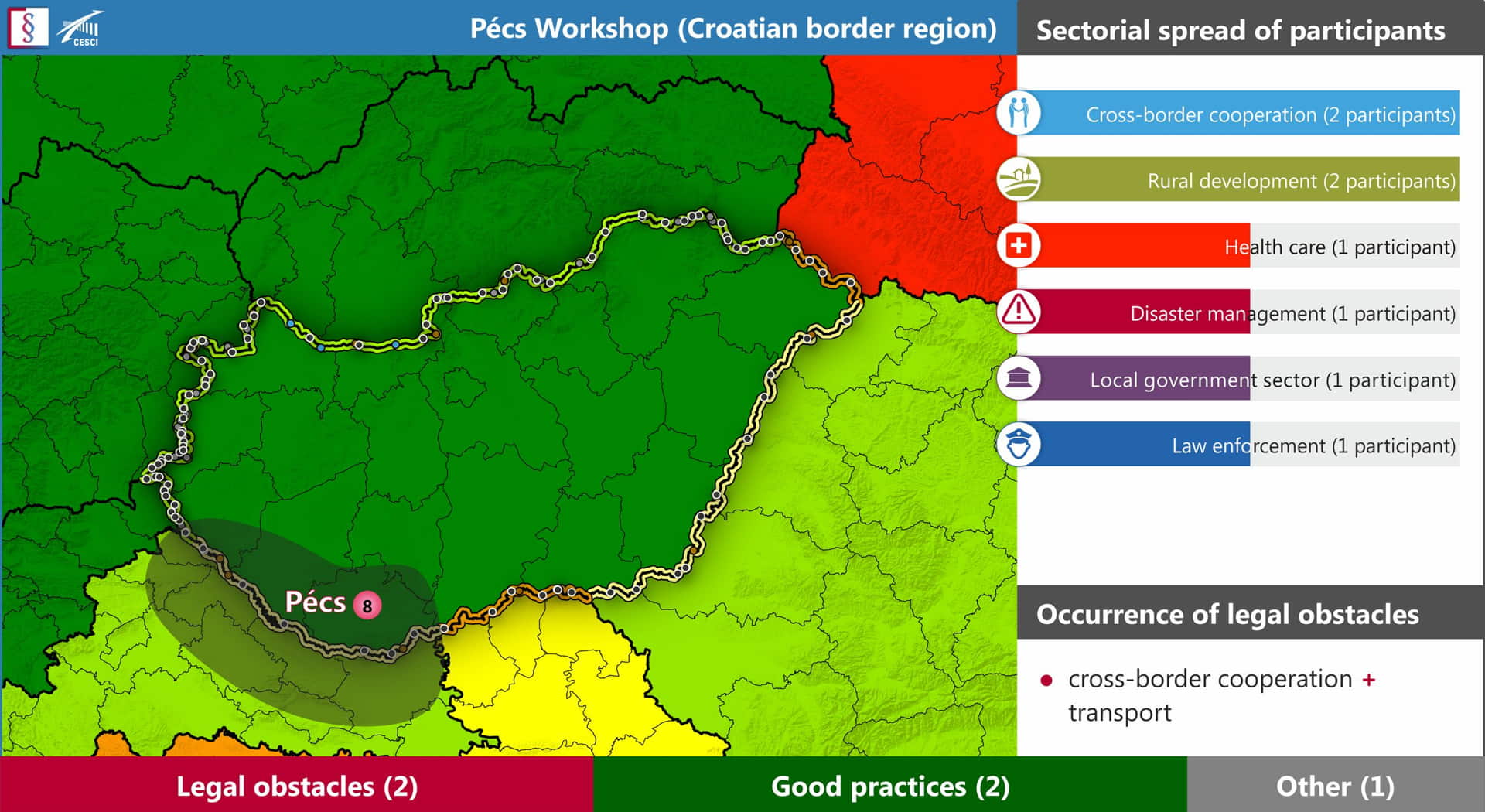
Within the framework of the legal accessibility project, several stakeholder workshops were organised between 27 January and 18 February 2016, to which stakeholders active in cross-border projects of the relevant border region were invited.
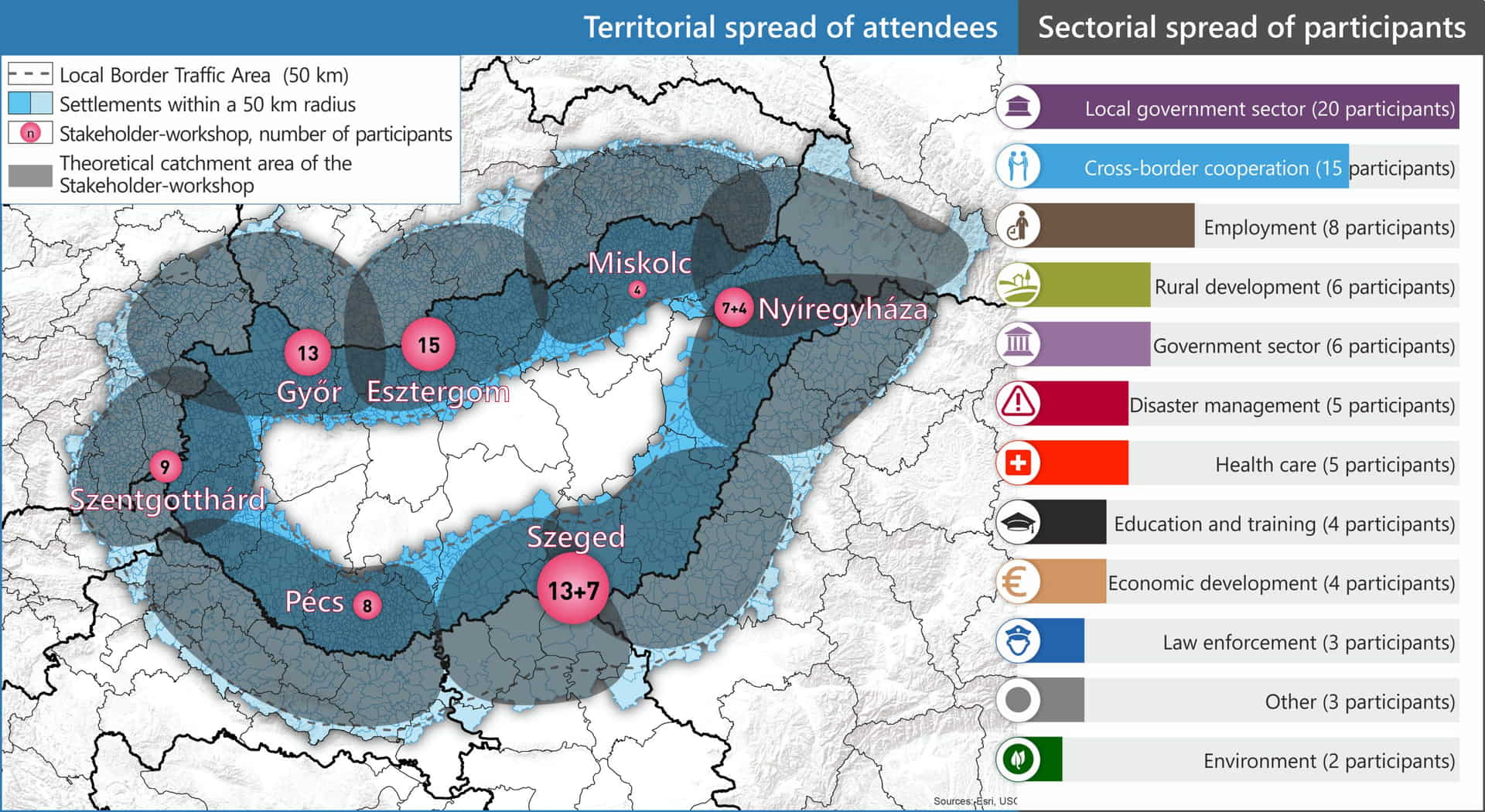
During the course of the workshop, in the form of a round table discussion, we gather information on obstacles experienced by local participants. Following the workshops, a summary report was composed.
The report briefly presents Hungary’s border sections, primarily focusing on their status in the EU integration process, as this fundamentally determines the scale and nature of cross-border interactions.
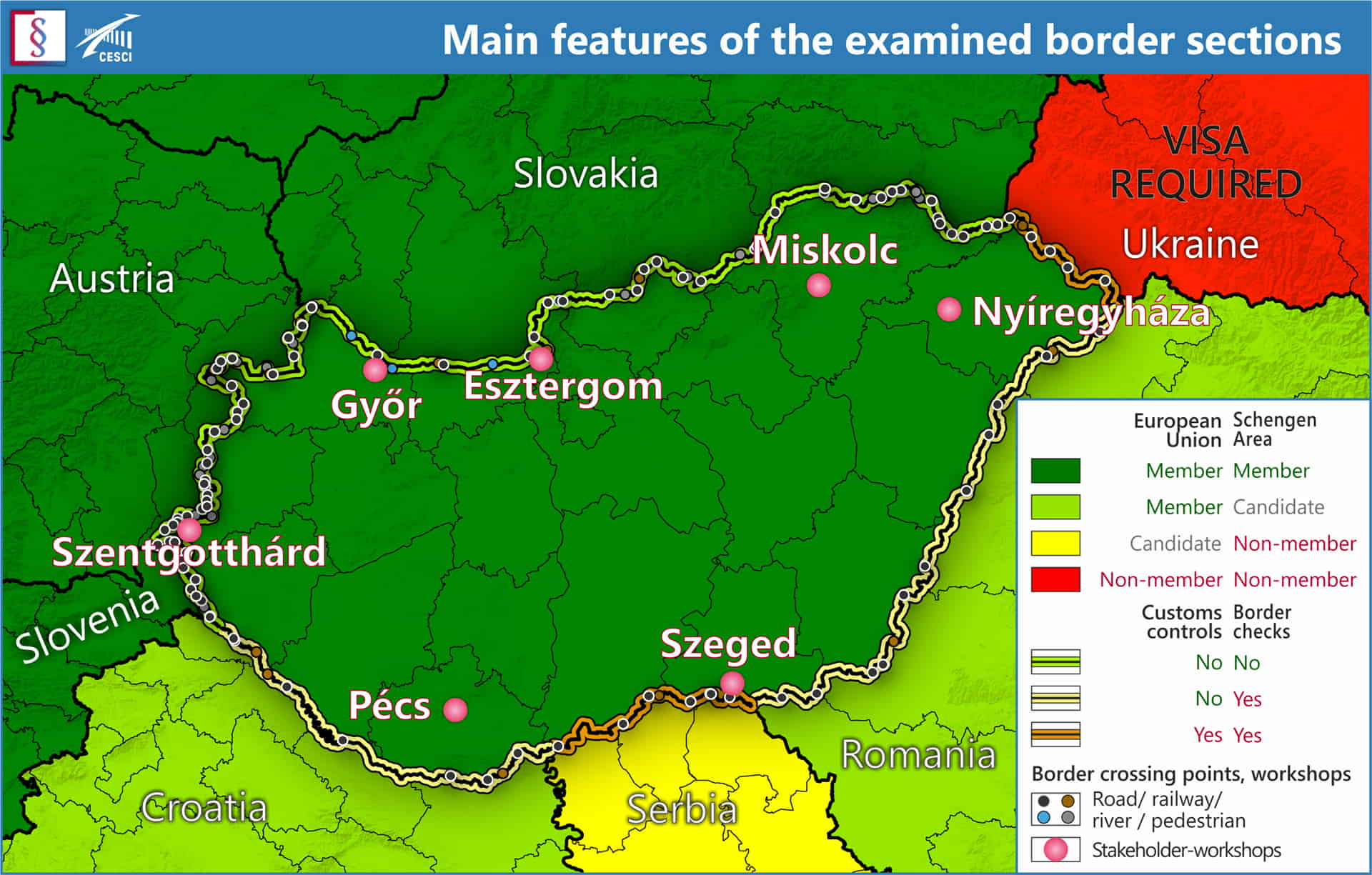
Following the border sections description, all information that came up during the course of the workshops (legal obstacles, best practices, other obstacles of non-legal nature, further comments) were presented by geographical breakdown.
 |
 |
| Nyíregyháza (1) | Nyíregyháza (2) |
 |
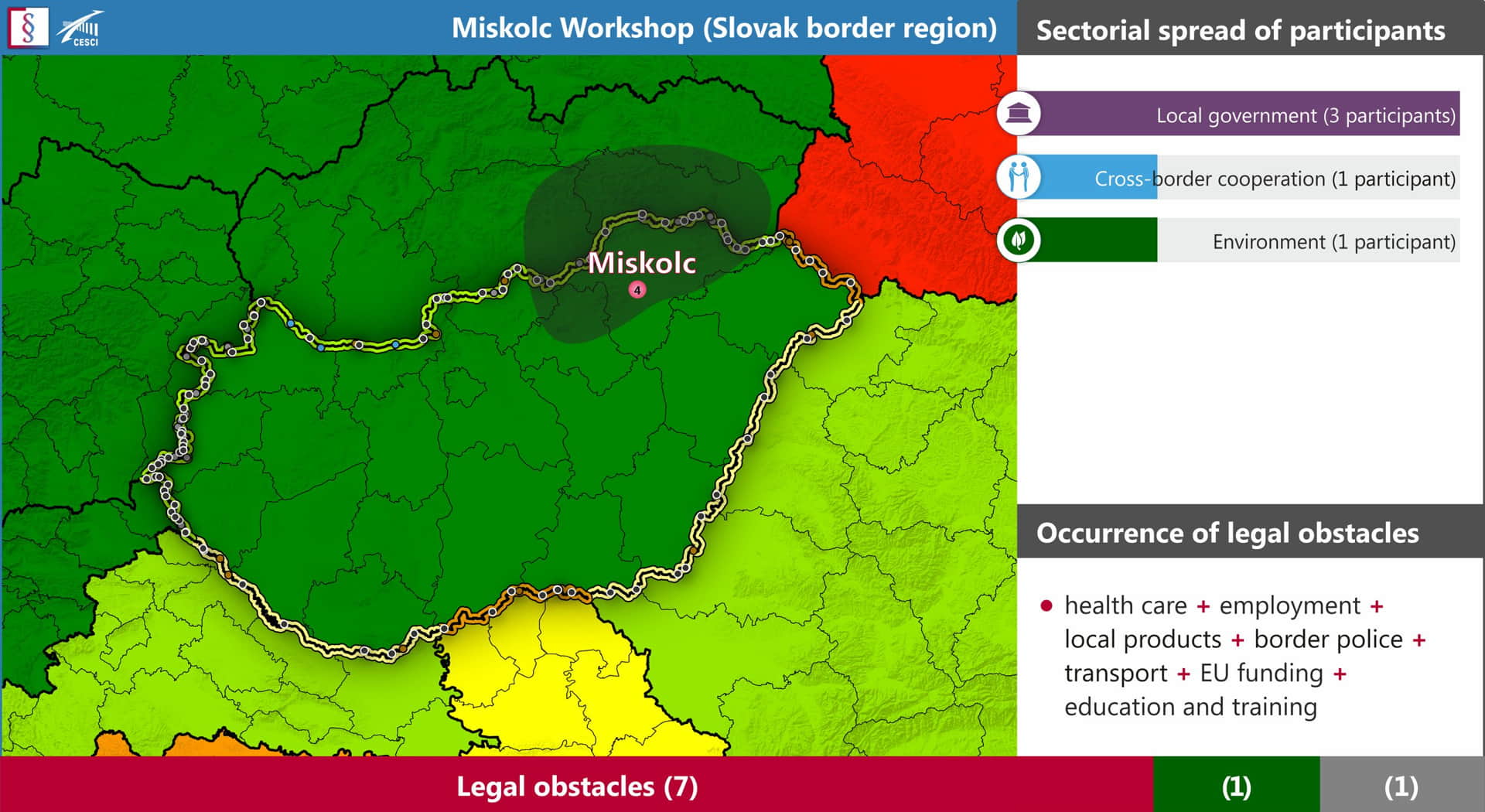 |
| Pécs | Miskolc |
After having presented the workshops themselves, a sectorial inventory was set up about everything that has been said during the events. The figure below shows how many independent legal obstacles could be identified after grouping the issues based on all bits of raw information.
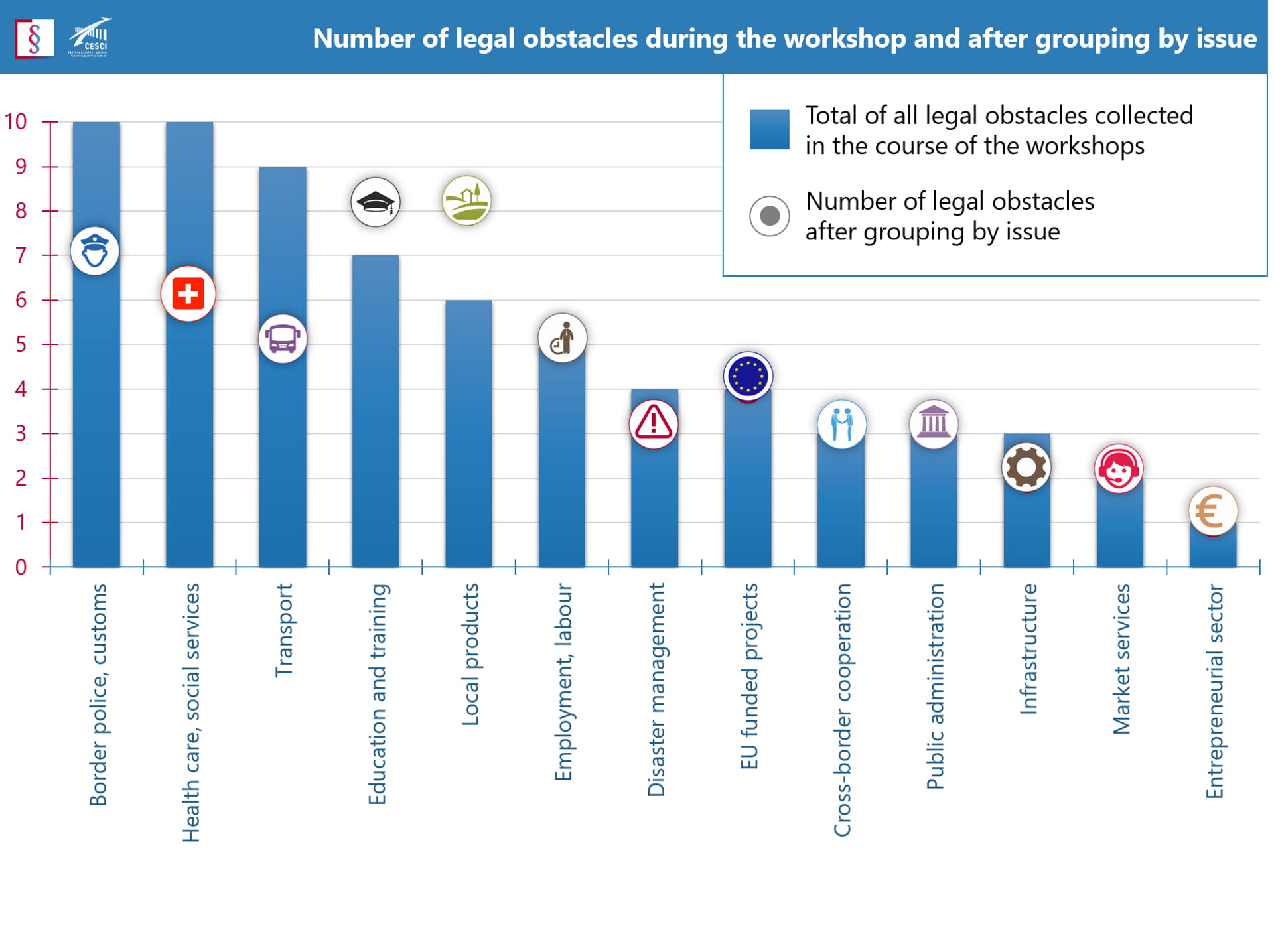
Most of the legal obstacles in the inventory call for a change in the national legislative environment. However, in some cases it is the legislations of the neighbouring country that causes hindrance, and in some cases, EU level legislation would be needed. Determining the latter will be down to the following part of the project (Investigating regulations).
It is possible that the explored legal obstacles already do partially dispose of the appropriate legal environment, but stakeholders do not know of these due to lack of information-flow. This is why we have collected all mentioned legal obstacles in our inventory, to be able to clear their background for the benefit of all participants in the following sections of the project (Sectoral interviews, Investigating regulations).
At the end of the report, we have published further useful information mentioned during the workshops. Firstly the non-legal obstacles and issues, then all further comments that help us understand the situation of some topics deemed problematic, or even best practices.
The summary report on the interviews with sectoral experts in Hungarian can be downloaded by clicking on the image below:
Interviews with sectoral experts were conducted between April and June in 2016 within the frameworks of the project, ‘Legal Accessibility’. The principal aim of these interviews was to thoroughly explore the obstacles experienced by local participants. The obstacles were initially gathered at the stakeholder workshops and roundtable discussions.
Approximately 100 interview requests were made, of which 24 in-depth personal interviews were actually held and 14 written answers were processed. Background research was frequently helped by telephone interviews. A total of 30 telephone interviews were conducted with different sectoral representatives.
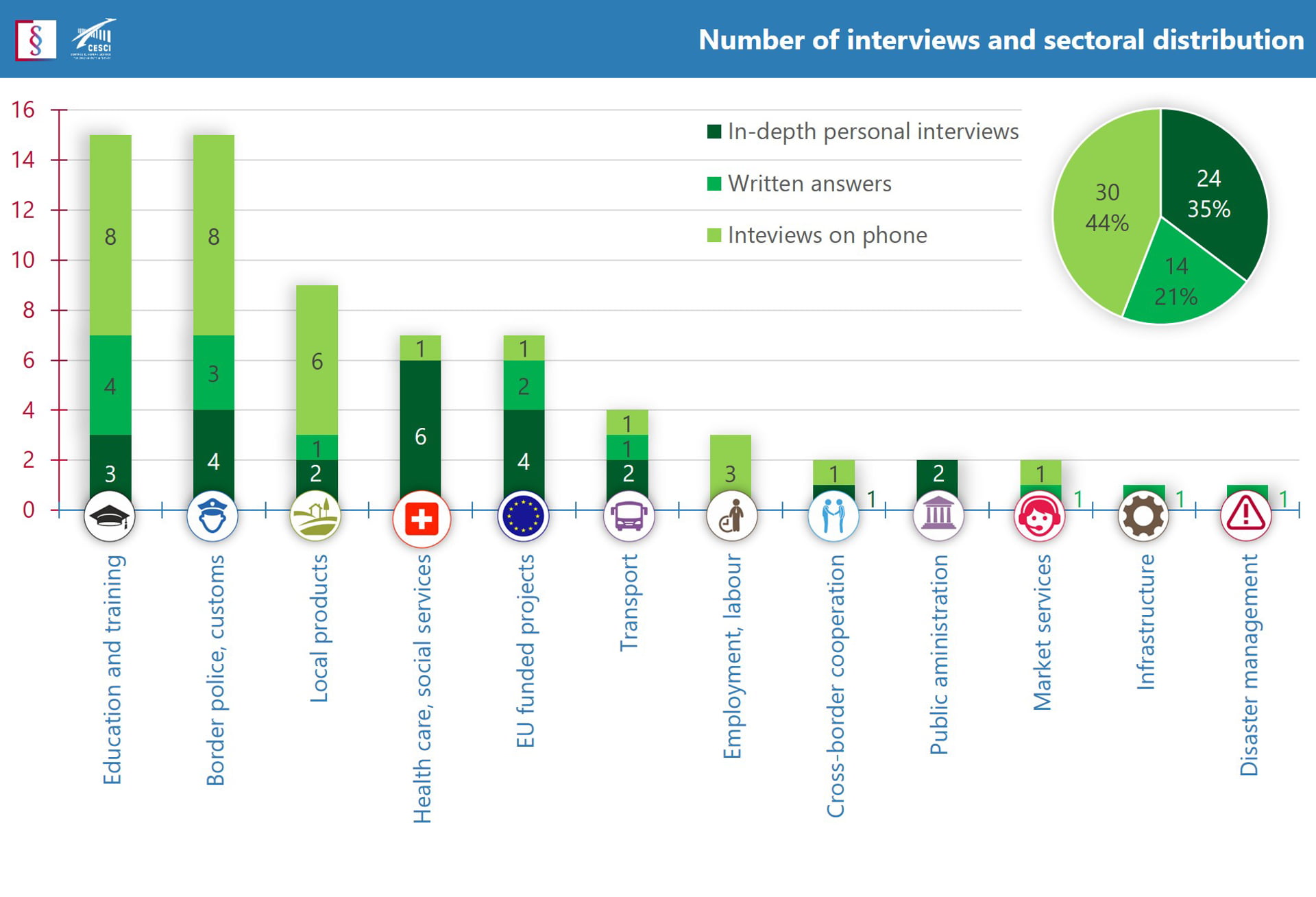
During the series of interviews, we asked for the help of experts who actively participate in shaping, or enforcing the rules, operating the system, or resolving the emerged problems. We aimed to understand the existing and determining legal and regulatory environment.
Legislative competence and acquired professional experience were considered as the most important characteristics for the selection of interviewees. Special considerations had to be included in those cases, where we had to uncover the legal background of relevant regulatory issues which were valid only on specified border sections (e.g. the Serbian – Hungarian border).
Concerning the interviews’ content structure, we considered the understanding of the complexity and completeness of the regulatory systems as important as the cases and problems we explored during earlier stakeholder workshops. Thus, the specific answers to problems that arose during our interviews also provide important general information about the given area.
We attempted to personally visit the interviewees; at the same time, however, some potential interviewees could not undertake a personal meeting due to administrative reasons, therefore we asked for written answers that they successfully provided to us. In addition, the examination of legislative regulations – which was performed in parallel with the interviews – made it necessary to perform further searches by telephone or by written form.
Within the frames of the summary report, interviews and sectoral reactions – received either in written or oral form – are elucidated on the basis of sectors and within them on the basis of obstacles. Some obstacles – which were originally identified as separate legal obstructions –have common roots, thus the given answers and solutions are also similar; subsequently, we merged them and we treat them together.
The concrete purpose of the interviews– and of the whole project – is to recommend legislative amendments; nevertheless, the prepared interview report itself represents a valuable achievement that contributes to a deeper understanding of the complex nature of political borders.
You can download the Collection of best practices prepared in the framework of the project by clicking on the following picture:
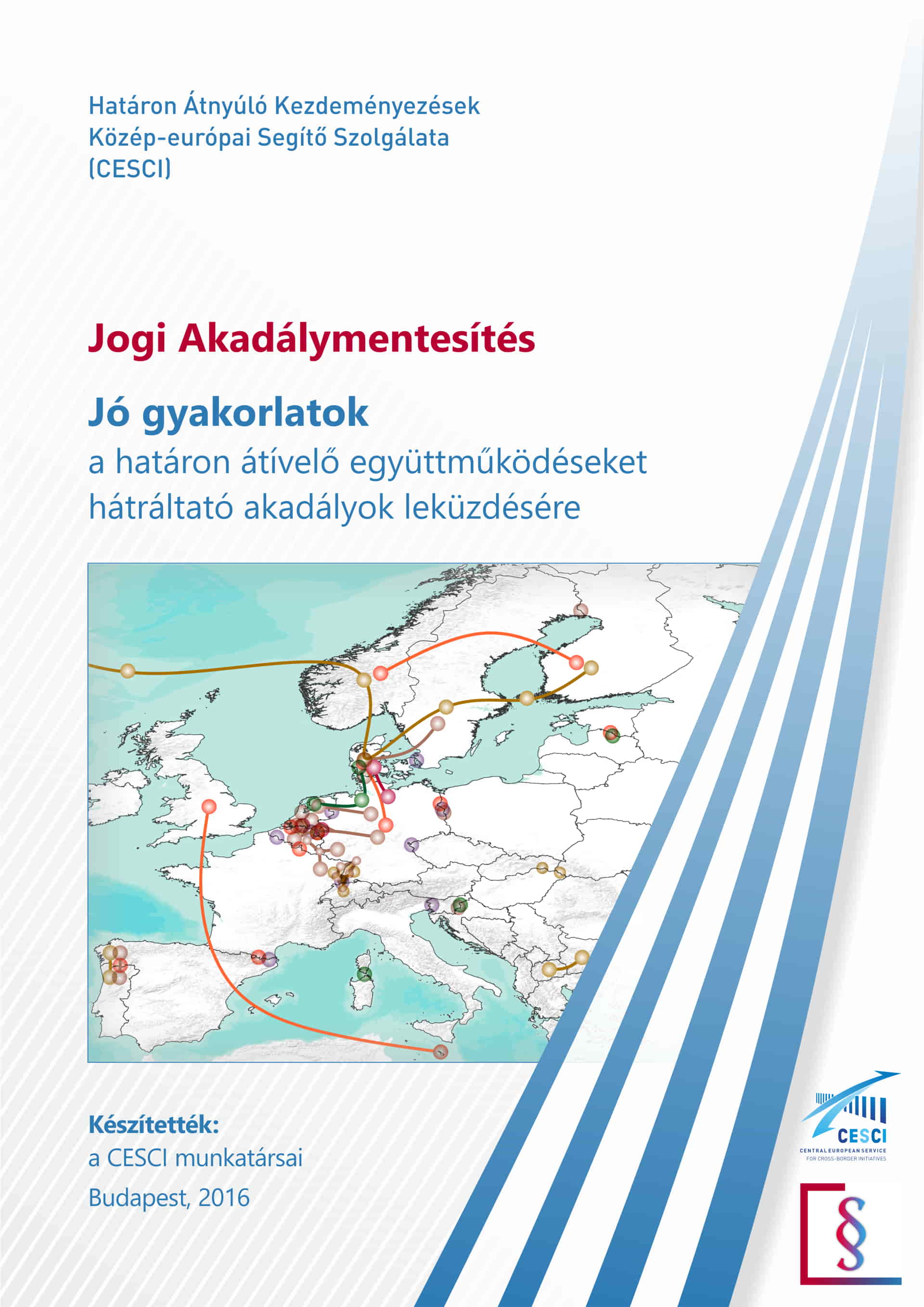
In the framework of the Legal Accessibility project, we examined the problems and obstacles that arise during the interactions of border regions; furthermore, we explored the handling, management and solution of these obstacles in other parts of Europe. We mainly concentrated on those European regions that have accumulated enough experience in the field of cross-border cooperation.
We used qualitative methodology during the preparation of the research study and during the actual research activity, too. That means our research was built on the so called ‘desk research’ methodology, thus we made a systematic gathering of good examples, their research, categorization, identification and evaluation of obstacles, and we explored the possible and implemented solutions as well.
Cross-border database and toolkit of the EDEN portal, developed by ISIG, commissioned by the Council of Europe, was a valuable help in the process of identifying relevant information on institutionalised cooperation. Furthermore, a useful source of information was the extensive information database that is accessible on the webpage of the French Mission Opérationnelle Transfrontalière (MOT), too.
During our research, we contacted some foreign cross-border cooperating parties and management organisations that coordinate cross-border cooperation, with the aim to receive updated and actual information, thus forming a clear picture about their obstacles and about their proposed solutions.
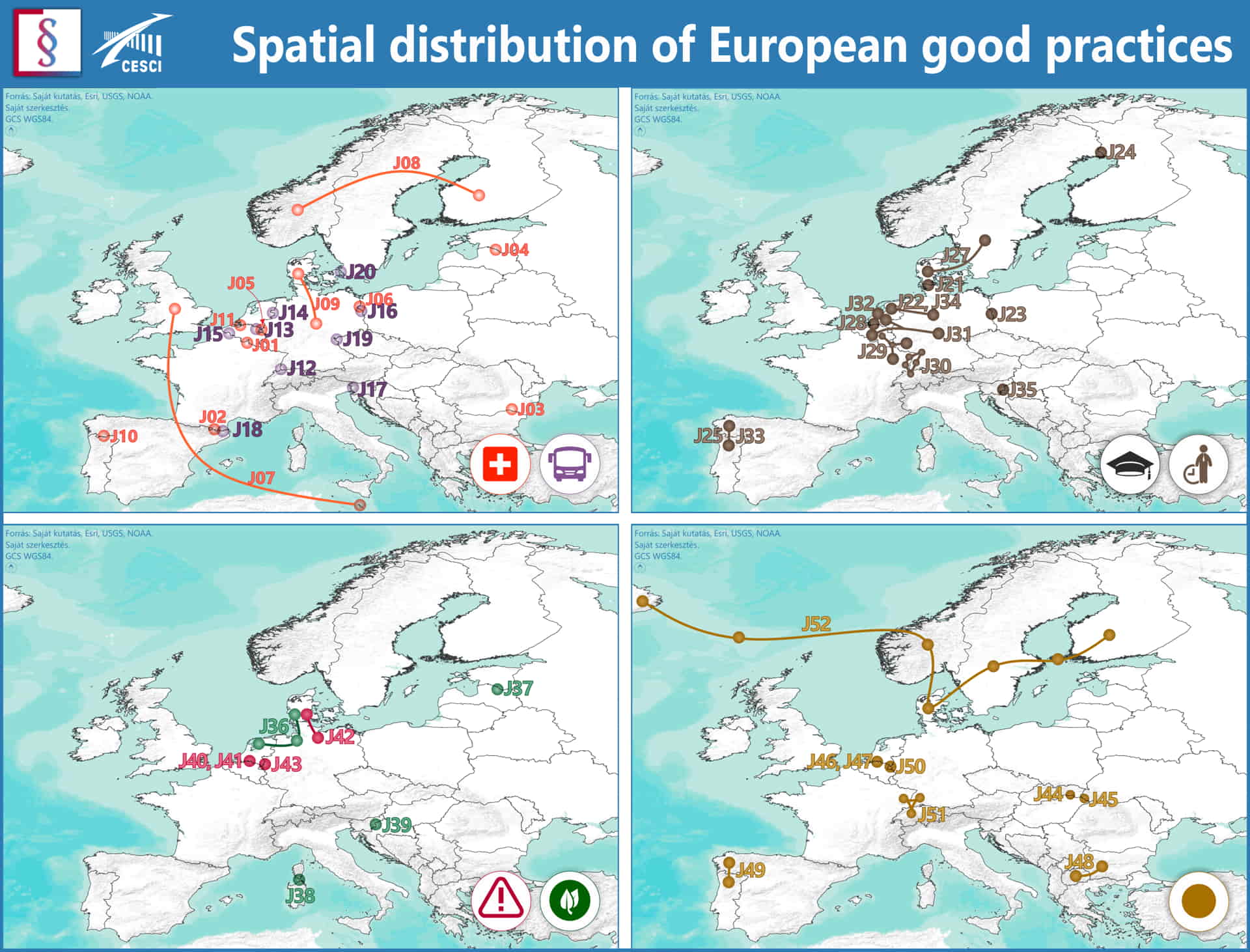
The document contains a detailed research of 52 good examples, and numerous additional models were mentioned. These good examples and models can be a useful source of information that can be effectively used in the process of abolishing the Hungarian obstacles.
| Topic of good examples | Number of good examples with detailed exploration | |
 |
Cross-border health care and social cooperation | 11 |
 |
Cross-border mobility and community transport cooperation | 9 |
 |
Cross-border educational and labour market cooperation | 15 |
 |
Cross-border environmental cooperation | 4 |
 |
Cross-border crisis management cooperation | 4 |
 |
Other non-specified forms of cross-border cooperation | 9 |
In the last group of the study, we described several institutional models for state-level coordination that offered solution to certain cross-border problems and which might be useful and instructive for continuing the project.
Moreover, the prepared collection of good practices contains a rich bibliography. Specifically, it involves more than 140 bibliographic items. This huge bibliography might be very useful for those professionals who are interested in this specific field of research.
You can download the Legislative inventory prepared in the framework of the project by clicking on the following picture:
During the legal analytical phase, we reviewed the legal environment of the obstacles identified at the workshops. When presenting the legal framework, we concentrated mainly on the legislation in Hungary but in the cases when it was necessary, we also touched upon the legal resources created by the European Union.
In the framework of the legal inventory, with respect to the 39 obstacles or groups of obstacles discussed in detail earlier we reviewed in total nearly 250 provisions. Among these, there were both EU and Hungarian provisions. In some cases, we analysed the legislations of the neighbouring countries, as well. Beside the desk research, in some cases, it became necessary to negotiate with the relevant authorities with a view to clarifying the legislators’ or the law enforcement officials’ interpretation.
During the compilation process of the legal inventory, we used the National Inventory of Legislations in case of the Hungarian law, the EUR-Lex database for the EU provisions and the N-Lex database for those of the neighbouring countries.
The legal framework of the obstacles identified at the workshops shows a mixed picture after the analysis of the legislations.
In the case of several specified obstacles, it cannot be set out that we clearly face a legal barrier. Their sectoral field is ruled according to long-term policy principles and interests, which apparently do not allow room for manoeuvering to modify the relevant legislations (e.g. public security, animal health issues).
In the respect of certain barriers, real progress can be envisaged only if the policy attitude of the relevant states moves toward cooperation. It is the case with local products. Territorial delineation of the particular provisions and the limitation of the territorial jurisdiction of the authorities currently prevent the citizens living in border areas to have access to local products with as wide a range as e.g. their counterparts living in more central regions of the country.
In some cases, the current legislation is comprehensible and well-justified along policy principles but it hinders cross-border cooperation in a hardly acceptable way. It is the case with the duty-free goods transported to third countries where regardless of that duties are not applied for these products and materials; the customs procedures are not avoidable.
In the respect of several cases, during the analysis of the legal environment it became clear that no legal obstacle backs the issue but the stakeholders have false or inaccurate information on that.
As a result of the legal analysis, we had the opportunity to identify several cases where the design of the legislation facilitating cross-border interactions already started or it has been under way for a longer time. A few of them already have tangible outputs and eases the daily life of the people affected by cross-border interactions. However, these initiatives typically need further improvements and completion.
As a result of our examinations, we found 2 obstacles requiring international legal harmonisation, 12 ones which make both legal and policy interventions necessary. Further, we identified one practical and one policy problem, as well as 3 barriers which, apart from legislation, contain also other factors.
You can download the Set of recommendations prepared in the framework of the project by clicking on the following picture:
Based on the research activities carried out during the previous phases of the Legal accessibility project, in the subsequent stage we drafted recommendations regarding the obstacles identified at the stakeholder workshops. While doing so, we made a priority for four sectors: cross-border mobility and public transport, cross-border labour market cooperation, health care services and local products. These topics were treated in a comprehensive and integrated way (i.e. several obstacles have been merged into one larger subject) and this way we formulated concrete policy and legal recommendations.
The figure below demonstrates the share of types of recommendations in a comprehensive way. The four prioritised areas concern altogether 14 previously identified obstacles and for each of them we drafted, applying the method mentioned before, complex recommendations including both legal and policy recommendations and proposals addressed to the European Union. As it is indicated on the figure, the horizontal recommendations formulated based on the experience of the research conducted after the identification of the barriers are relevant in relation to the resolution of all obstacles affecting border areas.
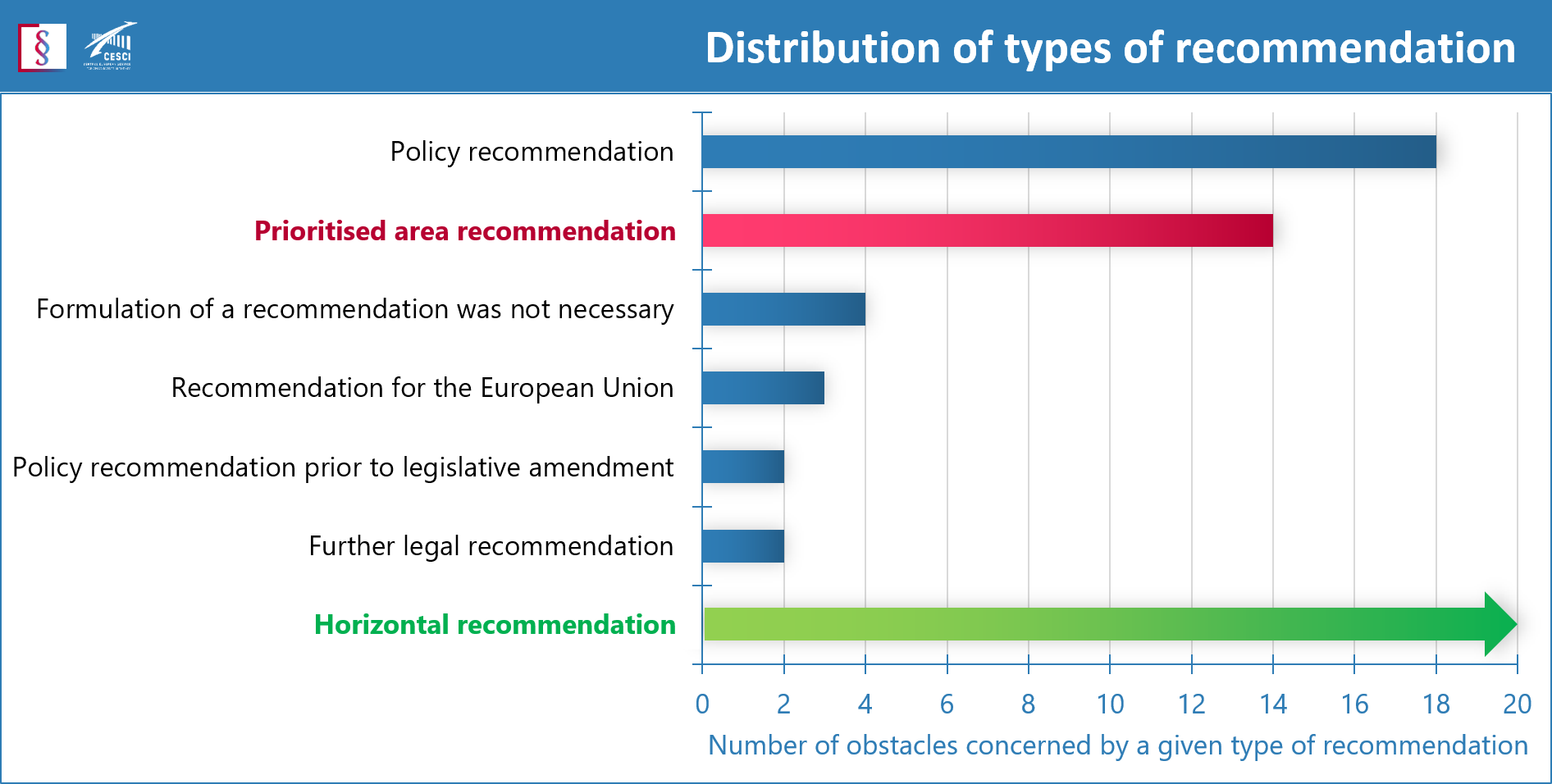
We made three types of recommendations for the removal of the barriers: if it was possible, we drafted a legal text proposal; in other cases, we made a proposal to policy interventions; and if we considered the room for manoeuvring too narrow for national level interventions, we initiated an EU level solution.
The legal recommendations can be classified again into three groups:
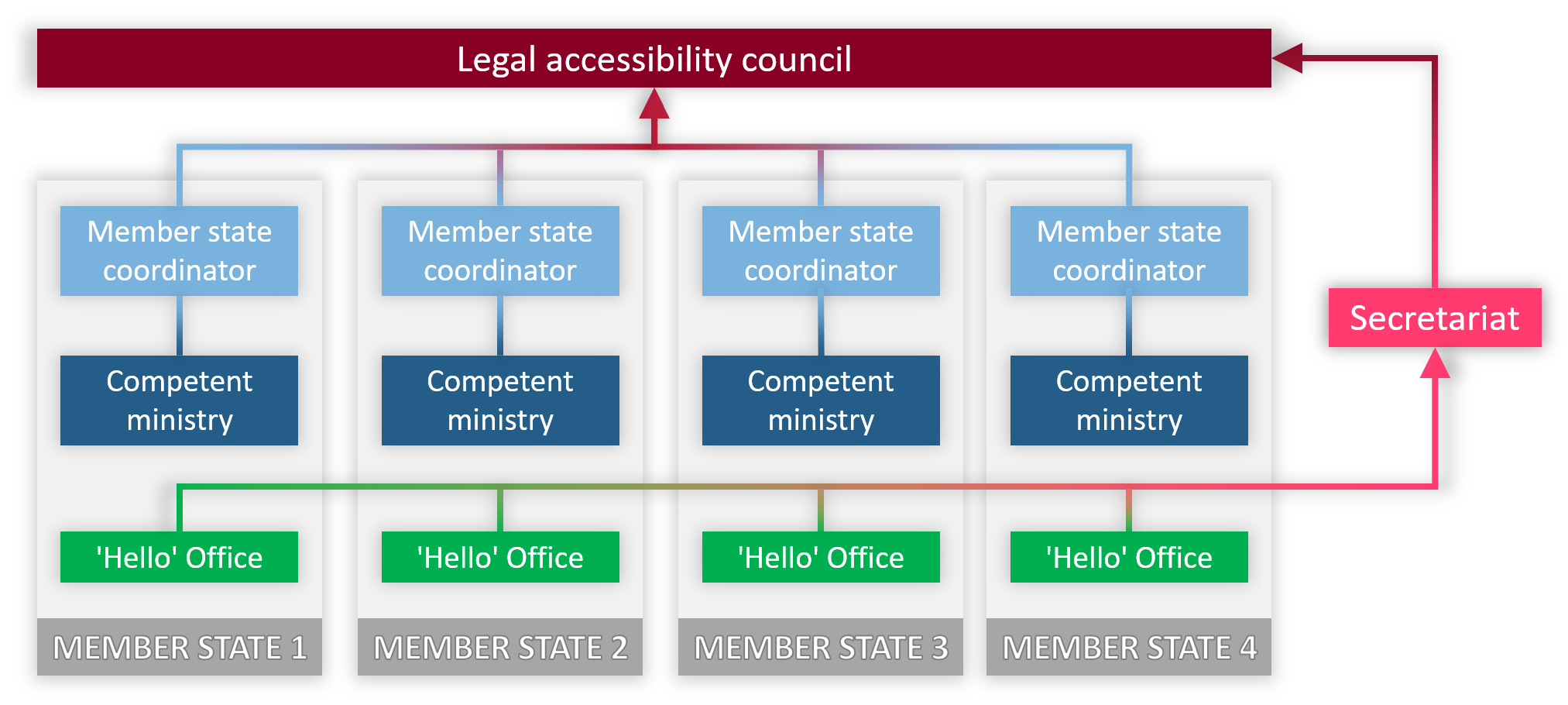
The study also contains a horizontal or, in other words, a „meta-level” chapter which, reaching beyond the sectoral based approach makes proposals on the one hand to apply EU and national level solutions for the information of the citizens; and, on the other hand, based on the example of the Nordic Council, to launch institutionalised mechanisms, by also involving neighbouring countries, which, make the problems caused by the borders erected by the nation states manageable.
You can download the final reports on the project results by clicking on the following pictures:
 |
 |
| Final report on the project | Contribution paper of CESCI to the public consultation on cross-border obstacles: 2. Report on Legal Accessibility project (2017) |
The final report intends to inform the readers about the main stages of the research project, which lasted eight months, as well as about the results of professional value that were achieved through carefully structured work. The final report means represents the official termination of the project; nevertheless, we carried out our work in a spirit that articulated new tasks and possibilities. This logic is directly mirrored in the structure of our final report, too.
After the first chapter giving a brief description of the introduction and methodology, the second chapter is set to identify the obstacles and its workflow. We describe in detail the stakeholder workshops offering an appropriate space to reveal the regulatory background that hinders interactions, as well as to identify obstacles, together with their territorial and sectoral aspects. Information collected during this stage marks the thematic ground of our research.
The third chapter describes the research revealing the background of obstacles and the compilation of recommendations. The unfolding of the background of the obstacles was in parallel with a composition of a European outlook, aiming to understand best examples and practices in relevant topics; revealing the existing regulatory environment and policy structure through sectoral interviews with the addressed experts; as well as making a detailed analysis of domestic and European legal frameworks. The compilation of the obstacles has been drafted based on this research work.
In the fourth chapter the results of the project related to each of the obstacles identified at the stakeholder workshops are presented. In each case, we specify the brief overview of the given obstacle, the best practices from Europe (if any) which can be used as models, the list of interviewees and relevant legal texts. Subsequently, we summarise, in a few sentences, our recommendations regarding the possible removal of each of these obstacles. At the end of the chapter, we give a short overview on our horizontal recommendations.
In the fifth chapter, we offer a summary of the main experiences of the project, by evaluating the fulfilment of the objectives set out within the indicators, as well as through a summary table. Finally, we compare the results of the project with contemporary trends in the European Union.
The results in European context
The European Union undergoes, at present, perhaps one of the most serious crises of its history which is fundamentally linked to the question of free cross-border mobility. It is of paramount importance what solutions will be worked out by the end of this crisis and whether these solutions hinder or facilitate free movement.
In parallel with the crisis, several EU policy debates are under way which are also in close relationship with the subject of our project. Our association submitted the application which can be considered as an antecedent of this project to the call of the DG Justice in February 2015. The objective of the proposal was to work out a comprehensive analysis within the central European region containing the unfolding of legal-administrative barriers and formulating recommendations based on West European good practices. The partnership involved several research institutes from the neighbouring countries, as well as, the ISIG from Gorizia and the MOT from Paris. Since our application was not successful, we approached the Ministry of Justice of Hungary with a similar proposal because the legal accessibility issue became (maybe not unexpectedly) a hot topic of the European discourse.
On the one hand, a project called Cross-border Review launched by Commissioner Corina Creţu attracted the attention to the significance of tackling legal and administrative problems. The project was started in the autumn of 2015. Initially, contracted experts conducted an on-line survey by which they requested the local stakeholders’ opinion on the obstacles. More than 600 responses were received from all over Europe (12 from Hungary). Based on these responses and the inputs gained at the 11 counsellors’ seminars as well as from the reactions of the participants of the expert group set-up also in the autumn, the experts started to compile the comprehensive study built on case study experiences. Our association delegated an expert to the expert group and we drafted a contributing document focusing on the analysis of territorial data. Our intention is to share also the results of the Legal accessibility project with the EU experts. At the same time, during the implementation of the Cross-border Review project, we also obtained and accumulated knowledge on certain issues which supported the realisation of the Hungarian Legal accessibility project.
When comparing the two projects, it is worth mentioning that in the case of the EU project eight sectors have been identified at the very beginning in the respect of which the analysis of the obstacles can be relevant: industry, labour market, health, transport, ICT, environment, climate change and spatial planning. At the second expert workshop held in January, 2016, the experts selected five of these eight topics that the contracted consultants would concentrate on.
At the starting phase of our project we did not follow similar preconceptions: we were interested in everything what can be a problem or obstacle for local actors. On the one hand, this approach led to the realisation of the fact that we faced numerous obstacles which were irrelevant for other countries; and, on the other, the barriers did not occur in line with a clear systematic principle or an internal logic but in an ad hoc way. It may be the reason why several „reports of obstacle” proved to be irrelevant after the interviews and the legal analysis. Regardless of this, a few problems can attract the attention also at EU level: in some of these cases we even made a proposal for their solution.
These problems are the following:
Apart from the Cross-border Review coordinated by the DG Regio, it is worth mentioning the progress of the new legal solution initiated by the Luxemburg presidency, in 2015. The proposal of the Luxemburg presidency aims at the voluntary based introduction of a new legal tool (European Cross-Border Convention: ECBC) which would create a territorial exception with a view to resolving a sectoral problem of a given border region. For the sake of ensuring cross-border service provision, the tool would establish a legal framework independent from the legislations of the two countries with a territorial limitation in a provisional way; which would make it possible to give life to models exceeding the obstacles generated by the national provisions. The Cerdanya hospital is considered as a such exceptional example but also in the case of a cross-border tramway, numerous technical, financial and administrative rules should be taken into account which prevent the initiators from the construction of the tramway line. Although both the intention and the need are given and the economic operation of the tramway could be guaranteed, the different legal environment of the two neighbouring countries should be modified at so many points and furthermore at general, national level that finally the project will not be put in operation. The ECBC would make it possible to launch such exceptional legal solutions which would reflect to nothing but the particular problem within the given border region. Our association has, right from the beginning, taken part in the activities of the working group preparing the ECBC.
In recent years, the French Mission Opérationnelle Transfrontalière (MOT) has been drawing the attention, at numerous professional events, to the shortcomings of territorial statistics hindering cross-border cooperation and developments. Eurostat gathers data at NUTS III. (in some cases at NUTS II.) level only which are irrelevant from the point of view of direct cross-border interventions (affecting mainly local and regional stakeholders). Our association has joined this consultative process by organising a seminar in September, 2014. It is expected that the European Commission will initiate the cooperation of the national statistical institutions (NSIs) with a view to resolve this problem.
The European Union is not exclusively working with the problem of barriers. In 2014, the European Council contracted an NGO called Institute of International Sociology of Gorizia (ISIG) to unfold the most frequent cross-border legal-administrative obstacles in Europe. Its intention was to find the best practices delivering solution to these obstacles and to make all this information available through a portal updated permanently.
The portal was opened in 2015 and its database is permanently expanding, thanks to the increasing number of its end-users. The EDEN portal of ISIG meant a generous help during the realisation of the current project. Apart from this, the professional documents of the MOT and the AEBR (Association of European Border Regions) offered help to us too. AEBR supported the implementation also with professional consultancy as a project partner.
Regarding the responses on the obstacles, the way of overcoming them can be different case by case. The legal harmonisation process of the European Union yields sometimes surprising results; at the same time, the Community has achieved remarkable success from the point of view of the mitigation of the obstacles against the free movement of persons, goods, services and capital. One of the main lessons learnt from this project was that in several cases, the community acquis are already in place but there are problems with their application.
At the same time, sometimes the application of a regional solution implying bilateral agreements is more rational. It can give life even to bilateral institutionalised cooperation structures. The Legal accessibility project offers examples for both models.
Our aim was to launch the process within which the state administration limiting its focus on nation state frames by nature recognises cross-border reality as an issue to handle and its problems to tackle and approaches it with due openness. Since, as a matter of fact, when we seek for either EU level or bilateral solutions, we can be successful only with the positive attitude of the state level authorities.
Media appearance
The eight workshop within the Legal Accessibility project was held in Szentgotthárd, at the Refectory of the Common Municipality Offices, to which stakeholders active in cross-border cooperation in the Austro-Slovenian-Hungarian border region were invited. In the form of a round table discussion, two associates of CESCI were collecting information on the legal obstacles, deficiencies and best practices experienced by local actors.
Based in Szentgotthárd, Gotthárd TV broadcast a 10 minute report on the workshop on the very same day of the event in its News – a programme that after 10 years is still its fastest and most efficient forum for information and communication. The report was repeatedly broadcast over the following week: each day at 6:30 a. m. and 11 p. m., and additionally at 7 p. m. on Wednesday and Friday and at 12:00 on Sunday. The first few moments of the video feature CESCI’s planner-analyst associate presenting the elements of the project, followed by representatives of the ambulance service, the Hungarian National Rural Network (MNVH) and the police, who give their opinion about obstacles and good practices experienced during their daily work.
Thanks to Gotthard TV, you can get a glimpse of the workshop through the video below:
All rights for this video are reserved by Gotthard TV.
A written report of the workshop is also available on our website.
Completion of indicators (First milestone)
Stakeholder workshops:
Sectoral interviews:
European outlook:
Legislation review:
Set of recommendations:
Final report:
From a formal point of view, the project achieved maximum success: we fulfilled all the indicators undertaken in our contract. At the same time, it must be admitted that in terms of substance we expected more from the project at the beginning. We thought that the local stakeholders would confront us with a host of border obstacles and we would even find solutions for the major part of them, based on the existing western European good examples. Finally, much fewer barriers were mentioned at the workshops than we had expected and it turned out later that a significant part of these were not real obstacles. In other cases, the modification of the principles of the total policy background would be necessary in order to bring about essential changes. Thus, during its realisation, the focus of the project has been slightly modified.
While at the beginning we envisaged to draft a kind of compilation of legal recommendations, at the end of the day this document has gained a strong policy accent.
Nevertheless, the current compilation of obstacles should not be considered as irrelevant, since we managed to draw the attention and (we hope) to find solution to numerous problems which make the lives of the people living in border areas difficult. We are convinced that the project was implemented successfully with results to be communicated even at EU level which opens the possibility for the continuation together with the neighbouring countries.
As far as the professional results of the project are concerned, one can state that the documents drafted indicate the starting point of a procedure; they create the opportunity for the systematic monitoring and analysis of the obstacles as well as to the institutionalised development of solutions.
Hereby, we would like to thank the Ministry of Justice of Hungary for the support making possible the implementation of this project.
Recent documents (First milestone)
The following summaries, reports and other documents were prepared in the framework of the project. You can find more information about the documents in the separate entries. You can also download each of them here.
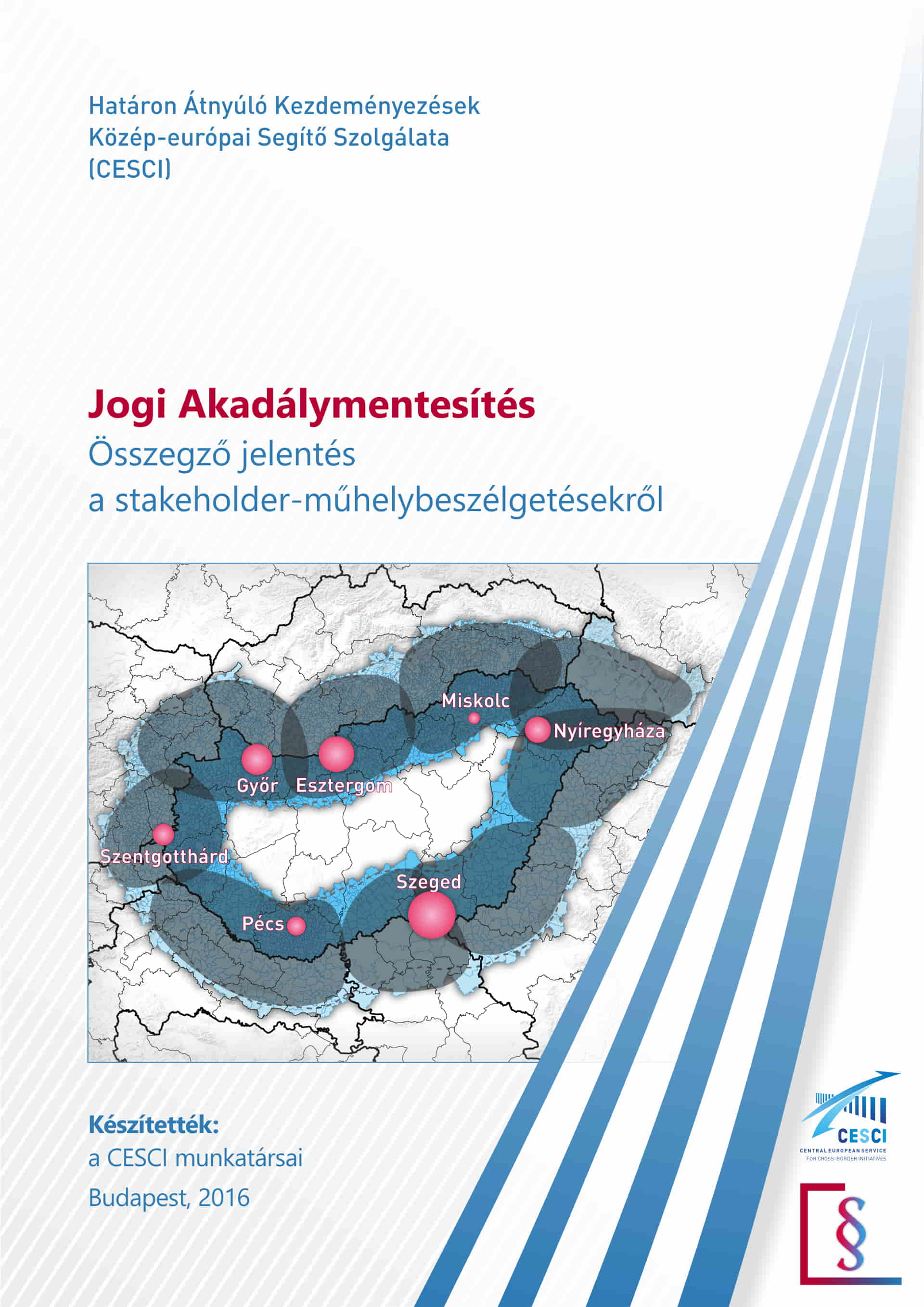
Summary report on the stakeholder workshops (in English)
Summary report on the series of sectoral interviews (in Hungarian)
Collection of best practices (in Hungarian)
Legislative inventory (in Hungarian)
Set of recommendations (in Hungarian)
Final report (in English) (2016)
You can download all the documents (28.8 MB)
that were prepared in the framework of the project by
The project was funded by the Ministry of Justice.
The project documents and the conclusions and recommendations contained therein do not necessarily reflect the official position of the Promoter.