Legal accessibility
2. Milestone
Aim of the second legal accessibility project is to continue the results that were achieved during the Legal Accessibility 1, as well as to continue the previous initiative that are relevant to the process of accessibility on the basis of the EU affairs experience. In the second project, we concentrate on supporting cross-border institutionalized cooperation, we want to contribute to the process of creating the necessary legal framework of this issue.
Implementation of the organizational solutions, included in the horizontal recommendations, belong to the competence of the Ministry, therefore this project proposal does not involve any of these activities for this purpose. At the same time – completely independently from the project – our association assures all the professional help in order to set up and operate the proposed organizational framework.
Objectives of the present project:
Within the second milestone, on the one hand we implement activities that help to eliminate the legal and the policy barriers of cross-border institutional co-operation, on the other hand we articulate a proposal for a web information platform that helps the process that the Hungarian and foreign citizens are informed uniformly. Subsequently, our work does not concentrate to deeply return to the identified obstacles which discovered during the first project, but we focus only on the issue of institutional co-operation and we make a proposal on the management of shortage of information.
1. Harmonization of EGTC-legislation
Hungary is a leading student in the EU’s EGTC policy. From the 64 groupings that were registered until the end of 2016, 23 groupings have Hungarian membership and the headquarters of 19 groupings are located in our country. Although, we cannot consider that all the EGTCs do high quality work, but they totally implemented a development of 24 million euros in the border regions between 2008, when the first EGTC was established, and 2015, partly due to the government’s supportive policy. In many cases, they effectively contribute to alleviate the separating effects of nation-state borders.
Hungary was the first country that helped to establish the first association within the Union that has a non-EU member country, namely the Tisza EGTC (established by the Szabolcs-Szatmár-Bereg County Council, city of Kisvárda and the Zakarpattia Oblast). That means there is only Serbia, from the neighbouring seven countries, where the necessary legal background is not available to establish this kind of association. Serbia ratified the Framework Convention of Madrid in the early 2016 (among the last members of the Council of Europe); however, framing up of the implementation rules are delayed.
Hungarian experiences, the Hungarian model could significantly help to our southern neighbour in order to make the missing steps, thus allowing to build Serbian relationships of the already established Banat-Triplex Confinium and the EGTCs that will be established in the future.
Therefore, in the framework of the project we will initiate the development of the necessary legislative background and its delivery to the Serbian authorities. Implementation is helped that CESCI Balkans, as the initiative of our Association, was established in 2015 with headquarter in Novi Sad. CESCI Balkans performs its activities in professional relationship with the ministries in Belgrade.
Planned activities of the project element:
The study (Harmonization of EGTC-legislation) prepared in the frames of this subproject can be downloaded by clicking on the picture below.
Results of the subproject were summarized in the following points. Click on the text for details.
The subproject contains the following objectives:
The Balkan office of the Central European Service for Cross-Border Initiatives elaborated a study about Legal Accessibility. The title of the study, Legal Accessibility. Serbia’s Participation in European Grouping of Territorial Cooperation (EGTC) and Euroregional Cooperation Grouping (ECG). During the preparation of the study, experts of the CESCI Balkans made coordination with the Serbian government institutions, with the Ministry of Public Administration and Local Self-Government, and with the Ministry of European Integration.
The study analysed those possibilities that are offered by the Madrid Convention for Serbia, the territorial policy of the European Union, cross-border structures located in the Balkans, or the authors gave recommendations, solutions for applying EGTC and ECG.
Goal of the Madrid Convention is to encourage and facilitate cross-border agreements between local and regional authorities within their spheres of competences. The three protocols, supplementing the Convention, help to develop new cooperation, including also the transnational level, and to define the legal status, creation and operation of Euroregional Cooperation Groups (ECGs).
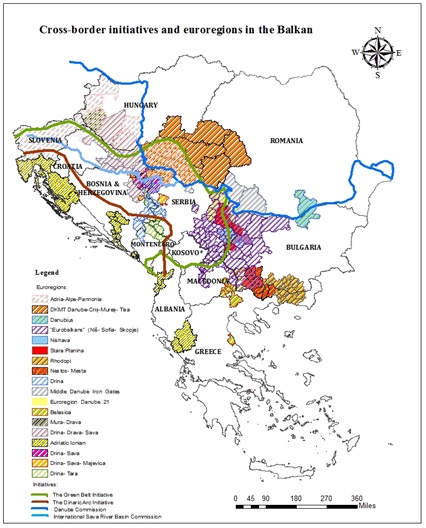
The study mentions the European Union’s regional policy, with particular reference to European territorial cooperation and cross-border cooperation programs. In a separate chapter, the study deals with cross-border structures and cooperation in the Balkans, and at the same times it maps their most important activities and projects. Unfortunately, only 7 of the 26 Euroregions in the Balkans can be considered as active on the basis of the methodology of the study (based on the activities of the last 12 months).
Currently, the entities of the Republic of Serbia cannot participate in EGTC and ECG as full members. Serbia ratified the Madrid Convention in the beginning of 2016; subsequently, there is no formal obstacle, on the basis of the EU regulation, that the entities of the EU Member States establish EGTC with the Serbian entities. Two possible solutions are described in the relevant chapter of this study:
Finally, the study proposes the establishment of ECGs with Serbian participation, and it specifies the details of the founding process.
Within the frames of the project, a proposal was developed for the EGTC legal harmonization process in Serbia. The proposal includes all the elements that may be relevant for the licensing process of the membership, or the rules regulating the conditions of participation of actors; provisions on establishment and organs, financial and economic activities, supervision and control of EGTC, or rules relating to the conditions of termination.
The legislative proposal defines the Serbian name of the European Grouping of Territorial Cooperation, its possible membership and the competent state authority, the Ministry which is responsible for registration.
The proposal was intended to get before to the Serbian Government after coordination with the competent ministries (Ministry of Public Administration and Local Self-Government, as well as Ministry of European Integration).
An international conference was organised with title, New opportunities of cross-border cooperation in the Balkans, on 20th of November, 2017. The conference was organised by the Balkans office of the Central European Service for Cross-Border Initiatives in Novi Sad, in the Parliament of the Autonomous Province of Vojvodina.
The aim of the international conference was to promote cross-border cooperation in Serbia that has been preparing for the EU accession, to call the attention of the Serbian decision-makers to the potentials of institutional cooperation and to encourage these decision-makers to adopt the necessary legislation.
The first panel was about those legal instruments that were established by the Council of Europe and by the institutions of the European Union. The Madrid Convention and its offered possibilities were mentioned. Then, good examples were presented by the concerned representatives and experts within the second panel. The final panel included the possibilities of Serbia relating to the development of border regions, which can be implemented through proven legal instruments.
It was expressed at the conference that it is important to pay attention to the fact that regions, municipalities and settlements can participate in cross-border regional cooperation.
Almost 150 people participated at the conference, especially the leaders and the representatives of municipalities, the representatives of the institutions in the neighbouring countries and different organizations were present. The conference was opened by István Pásztor, President of the Assembly of the Autonomous Province of Vojvodina. The speakers of the conference were the following ones: Hajnalka Juhász, Head of the Ministerial Cabinet, Ministry of Justice, Hungary; Slobodan Vukčević, Ambassador of the Ministry of Foreign Affairs of the Republic of Serbia; Tim Cartwright, Head of the Council of Europe Office in Belgrade; Martín Guillermo Ramírez, General Secretary of the Association of European Border Regions; Slaven Klobučar, EGTC Platform Coordinator of the Committee of the Regions; Patrícia Abaffy, Deputy Head of the Ministry of Foreign Affairs and Trade of Hungary; Yolanda Puiggrós Jiménez de Anta, Legal expert of Roca Junyent; Zoltán Bara, Director of the Slovakian Pons Danubii EGTC; Ana Nikolov, Directress of the AEBR Balkans and Director of Planning, CESCI Balkans; Sanda Šimić, Ministry of European Integration of the Republic of Serbia; Gyula Ocskay, Secretary General of the Central European Service for Cross-Border Initiatives (CESCI) and Ervin Erős, Director of the CESCI Balkans.
The objectives of the subproject were successfully achieved. The analytical study, exploring the Serbian legislation that ratified the Madrid Convention, was prepared, international conference was organized with 144 participants and the most relevant speakers, lecturers were present. A legislative proposal was elaborated for the adaptation of the EGTC Regulation in Serbia. The process of EGTC legal harmonization with the relevant Serbian authorities was launched.
The first cross-border association with a member entity from third country was established in the EU, namely Tisza EGTC, and the seat of this association is in Hungary. Out of the seven neighbouring countries, only Serbia is the only one, where the necessary legal background is not available in order to establish such associations. Although, Serbia ratified the Madrid Convention (as one of the last Member State of the Council of Europe) in early 2016, but drafting of the implementation rules are delayed.
Primarily, the subproject was intended to launch the development of the necessary legislative background in Serbia. Given that the legislative proposal was completed, the CESCI Balkans office will continue the coordination with the relevant ministries, namely with the Ministry of Public Administration and Local Self-Government, with the Ministry of European Integration and with the Ministry of Foreign Affairs in order to get the legislative proposal to the Serbian Government after final consultations. This process has been supported since the beginning by the Council of Europe and by the Department of Economic Development of Border Aras of the Hungarian Ministry of Foreign Affairs and Trade which is responsible for EGTCs. During 2018, the CESCI Balkans intends to put special emphasis on further steps of legislative harmonization in Serbia, as well as to promote the benefits of the EGTC. Subsequently, it launches a new initiative together with the Council of Europe in 2018, namely Leadership Academy for CBC.
Hungary was the first country that helped to establish the first association within the Union that has a non-EU member country, namely the Tisza EGTC (established by the Szabolcs-Szatmár-Bereg County Council, city of Kisvárda and the Zakarpattia Oblast). That means there is only Serbia, from the neighbouring seven countries, where the necessary legal background is not available to establish this kind of association. Serbia ratified the Framework Convention of Madrid in the early 2016 (among the last members of the Council of Europe); however, framing up of the implementation rules are delayed.
Hungarian experiences, the Hungarian model could significantly help to our southern neighbour in order to make the missing steps, thus allowing to build Serbian relationships of the already established Banat-Triplex Confinium and the EGTCs that will be established in the future.
Therefore, in the framework of the project we will initiate the development of the necessary legislative background and its delivery to the Serbian authorities. Implementation is helped that CESCI Balkans, as the initiative of our Association, was established in 2015 with headquarter in Novi Sad. CESCI Balkans performs its activities in professional relationship with the ministries in Belgrade.
Planned activities of the project element:
2. Healthcare integration
In the frames of the first legal accessibility project we managed to find numerous examples from Western Europe, where cross-border healthcare is provided – even without EU regulations. In all cases, the aim was to improve the quality of life of those living in the border regions. The quality of life of Hungarian citizens as well as those (often Hungarian-speaking) living on the other side of the border is greatly influenced by the often remote national level healthcare institution, instead of which there can be available service in the immediate vicinity, on the other side of the border. Moreover, this proximity can mean life in many cases. In the course of our research we explored how these services can be financed based on the relevant EU provisions, and it also became clear, what major legal and administrative obstacles are hindering the cross-border movement of emergency care vechicles. In the framework of this project we would like to carry forward the results of the first project and to develop a specific action plan in order to provide the legal-administrative conditions of cross-border emergency ambulance services and to promote institutional cooperation.
Content of the project component:
The study (Healthcare integration) prepared in the frames of this subproject can be downloaded by clocking on the picture below (in Hungarian).
Results of the subproject were summarized in the following points. Click on the text for details.
During the Legal Accessibility project, implemented in 2016, cross-border integration of health care services was identified as a priority topic, because numerous different questions emerged in the domain of this topic at the stakeholder workshops, and whose legal background is very complex and fair-reaching. The identified legal and administrative obstacles principally gathered around two topics, namely cross-border movement of patients and cross-border emergency activity. During the planning of the project in 2017, cross-border rescue activity received bigger attention. This happened because the professional agencies, which were addressed during the first project, were committed to the initiative. On the other side, the chosen topic seemed to be more manageable as the issue of cross-border movement of patients.
Aim of the subproject was to make a detailed analysis of the legal and administrative background of cross-border emergency activity with help of a professional working group, and we articulated proposals in order to terminate the existing obstacles. Hence, we wanted to achieve
We think that the subproject was successful, since it effectively triggered a debate between the domestic competent authorities and professional bodies, as well as legislative proposals and policy recommendations were drafted in order to eliminate the existing domestic obstacles.
Manager of the subproject was Enikő Hüse-Nyerges, a project manager. Working plan was prepared on 3rd of May.
Within the frame of the subproject, a study was prepared about the possibilities for organizing cross-border emergency rescue. The study included comprehensive, concrete legislative and policy proposals. The study was prepared between June and November, in 2017.
A working group with experts was set up in order to support the professional preparation of the study. The working group had 4 meetings during the duration of the project. Besides, taking into account the complex financing background of the issue, two experts were entrusted with the task to elaborate the related chapters. The relevant request was sent to the National Health Insurance Fund of Hungary on 13th of June, and we made a contract with two experts, recommended by Deputy Chief of Health, Zsolt Kiss. The two involved experts were Brigitta Paragh and Dr. László Kőrösi.
The following experts were involved within the work of the working group, except the CESCI members (Enikő Hüse-Nyerges, Dr. Norbert Jankai):
We invited other experts to participate within the activities of the working group from the Ministry of Human Capacities, Department of EU and International Health and Social Affairs, and the experts from the Ministry of Foreign Affairs and Trade, but they did not want to participate in the joint work.
The working group had 4 meetings altogether: on 6th of July, on 13th of September, on 11th of October and on 23rd of November.
At the first meeting of the working group, critical questions of legal harmonization were identified by a narrow circle of participants (National Ambulance Service, National Health Insurance Fund of Hungary) with the help of CESCI staff. These critical issues go far beyond the health and professional fields, thus, they affect also other domains, like the issue of transport, information communications and the language competence of participants in rescue. Besides, the participants, with the representative of the National Health Insurance Fund of Hungary, thoroughly analysed the domestic and EU aspects of the funding background of health rescue activities. The participants began to identify the EU and national legislation which play relevant role in each topic, as well as they surveyed the possibilities to overcome obstacles. At the end of the meeting, they agreed on further tasks and about the scheduling.
At the second meeting, the number of participants of the working group was extended by the representative of the National Healthcare Services Center, who raised several important questions and issues in the field of cross-border rescue activity. Majority of the questions were either fully or partially answered at the meeting, but in several cases there was a need for further information gathering, legal analysis or involvement of an expert from the sector. During the second part of the meeting, the participants began to clarify the methodological questions relating to the theoretical designation of border area health care and to identify the data and information that were required by the given task.
At the beginning of the third meeting, CESCI reported on the progress of the project in the domain of clarifying professional issues and data collection. They expressed that since the previous meeting, they managed to contact with the experts of Pro-M Zrt., who assure radio services for the National Ambulance Service, as well as they contacted the company that assures ambulances and personnel staff and who answered the previously emerged questions. Subsequently, the participants with the help two experts from the Ministry of Human Capacities, National Health Office of Health Care Administration, reviewed the possibilities of extending the permits in order to carry out foreign rescue activity and they formulated their final proposal. During the second half of the meeting, the questions that were previously unanswered were clarified and the methodology for the theoretical designation of border area health care was finalised, too.
Before the fourth meeting of the working group, the comprehensive study, involving the main results of the subproject, and the draft of the bilateral agreement on cross-border emergency rescue operations were completed. Both materials were shared with the experts of the working group before the meeting. The experts sent their questions and suggestions to the prepared documents before the meeting. At the meeting, the suggestions were reviewed separately and they clarified the content of the disputed parts. On the basis of this, CESCI staff finalised the above mentioned documents.
Debated at the meetings of the working groups, legal and administrative obstacles, which hinder ambulance vehicles to cross the borders in emergency case, affect numerous areas besides health care. In order to clarify these issues, we contacted the following actors with the aim to gather information.
For the spatial modelling of border areas, which was implemented within the framework of the study, an extensive data collection was needed. In order to obtain the data, we contacted the following organizations and institutions with the help of the working group members:
The starting point was the analysis that was implemented by CESCI in 2016, whose main findings were the followings.
Contribution of the working group to the final documents seemed to be very fruitful and useful, because the participating members had knowledge about the regulatory background of their own field of expertise and it significantly contributed to the exploration of the full range of existing problems and obstacles, and to the formulation of solution proposals, as well as to develop of the required methodology, to obtain the data that was needed for spatial modelling of border areas.
Besides, the preliminary concept of the CESCI was partly modified on the advice of the participating experts. According to the original idea, we wanted to take steps to enable sharing of cross-border hospital emergency services. This would mean in practice that in case of emergency rescue, the patient would not be necessarily transported to the nearest domestic hospital, but the patient would be transported to the nearest hospital, where he/she can receive appropriate health care service, even in the case when the hospital is located beyond the border. In the case of emergency care, there are no legal and funding barriers in this respect; however, equal opportunities of the injured would be violated. In order to avoid this, the experts advised that regardless of whether domestic or a health care rescue unit beyond the border provides a health care for the injured person, it should always be considered whether the patient would receive higher standard and/or faster patient care in the state of action or in a neighbouring state. However, opening of borders in this specific issue would generate capacity and financial risks because of the expected increase in emergency cases. The volume of the expected increase is not known, yet. Therefore, the problem goes far beyond the scope of this project and study; consequently, we only dealt tangentially with this specific topic.
The expert study can be divided into three major parts:
In the first part of the document, we provide a brief overview about the justification of the cross-border movement of ambulances, as well as we introduce the related European Union processes. Then, we give a theoretical introduction into the basic elements of the emergency care services, and we describe the domestic emergency system and the emergency system of the neighbouring states, taking particular attention to factors that affect cross-border cooperation.
In the second, most prominent part of the document we analysed the conditions of implementing cross-border emergency rescue through thematic approach, then we formulated legal and policy recommendations. The following topics were processed in this chapter:
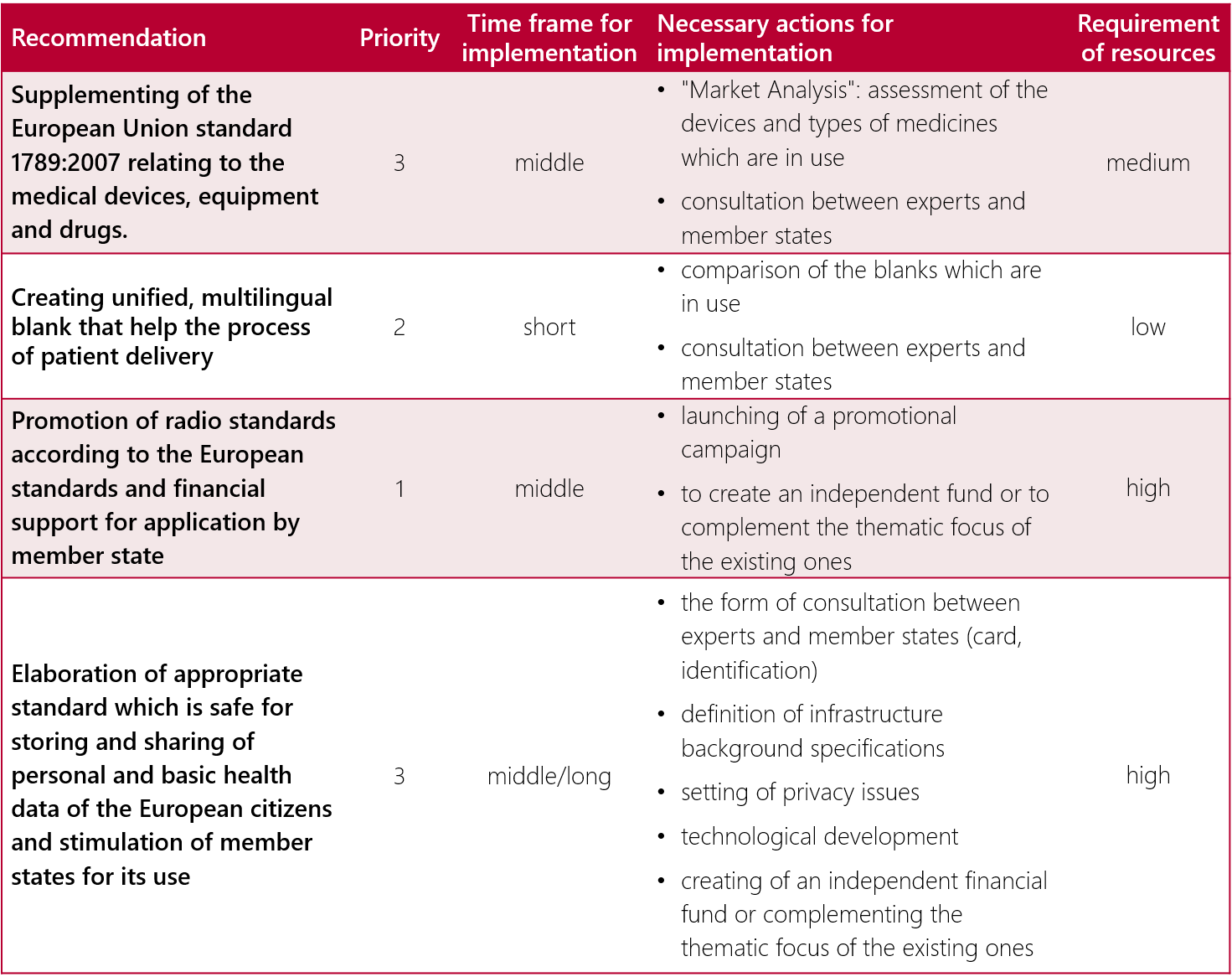
The formulated legal proposals and policy recommendations in the document were separately summarized on European, bilateral and national level, we reviewed the priorities of the recommendations, time horizon for implementation and we formulated a series of actions that aimed practical implementation.
A) We made a proposal at the European level to define the concept of cross-border rescue, mutual acceptance of operational and distinguishing signs beyond the border (similar to the Directive No. 2011/24). The applicability of the Directive would be based on the condition that the involved member states voluntarily settle the terms and conditions of cross-border cooperation.
B) We recommend to regulate the following aspects of cross-border rescue through bilateral agreement:
C) Depending on the new provisions at European and bilateral level, in some cases it is necessary to implement amendments within the related domestic legislation. The new proposed legislations will affect the content of the following domestic provisions:
D) Policy recommendations, priority of the recommendations, or the necessary action steps, their time horizon and costs for implementation
It became clear during the project that modification of the legal instruments alone is not enough in order to establish the conditions for cross-border emergency rescue activity, hence formulation of policy recommendations at European and/or bilateral level is necessary for each concerned topic.
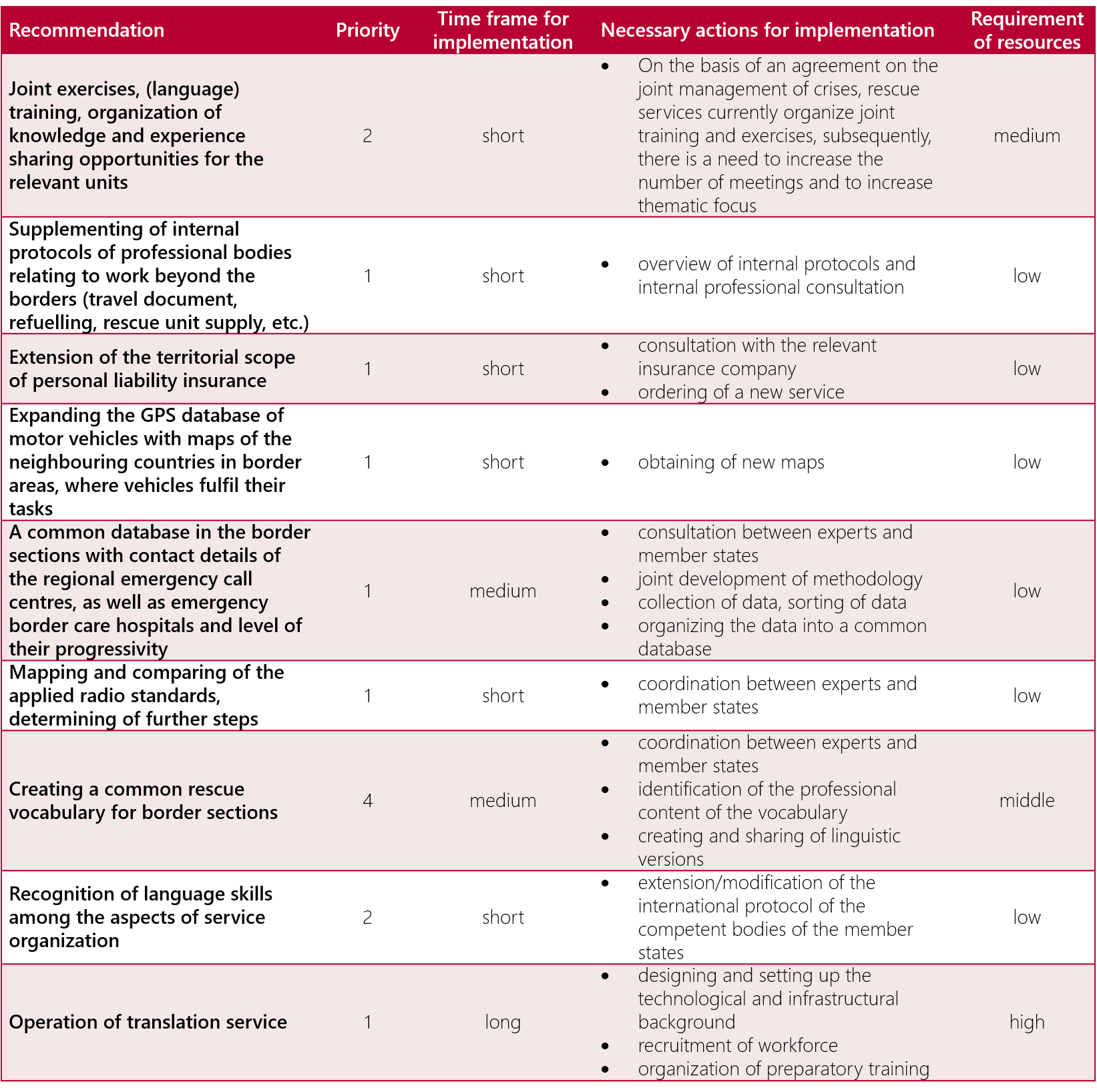
In the third part of the study, we modelled and analysed the territorial aspects and potentials of cross-border rescue and emergency hospital care at the theoretical level.
This and elimination of all the other obstacles clearly require not only the effective and high-level cross-border cooperation among wide range of professional organizations, but there is a need for co-operation and problem-solving intention at high political level between neighbouring member states; however, we currently experience shortcomings in this domain.
Based on the formulated proposals and the identified difficulties, the following continuation option is conceivable.
In the first phase of the project we identified the most important actors involved in the issue of cross-border emergency services and invited them to participate in the project as well as in the working group. Representatives were sent to the working group from The National Ambulance Service (NAS; Országos Mentőszolgálat or OMSZ in Hungarian), the National Institute of Health Insurance Fund Management (Hungarian acronym: NEAK), the National Healthcare Service Center (ÁEEK), and the Ministry of Human Capacities, Office of the Chief Medical Officer (EMMI).
In the framework of the first working group meeting, a smaller group of the participants (OMSZ, NEAK) assisted by the employees of CESCI identified the issues that are critical in terms of legal harmonisation. These significantly go beyond the medical-professional sector, covering inter alia transport, communication and the language competence of those taking part in emergency services. In addition, with the representative of NEAK, they reviewed comprehensively the domestic and EU aspects of the emergency service’s funding. Those present began to identify EU and national laws relevant to specific subjects, and to review options with the aim of surmounting obstacles. At the end of the meeting they agreed on the further actions and their scheduling.
The second working group meeting took place with the former participants, together with the employee of the ÁEEK, who phrased several questions covering cross-border emergency services in detail, but important in terms of practical implementation: In the case of services performed abroad, how should the waybill be completed? What kind of protection are ambulance services provided with abroad? , etc. The majority of the questions was partly or fully answered in the course of the meeting, however there were cases that required further gathering of information, review of legislation or the involvement of sectoral experts. In the second half of the meeting, participants began to clarify methodological issues necessary to the designation of the health service zones along the borders and to identify the requirements for data and information, necessary for the fulfilment of the task.
The third working group meeting was opened by the employees of CESCI, who reported on the progress of the project as regards the clarification of technical matters and data collection. They said, that during the period since the previous meeting, they managed to contact the experts of Pro-M Zrt., the provider of radio communication for OMSZ, as well as companies providing ambulances and the staff with insurance, who answered the questions raised previously. Subsequently, together with two employees of the Ministry of Human Capacities, Office of the Chief Medical Officer (EMMI), they reviewed the possibilities of extending the authorisation and permission necessary for performing emergency services abroad, and outlined their final proposals to that effect. In the second half of the meeting, the questions that formerly remained unanswered were clarified and the methodology of designating health service zones along the borders was finalised.
The draft version of the overall study and the proposal on the bilateral agreement, as the main outputs of the project were delivered and sent to the members of the working group in the middle of November. The experts reviewed the documents and shares their questions and comments before the forth working group meeting. During the meeting these questions and remarks were discussed and clarified one by one. Following the meeting, the experts of CESCI have modified the concerned documents accordingly.
Legal and administrative obstacles discussed at the meetings, that are hindering the border-crossing of ambulances in cases of emergency concern several fields beside healthcare, including transport, communication and other administrative matters. In order to clarify the related questions, we contacted the following actors:
To obtain the necessary data for the designation of health service zones along the borders we contacted the following organizations and institutions:
3. Local products, short supply chains
The issue of local products is strictly regulated throughout Europe and it is maintained in the competences of the member states. The association of Kislépték (Association of Interest Representatives of the Manufacturers and Service Providers) successfully prepared Hungarian legislation in the area of local producers and short supply chains in the last years.
People who live in the border regions are in a disadvantageous situation because of the current territorial restrictions, thus they can acquire healthy local products from a much smaller area than those people, who live in the inner parts of the country. Within the frame of the current project, we would like to put together a proposal that is able to manage this discrimination. Subsequently, we involve the experts from the Kislépték into the legislative preparatory work.
Content of the project element:
The study (Local products) prepared in the frames of this subproject can be downloaded by clicking on the picture below (in Hungarian).
During the 2016 project, Legal Accessibility, the issue of cross-border trade of local products was identified as a priority topic, since this question, which has a complex legal background, appeared at numerous stakeholder-workshops. Subsequently, during the 2017 project design, the topic of local products and cross-border supply chains received special emphasis.
The aim of the subproject was to reveal the legal background of the specific issue in details and to formulate suggestions in order to remove the existing obstacles. Revealing of the legal background and formulation of suggestions took place with the help of external experts and with the help of a working group on the other hand. We wanted to achieve
Although, the subproject did not bring the expected results, thus we had to leave the idea to harmonize legislation, and we formulated alternative suggestions in order to meet the original objectives.
Leader of the subproject was the Secretary General, Gyula Ocskay, the working plan was completed on 10th of May.
In the framework of this subproject, a comprehensive study was written about the legal and policy context of local products in cross-border trade. The study was developed between July and December 2017.
In order to involve the appropriate experts, CESCI requested a tender from three legal experts on 20th of June 2017. The tender offers were received on 23rd of June. On 26th of June, the committee, set up by the Association, accepted the offer that was given by Dr. Ágnes Major. The chosen service provider involved two other experts into the study, namely Andrea Szabadkai, the Director of the Kislépték Egyesület (Kisléptékű Termékelőállítók és Szolgáltatók Országos Érdekképviseletének Egyesülete; in English: National Association of Interest Representations for Small-scale producers and service providers), as well as János Horváth, a tax expert, who is the board member of the Association. The three member team prepared the first version of the study by the end of September, then the study was finalised by the end of November on the basis of the expert group´s comments. Subsequently, CESCI did further amendments in the document, thus achieving the final form of the study by the end of the year.
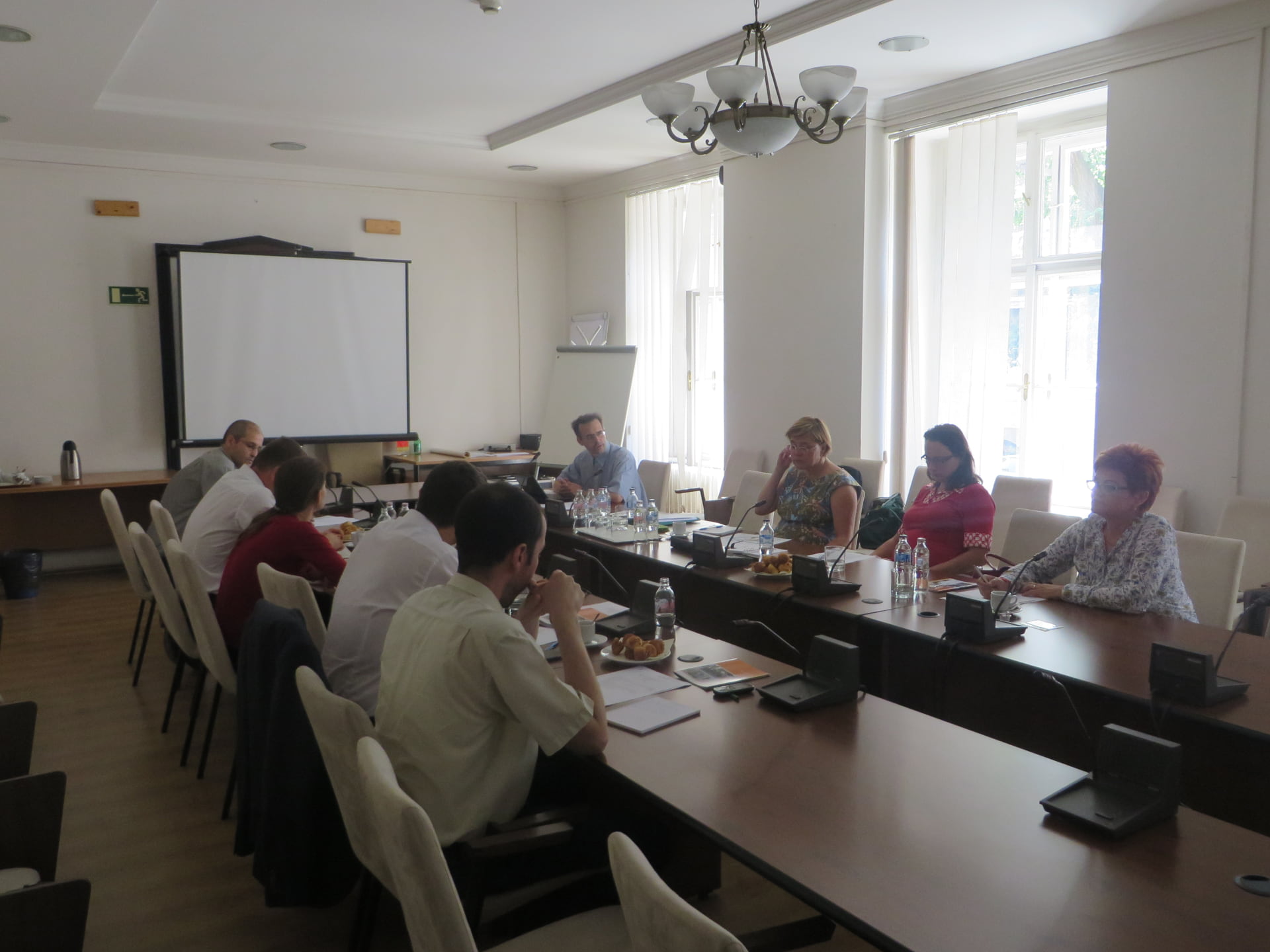
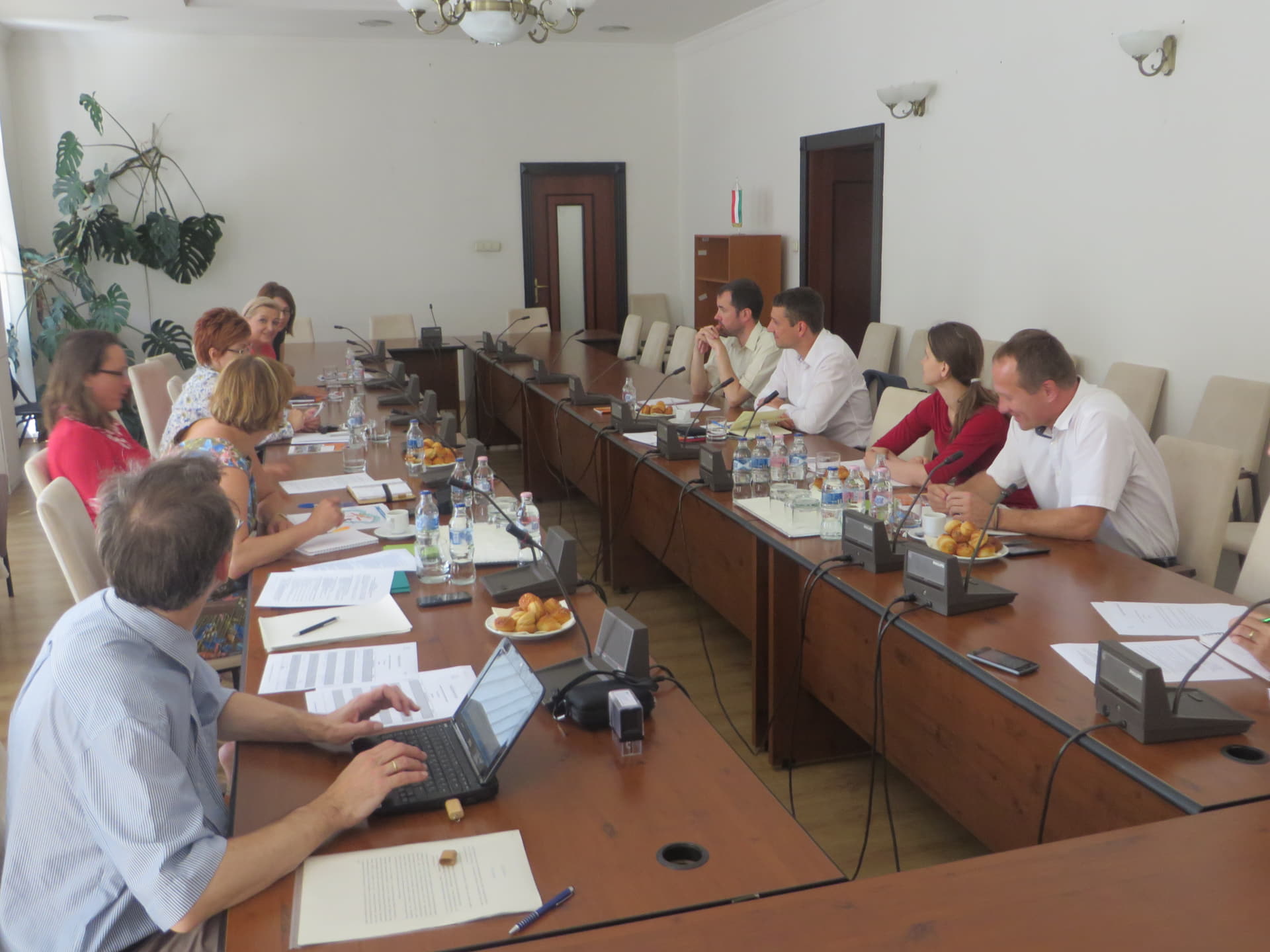
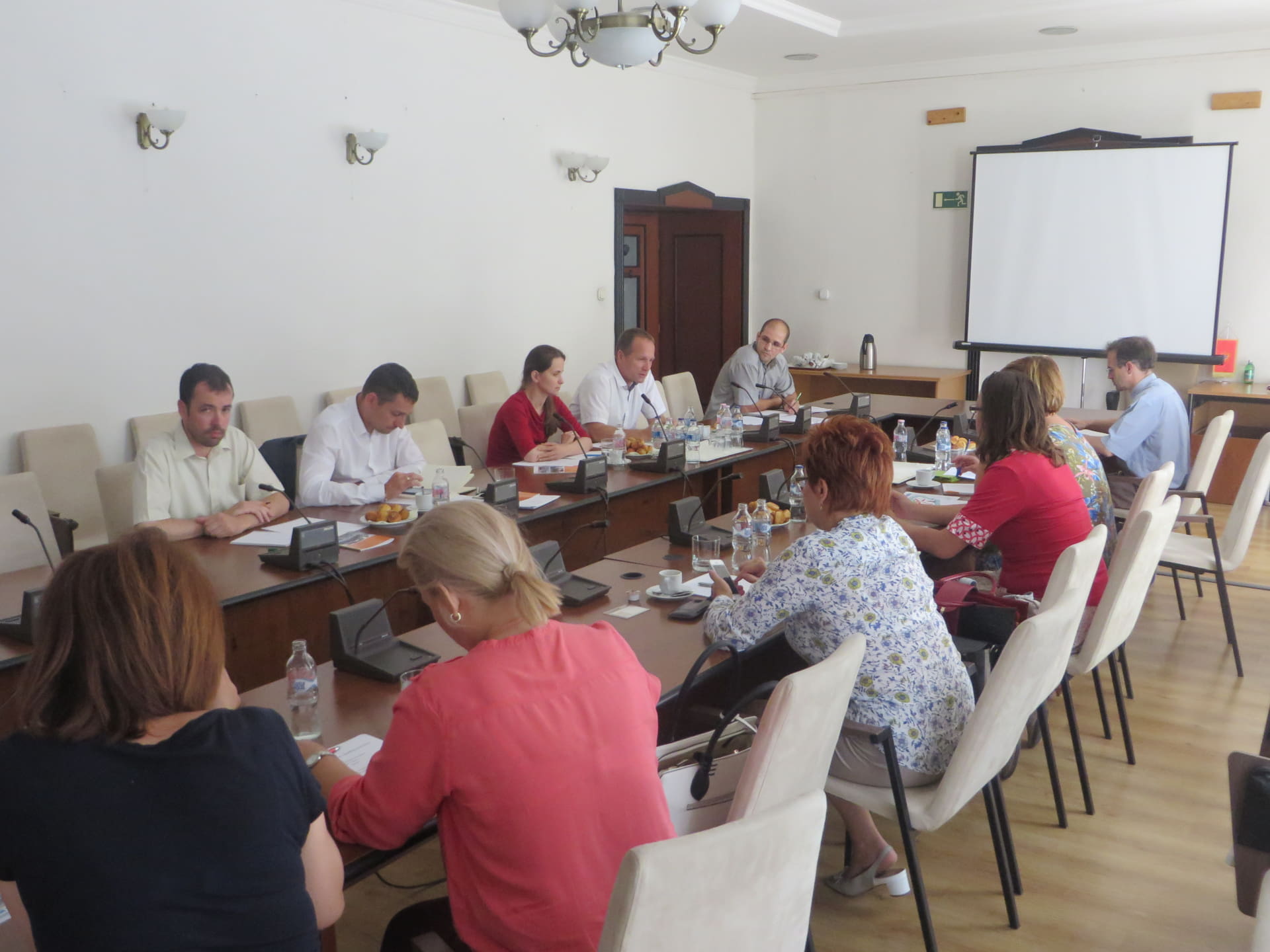
An expert team was set up to support the preparation of the study. The first meeting of the team took place in the office of CESCI on 20th of June, 2017. At this meeting, Dr. Márta Torda, who is the Head of the General Department of International and the Carpathian Basin Relations at the Ministry of Agriculture, offered that she will announce the initiative within the Ministry and among the partner organizations, and she expressed that they provide space for further meetings of the working group. Since then, the meetings took place in the building of the Ministry of Agriculture, located on the Kossuth Square.
The following experts were involved within the work of the working group, except the appointed experts and the CESCI members (Dr. Norbert Jankai, Gyula Ocskay):
The working group had four meetings altogether: on 20th of June, 4th of July, 2nd of October and 28th of November.
At the first meeting of the group, experts were identified who should be involved in the work. Beforehand, CESCI prepared a summary about the results of the project in the previous year in order to summarize the issue.
At the second meeting (the chosen expert prepared another preparatory material), various aspects of the necessary legislative and policy environment were investigated, and the theoretical framework of the study was accepted. Moreover, a decision was made at the meeting to launch a questionnaire, because the present members of the working group articulated their fears that changes in the contemporary regulatory regime might be disadvantageous for the producers in the border area. Thus, the experts thought that it is important to ask the opinion of the local producers about the draft, too. The questionnaire was compiled by the experts. Publication of the questionnaire, as well as processing of the results (including the digitalization of the hand-filled questionnaires) were undertaken by CESCI. The link of the questionnaire was disseminated by the working group experts through their own professional networks.
On 2nd of October, the first draft of the study was discussed. Members of the working group formulated minimal proposals for modification. Beside of the study, the results of the questionnaire were also discussed. The low number of filled questionnaires resulted in a decision that the questionnaires were extended with the help of the Hungarian Chamber of Agriculture and we started to accept answers in paper version, too.
On 28th of November, the finalised form of the study, the questionnaire results were presented and the outcomes were acknowledged by the members.
The questionnaire activity was implemented between 3rd of August and 20th of November. Two questionnaires were prepared: one questionnaire identified the consumers, while the second questionnaire identified the producers as the main objects of the questionnaire. The first deadline was the end of September. Until the end of September, 94 consumer questionnaires and 34 producer questionnaires were received. However, the number of filled questionnaires was significantly increased by the help of the Hungarian Chamber of Agriculture, and 452 consumer questionnaires and 341 producer questionnaires were processed until 20th of November. The analysis of the results were included in the final version of the study which was completed in December.
The starting point was represented by the study of CESCI from 2016. The main arguments were the followings:
(1) The constitutional rights of those people who live in border regions are violated because of the current Hungarian legislation. The Fundamental Law of Hungary declares that
“Article XX, paragraph (1) Everyone shall have the right to physical and mental health.
(2) Hungary shall promote the effective application of the right referred to in Paragraph (1) by an agriculture free of genetically modified organisms, by ensuring access to healthy food and drinking water, by organising safety at work and healthcare provision, by supporting sports and regular physical exercise, as well as by ensuring the protection of the environment.” (highlighted by us – the editor)
At the same time, the Government Decree 55/2009. (III. 13.) on fairs, markets and shopping centres identifies the local producer market in a way that only those Hungarian small producers can sell their own products who are from the given county, or in case that the local market is located in the peripheral part of the county, then the local producers may arrive from 40 km area. (Budapest is an exception, any Hungarian small-scale producer can sell his/her products here because of its easy accession). The territorial discrimination is embodied by the fact that in case of a market in the city of Szentes, small producers may arrive from Csongrád County and from a further 40 km radius area, thus small producers may arrive from Jász-Nagykun-Szolnok, Békés and Bács-Kiskun counties. Nevertheless, in case of Esztergom there is only a half circle area from where the producers may arrive, or the case of Sopron is even narrower. Argumentation of CESCI was built on the notion that if the citizens of the latter cities cannot access to healthy food from a similar area, their constitutional rights are violated.
(2) The above mentioned discrimination might be overcome if the 40 km territorial scope does not end at the border, but the local producers may arrive to the Hungarian markets from the areas beyond the borders. The European Union’s legal order which guarantees the free movement of persons, services and goods could be the basis for this. At the same time, the actual legal background assures that the domain of local products and the regulation of local producers’ sales, including food safety and tax issues, are situated within the level of national power. Subsequently, if the local producers want to sell their products in Hungary the contemporary legal constellation creates a particularly disadvantageous situation for the small producers in the neighbouring EU countries. Because of administrative and logistical burden, they can offer and sell their products with a much higher price in comparison with the Hungarian producers and this generates that their appearance is irrational from economic point of view on the Hungarian side.
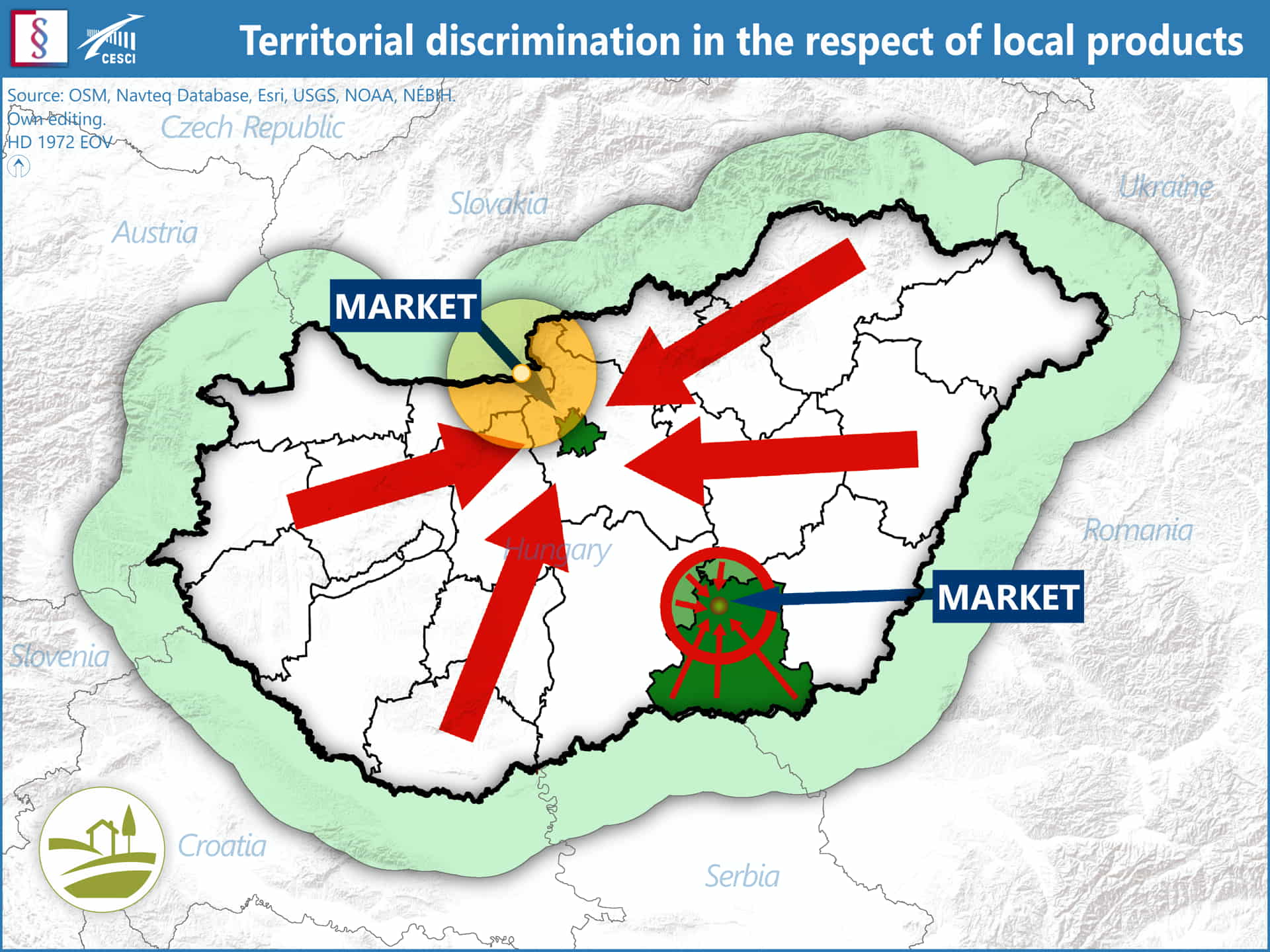
Subsequently, CESCI proposed legislative changes within the text of the existing regulations, as well as it made a proposal for a bilateral agreement that might enable the Hungarian Government and the governments of the neighbouring countries to agree on mutual recognition of cross-border sales of local producers.
On the basis of the initiative of the expert group, we asked the opinions of the Hungarian consumers and the small producers of the counties, located near to the borders, about their opinion that local producers beyond the border could sell their products on the domestic markets which are located near to the borders.
The consumers’ questionnaire was filled in by 464 people, while we could not include 12 filled questionnaires since those questionnaires were filled either by a private person beyond the border or by a person who does not live in a county that is located near to the border (e.g. Tolna). Most respondents arrived from the counties of Békés and Komárom-Esztergom. The respondents of these two counties accounted for three quarter of all the respondents.
The distribution of the answers to each question is visible in the following table below.
Results of the consumers’ questionnaire research
| Question | Supporter[1] | Against | Refrained, without answer | |
| How would you be affected if the foreign local producers, from a range of 40 km, could arrive to Hungary with the aim to sell their own produced products on the market near to the borders, events? | I would be happy because more products enrich the assortment of products and it attracts more consumers. | 68% | 32% | 0% |
| If the seller is a registered producer, I would be happy. | 74% | 26% | 0% | |
| I would be happy if there could be a label, description about the product in Hungarian language (or the seller speaks Hungarian language). | 80% | 19% | 1% | |
| I trust the market organizer that he allows to sell only those producers, who do not pose any risk to the consumers. | 76% | 23% | 1% | |
| I am not happy, I am afraid of food safety risks. | 59% | 40% | 1% | |
| I am not happy, it generates a concurrency for the domestic producers. | 45% | 54% | 1% | |
| I could accept it in the case if the Hungarian producers could sell in neighbouring countries, too. | 73% | 26% | 1% | |
The results of the questionnaire show that the consumers do not want to experience that the producers beyond the border could generate a market concurrency for the Hungarian producers. At the same time, they could accept their appearance with certain conditions – for example on the basis of mutuality.
The producers’ questionnaire was filled in by 355 people, but we could not include 14 filled questionnaires because of the above mentioned reasons. Most of the respondents arrived from the counties of Békés and Komárom-Esztergom, too.
Results of the producers’ questionnaire research
| Question | Supporter | Against | Refrained, without answer | |
| How would you be affected if the foreign local producers, from a range of 40 km, could arrive to Hungary with the aim to sell their own produced products on the market near to the borders, events? | I would be happy because more products enrich the range of products and it attracts more consumers. | 47% | 50% | 3% |
| It does not disturb me, I do not feel it as a concurrency. | 47% | 50% | 3% | |
| I trust the market organizer that he allows to sell only those producers whose products do not mean concurrency. | 54% | 44% | 2% | |
| I accept it, if the seller complies the quantity for the small producers. | 66% | 31% | 3% | |
| I accept it, if the products are taxed with the same measures as my products. | 66% | 30% | 4% | |
| I accept it, if I can enter (on the basis of reciprocity) to their market/event. | 68% | 29% | 3% | |
| It is a concurrency, producers beyond the border should not come to the markets, events located near to the border. | 44% | 53% | 3% | |
The fear of competition is stronger among the producers than among the consumers, but it is fully understandable. This is the reason that most of the questions proved to be significantly divisive: the supporters and the opponents of the relief appeared in half and half proportions. However, the producers might accept the proposal easier if these changes do not generate any competitive advantage for the sellers beyond the borders. It is especially true if the liberalisation are based on mutuality with the neighbouring countries.
The results of the questionnaire show that the consumers and the producers are more likely to support liberalization than to reject it – mainly, if the liberalisation is based on reciprocity.


The contribution of the expert working group to the final document proved to be extremely useful, namely the experts significantly influenced the formulation of the preparatory concept through the expertise of their professional specialization’s regulatory background.
It can be comprehensively stated that the expert working group criticized the original concept at numerous points, but this criticism supported the development of a more pragmatic proposal.
The expert study can be divided into three major parts.
The authors sum up the theoretical frameworks of cross-border local product sales in the first part. They address the latest developments in the field of legal harmonization, the DG Regio Cross-Border Review project, as well as the statement of the Commission on the basis of the project and its expected consequences. The launched program on the EU level aims to remove the existing legal-administrative obstacles, the study also draws attention to other initiatives at the level of bigger region and at national level. Besides, it emphasizes the country-specific recommendation on the reduction of economic bureaucracy in the Hungarian Partnership Agreement.
The authors present the latest developments on local products in the EU policy and they draw attention to cross-border aspects. They mention several attempts, when the EU members took initiatives to make cross-border integration of local markets or to facilitate the possibilities of the small producers to sell their products beyond the borders. Although, these experiments have not achieved any spectacular success and most of them failed.
Finally, they underline the specificity of the Central European region, emphasizing that opening of the borders, structured in the 20th century and which were formerly impermeable, generate that old and organically related territorial ties reoccur and they create opportunity for development of economic cooperation.
The second part introduces the activities that were implemented within the frame of the subproject: results of CESCI project from 2016, the questionnaire process and the work of the working group (their description see above).
Finally, the third part includes the comprehensive legal analysis that deduces the need for a harmonization from the Union’s pillar of free movement of goods and services. From this point of view, the authors see the Directive 2006/123/EC on services in the internal market as the starting point. The Directive assesses that the provider who arrives from the area that is beyond the border (with exception of so called “regulated professions”, identified within the Directive) does not need any specific permission, or he does not have any separate obligation for registration: the provider can be obliged to obtain those permissions, as well as registration, which are obliged for the domestic provider, too. On the basis of the prohibition of discrimination, no specific restrictions could be imposed on a producer who arrives beyond the border.
“Member States may obstruct, limit the right to provide services on their own territory only on the basis of the principles of necessity and proportionality, namely they may describe only such – proportional – eligibility criteria that may be necessary due to public policy, public security, public health, the protection of the environment and the protection of the consumer” (ed. English translation by the authors) [2]
The problem is that selling of food beyond the borders always raise food hygiene question, thus the issue of public health risk – this is true even in a case of short supply chain, in our case it is a small volume sale to the end user.
The Member States of the European Union have to follow the Community law in the domain of food safety and food hygiene, where the issue of traceability is the most important aspect. As a rule of thumb, it is acceptable that those products whose production is in agreement with the relevant EU regulations are considered as safe and they can be placed on the market without restriction – theoretically, they can be introduced at the market also beyond the border. This measure requires that the producer registers himself in his own country, thus ensuring a control mechanism for the authorities. The EU Regulation (EC) No 853/2004[3] reflects the possibility of potential cross-border sales.
EU food law was incorporated into the Hungarian legislation by the Act XLVI of 2008 on the food chain and the official supervision. According to the law, safety of food is a responsible of the Hungarian distributor.
For the traceability of the liability system, the Hungarian small scale producer has to register himself that he is engaged in commercial activity. It is important to underline that this has to be done in Hungarian language and the registration number has to be indicated. However, the small producer beyond the border may not necessarily speak Hungarian language and his registration number is not compatible with the Hungarian system. These problems can be handled with small modifications (e.g. official blanks are accessible in the language of the neighbouring countries, as well as establishing of interoperability with the foreign registration databases).
At the same time, according to the Hungarian Commercial Law, only those local small-scale producers can sell on a local market who comply with the Hungarian law. In the case of producers from the EU Member States, the legislation allows the sale of goods if the producers comply with the Hungarian tax and accounting rules and if they fulfilled the required obligations for registration. That means that they have to apply for a Hungarian tax number, but this automatically includes the producer, because of his foreign establishment (“intra-community acquisition of goods”), within the tax system. The Hungarian producers can apply for a VAT exemption under 8 million HUF annual turnover, but this exemption is not available for the foreign producers. The Hungarian VAT rate is the highest in the EU (27%), then the foreign producers, even under the same conditions, can sell their products with 27% higher prices in Hungary than their economic competitors. Moreover, the inclusion in the VAT circle obligation entails much greater administrative burden. In the case of a foreign seller, the issuance of internal invoice is also mandatory – all this has to be done in Hungarian language.
Even bigger problem is generated by the regulations that aim to “whiten” the Hungarian economy:
According to the Decree No. 3/2010 (VII. 5.), notification obligation appears to the market organizer even in case of selling 2 bottles of foreign jams (in many cases the notification obligation has to happen 2-3 days in advance, namely to notify who will sold what kind of products in the market). In the case of goods that exceed 500 kg or they have a value above 1 million HUF, it is necessary to register the risky products (including food) in the Electronic Public Road Trade Control System. The consignee is obliged to register (it is the market organizer in our case).
It can be seen from the above described conditions that sale of foreign local products in Hungary includes such administrative burden which directly questions whether it is worth to legally bring small amounts of locally produced food or not. The contemporary legislation is more favourable for the illegal moves, because the volume of the sold food is negligible in comparison to the administrative burden. This argument was repeated several times at the debates of the working group.
Because of the above described difficulties, the authors of the study do not recommend amendment of the legislation. Instead, the following suggestions were formulated:
“A market, where a small-scale producer, or a producer who is registered in a bordering EU country, within a county on the basis of location of the market, or in a 40 km area from the market, or in the case of a market based in Budapest, producers, operating anywhere in the country, of agricultural and food products may sell their products.” (ed. English translation by the authors)
As it is visible, the study rather contains policy and practical advices and suggestions instead of legal ones. However, a half-year work cannot be regarded as unsuccessful, since every aspect of the given question was analysed with sufficient depth.
Footnotes
[1] Supporters are those respondents who expressed their opinion to the given question that they could accept the appearence of producers beyond the borders at domestic markets.
[2] Szabadkai Andrea – dr. Major Ágnes – Horváth János – CESCI (2017): Határon átnyúló helyitermék-értékesítés. Tanulmány és jogalkotói javaslatok, 36.
[3] Regulation (EC) No 853/2004 of the European Parliament and of the Council of 29 April 2004 laying down specific hygiene rules for on the hygiene of foodstuffs down specific hygiene rules for food of animal origin
[4] Szabadkai et alii: i.m. 55.
On the basis of the formulated proposals and the identified difficulties, the following continuation option is feasible.
An expert working group was set up in order to reveal the legal background and to formulate suggestions on the issue of cross-border trade of local products. The following experts were involved within the work of the working group, except the appointed experts and CESCI members (Dr. Norbert Jankai, Gyula Ocskay):
The working group had four meetings altogether: on 20th of June, 4th of July, 2nd of October and 28th of November.
Gyula Ocskay welcomed the participants on behalf of CESCI and he thanked for accepting the invitation. He briefly introduced the Association, then he gave an overview of the project with title Legal Accessibility, implemented last year, and about its results on cross-border trade of local products.
On the basis of the background material, which was posted in advance, Márta Torda, Head of General Department, indicated that they would like to cooperate in discussion of the issue with CESCI. On the one side, she offered that the meetings could be held in the building of the Ministry of Agriculture, on the other side she promised a help that the relevant general departments of the Ministry will also represent themselves at the meetings. She also proposed a list of additional invitees, like the experts of NÉBIH (in English: The National Food Chain Safety Office), Prime Ministers’ Office, and the Hungarian Chamber of Agriculture. She promised contacts, too.
Gyula Ocskay thanked for the offered help and he briefly introduced the project schedules and indicators of the Legal Accessibility project in 2017. He mentioned that three experts were invited to offer a tender for legal advice.
The participants agreed that the next meeting of the extended working group will be held on 4th of July in the building of the Ministry.
The following participants were present:
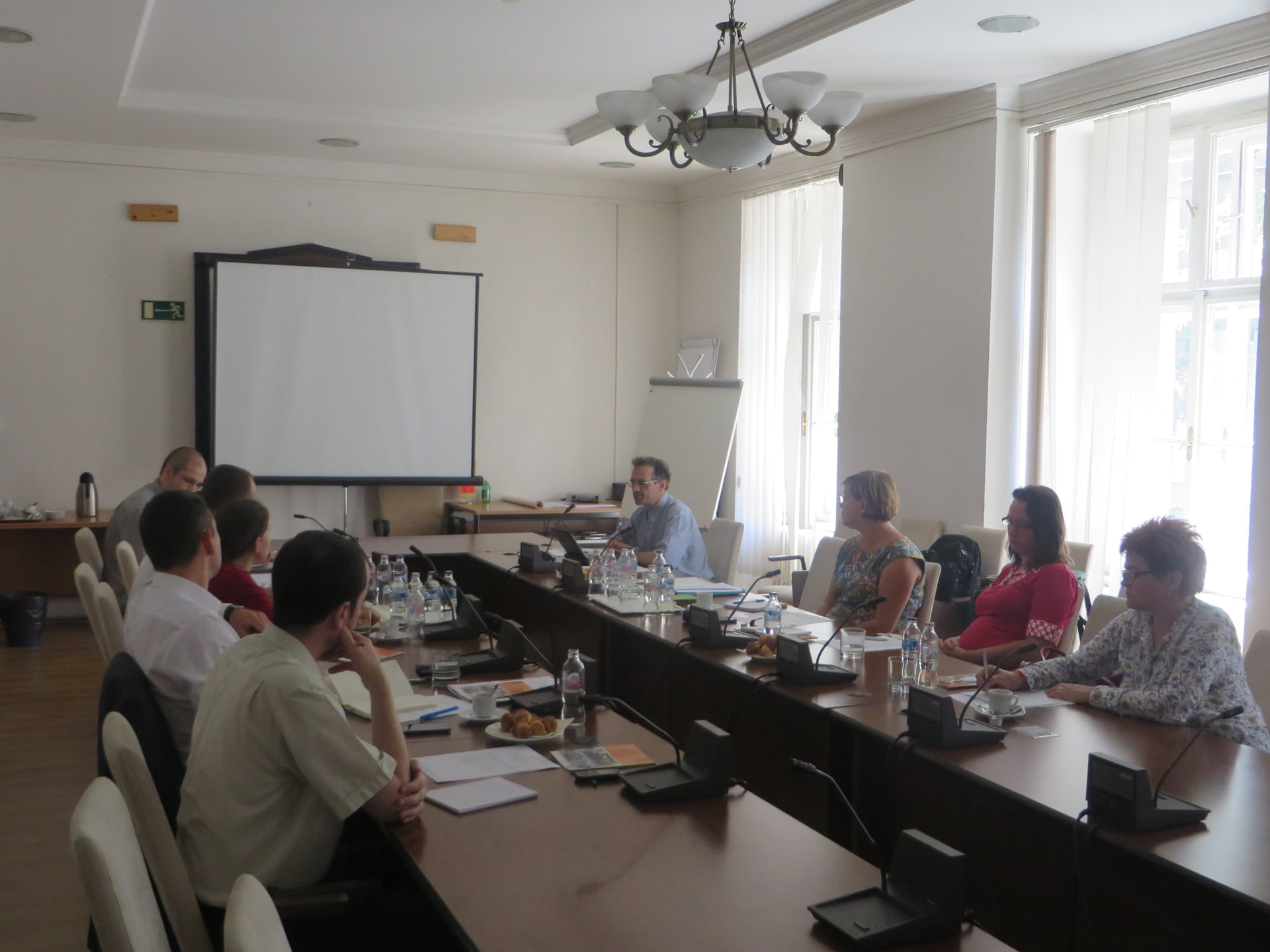
Szabolcs Hancsók welcomed the participants at the beginning of the meeting, then Gyula Ocskay introduced the Legal Accessibility project, whose aim is to propose legal and policy recommendations in order to reduce the dividing effects of the borders, thus improving the living conditions of people who live in border areas. As it was mentioned at the meeting, several attempts have been made in order to address the problem of cross-border trade of local products, but the attempts were unsuccessful, so far.
Subsequently, the following topics were discussed by the participants:
Regulating environment: the problem is that most of the countries have different legislative regulation of (small-scale) producers. The definition itself is also different in most of the countries, hence it is appropriate to avoid using the term ‘small-scale producer’, rather the focus should be taken on ‘selling to a direct end user’. For example, it is known that the Slovak legislation is much stricter than the Hungarian one. The regulative environment differs from country to country and this makes the harmonization harder, i.e. there is a need to find the way of harmonization with at least 5 EU neighbouring member states. The easiest way would be to make a legislation on the EU level. At the same time, a training system, Better Food, exists in the EU, and the Flexibility training showed that there are different ideas for small-scale producers in each country.
Regulatory flexibility: the basis for applying the principle is the local tradition, traditional raw materials and the existence of special producing processes and their respect (small scale sales!). Transport of local food across borders questions this principle. Selling of local products is also based on customer trust. Although, this is not denied by the cross-border sale.
Food safety: the risk is embodied by the track of the food which comes from the area beyond the border is unable to control. It is not possible to exactly know whether the product was produced by the selling person or not. The Slovak produces are registered and controlled by the domestic authorities. There is no possibility to register the foreign producer in the Hungarian register. There would be a need to have an access to each other’s database. There is a need to ascertain whether the given producer is entitled to sell his products and whether the given product is not harmful to health (traceability).
Healthy food: following the request of the Minister, a working group has been recently established for this topic. However, the group has failed to define what can be considered to healthy food. Consequently, it is not appropriate to refer on this; although, the Constitution contains the right to have access to healthy foods. The reference is weakened by the fact that the article XX mentions the basic rights, but concrete measures cannot be deduced from it. The use of the term also requires caution in the sense that healthy food cannot be produced only by a small-scale producer.
Territoriality / extra territoriality: administrative barrier of the border creates discrimination – as every national legislation do. Nevertheless, the Constitution of Hungary and other laws (e.g. law on citizenship) apply extraterritorial provisions. The possible solution cannot include any national discrimination, but the Hungarian citizenship cannot be a criterion either. The regulation of the local producer market should be amended, and the Ministry of National Economy will address it, too.
Concurrency: appearance of sellers from the area beyond the border represent a concurrency for the domestic producers. It is a fact that many small-scale local markets have developed in recent years. Many of them have few vendors and expansion of the potential vendors may improve the situation. At the same time, the unilateral amendment of the Hungarian legislation, without accepting mutuality, could generate disadvantage for the Hungarian producers. Important aspect is the question of regularity and quantity of selling – especially, for the protection of the Hungarian producers. An example of foreign selling exists, e.g. somebody from the Board Member of the Kislépték (in English: National Association of Interest Representations for Small-scale producers and service providers) sells products in Austria. If selling activity takes place, it has to be done with the same conditions as the Hungarian producers do it.
 |
 |
 |
 |
The following participants were present:
Szabolcs Hancsók welcomed the participants at the beginning of the meeting on behalf of the Ministry of Agriculture, which assured space for the meeting, and he apologised that he had to leave the meeting. Then, Gyula Ocskay presented the prepared study, as well as the results of the questionnaire.
GENERAL NOTIONS
Each Member State has the power to determine the content of the “local and marginal” production. Food hygiene rules are equally binding for everyone, there is no difference here, but the conditions of local producer are fully based on local traditions. This will result that the process of harmonisation will be very hard with the neighbouring countries, because separate agreements will be needed with each government.
The same conditions need to be provided for the Hungarian small-scale producers in the areas beyond the border. However, production costs are not the same on both sides of the border. How can it be ensured that the Hungarian small-scale producers are not in disadvantaged position?
It is important that the analysis should not generate any impressions that we do not comply the EU rules.
Modification of the regulation on small-scale producers is not among the plans. Authors of the study propose the amendments of the local market regulation.
CONCRETE NOTIONS
Significance of the modifications: there are no problems with small-scale producers in the case of the registered enterprises. Does the cross-border trade of local products have such economic importance which is worth to undertake a complicate amendment in legislation?
Difficulties of controlling: it is impossible to compare the small quantity across the border with the quantity that is sold in Hungary, because the databases are not linked, and controls should be done on both sides. Thus, there is a risk of dumping.
FELIR-identification: selling activity can be done only by FELIR-identification. Food controlling are carried out on this basis of this, but fighting against the black economy is also an important aspect of it. Subsequently, modification of the relevant rules would not be beneficial for this reason.
Obligation of notification: food that is imported to Hungary has to be reported on the basis of its first storage place. In this case the first storage place is the market. The market organizer is responsible for reporting, the NÉBIH will penalize him, too.
Supplier’s identity: the small-scale producer cannot operate a web-shop (mail order trade), it is prohibited by law. Transport is a task that has to be made by the buyer. The small-scale producer may advertise himself in order to attract the consumers. This seems to be simpler, since there is no need to make amendments in the law: the buyer transports the good across the border – at his own risk – instead of the producer.
Question of direct supply: only the cooperation itself may be the seller and it cannot sell the goods further, because the Regulation no. 852 applies only to direct sales.
Definition difficulties: in the case of compound foods, there are also differences in the definition of ingredients between each country.
SOLUTION PROPOSALS
At the request of the participants, CESCI undertook that the study will be available for everybody in ‘word’ format. Deadline for submitting of the comments was 10th of November.
Contradictory results have emerged: responses of the producers of two questions that concerned the exclusion of competition did not produce the same result. Did they understand the questions?
The number of responses is very low (probably due to the summer announcement), so there is no possibility to draw a real picture about the opinions of the consumers and producers. The Hungarian Chamber of Agriculture offered that they will restart the questionnaire through their county offices. They asked us to allow the option that the questionnaires can be filled in paper-form, because this is the simplest solution for many small-scale producers. The participants agreed that time frame for the questionnaire survey is extended until 10th of November. For this, CESCI reopens its on-line interface and the link is shared within its network. CESCI undertook the task to process the questionnaires that were filled by hand.
Participants of the group will be informed about the results at the meeting in November.
The following participants were present:
Szabolcs Hancsók welcomed the participants at the beginning of the meeting on behalf of the Ministry of Agriculture that assured space for the meeting, then Gyula Ocskay presented the results of the extended questionnaire survey. He expressed in his introduction that they accepted the filled questionnaires until 20th of November; subsequently, they finished the digitalization, and a presentation was prepared from the results of the questionnaire survey.
In comparison with the previous measurement, the extension resulted in processing of 452 consumers’ questionnaires and 341 producers’ questionnaires which is an appropriate number in order to make realistic deductions. He underlined that the final results do not significantly differ from the results of the previous limited questionnaire survey: the vast majority of the respondents is ready to accept that small-scale producers, from the areas beyond the border, might sell their products in Hungarian markets with certain conditions (especially on the basis of mutuality).
Neither question nor comments were received in relation to the questionnaire survey.
Subsequently, the topic was the study itself and only two comments were articulated. CESCI inbuilt the comments into the document – with certain analytical section. The study was published in the end of the year 2017 and it was published on the webpage of CESCI. From the notions of the conclusion of the analysis, it was emphasized that legislative changes were not initiated, because solution of the identified problems would be disproportionately hard task in comparison with the volume of the trade. Instead, the study will propose some alternative solutions.
At the end of the meeting, Gyula Ocskay thanked the joint work of participants of the working group.
The following participants were present:
4. Evaluation and development of information systems
One of the main conclusion of the project from 2016 was that in the most cases the biggest obstacle of cooperation is the nonsufficient information of people who live in border regions. We saw in numerous cases that the mentioned problems, articulated by the stakeholders, actually did not exist. In other cases, insufficient information led to problems that hard to solve. Consequently, we consider that there should be a progress also in the domain of information.
Content of the project element:
The study (Information systems) prepared in the frames of this subproject can be downloaded by clicking on the picture below (in Hungarian).
Results of the subproject were summarized in the following points. Click on the text for details.
One of the main conclusions of the 2016 Legal Accessibility project was that in most cases insufficiency of information generates the biggest obstacle of cooperation for people living in border areas. Therefore, the first horizontal proposal of the project aims to improve information mechanisms.
Within the project in 2017, the objective of the subproject, “supporting the creation of a legal information background in order to help the everyday life of border areas”, was to review, to analyse the electronic information systems that are related to everyday cross-border life situations, and to evaluate the contemporary solutions; to articulate proposal on the basis of identified information in order to terminate the shortage within the domain of information.
The authors wanted to achieve the followings:
On the one hand, the subproject fulfilled its objectives, namely it reviewed the main official information opportunities and it articulated development opportunities. At the same time, it became clear that huge number of various official online platforms were established across Europe which mainly, or with multiple purposes, aimed to inform the citizens on various levels. To find and identify these online platforms are mainly depend on fortune (do the citizens find the appropriate platform). Subsequently, this pattern embodies a risk that the prepared study could not fully review the information systems. On the other hand, it significantly complicates the orientation practice for cross-border mobility participants. At the same time, integration of information sources has been already started at the EU level which is expected to establish an integrated digital client service around 2025.
The main activity within the frame of the subproject was the compilation of a study. In this study, CESCI staff analysed the Internet appearance of information which related to everyday life situations in the domain of cross-border mobility, and they made suggestions on the basis of the analysis. During the preparation of the study, various research, questionnaire, analysis, evaluation and negotiation activities were implemented.
The study, which was prepared within the frame of the subproject, can be divided into three major parts.
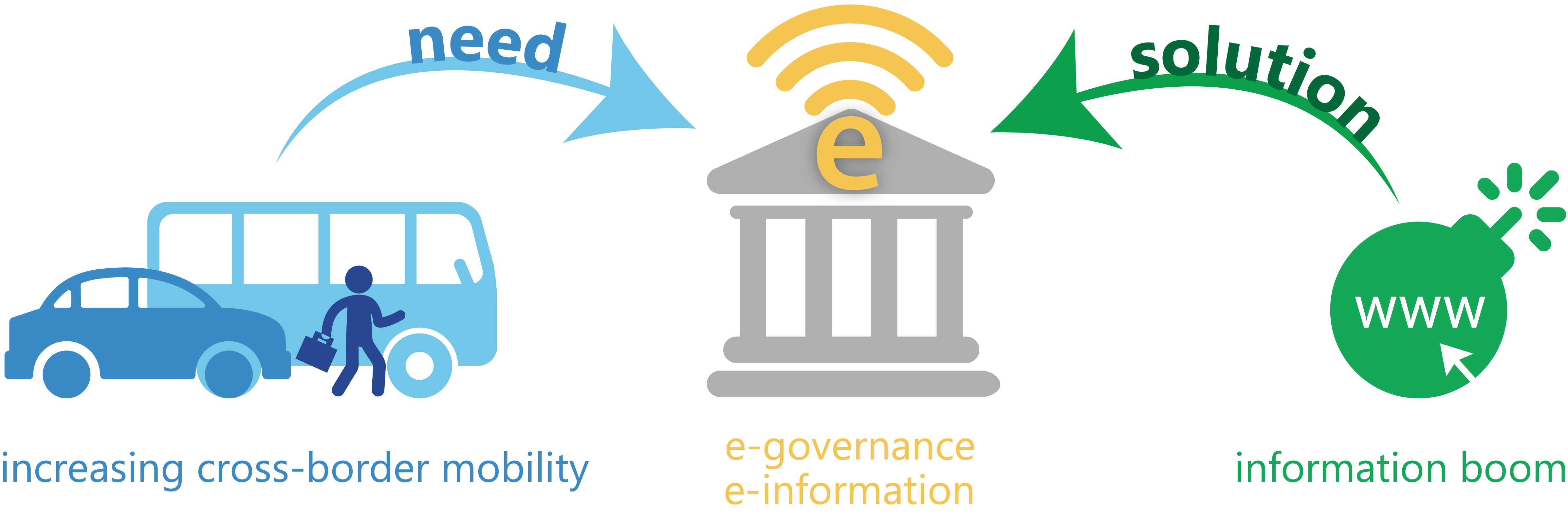
In the first part, CESCI staff analysed the conditions of internet information. Actuality and relevance of the subproject is justified by the growing tendency of cross-border mobility which has generated new demands for information by the citizens. In many cases, non-locally-based information requirements can be provided by e-information within the context of e-governance. Creation and diffusion of e-governance were substantially supported by the information boom that happened in the past decades and by dramatic change of the sources of information. The study briefly reviews all three topics.
Analysis of the situation continued with an overview of the regulatory environment which included Hungarian strategic documents and legislations, besides the most important European Union strategic documents. It can be claimed on the basis of the analysis of the regulatory environment that the decision-makers clearly aim to create a user-friendly e-governance. The members of the European Union have their own strategies for developing their e-governance practices; although, the EU eGovernment Action Plan 2016-2020 contains common elements. One of these principles is the following, “enabling cross-border mobility with interoperable digital public services”. The study, prepared within the frame of the subproject, reached almost the same result as the findings of the action plan:
“Currently Single Market-related information, advice, problem-solving mechanisms, contact points and procedures do not operate as a whole but are dispersed, incomplete, not sufficiently inter-connected and not consistently user-friendly – both at EU and national level. It is therefore difficult for users to find the right information and assistance required.” [EU eGovernment Action Plan 2016-2020]
The study continued with the review of existing evaluation systems. The review starts from the conclusion that the rise of the e-governance systems went hand in hand with the self-evident need to quantify, as well as to prioritize the results. After a brief methodological introduction, four international benchmark methodologies were reviewed, with special reference to the results of Hungary. The following conclusions can be deduced for Hungary from the summary of the benchmark results:
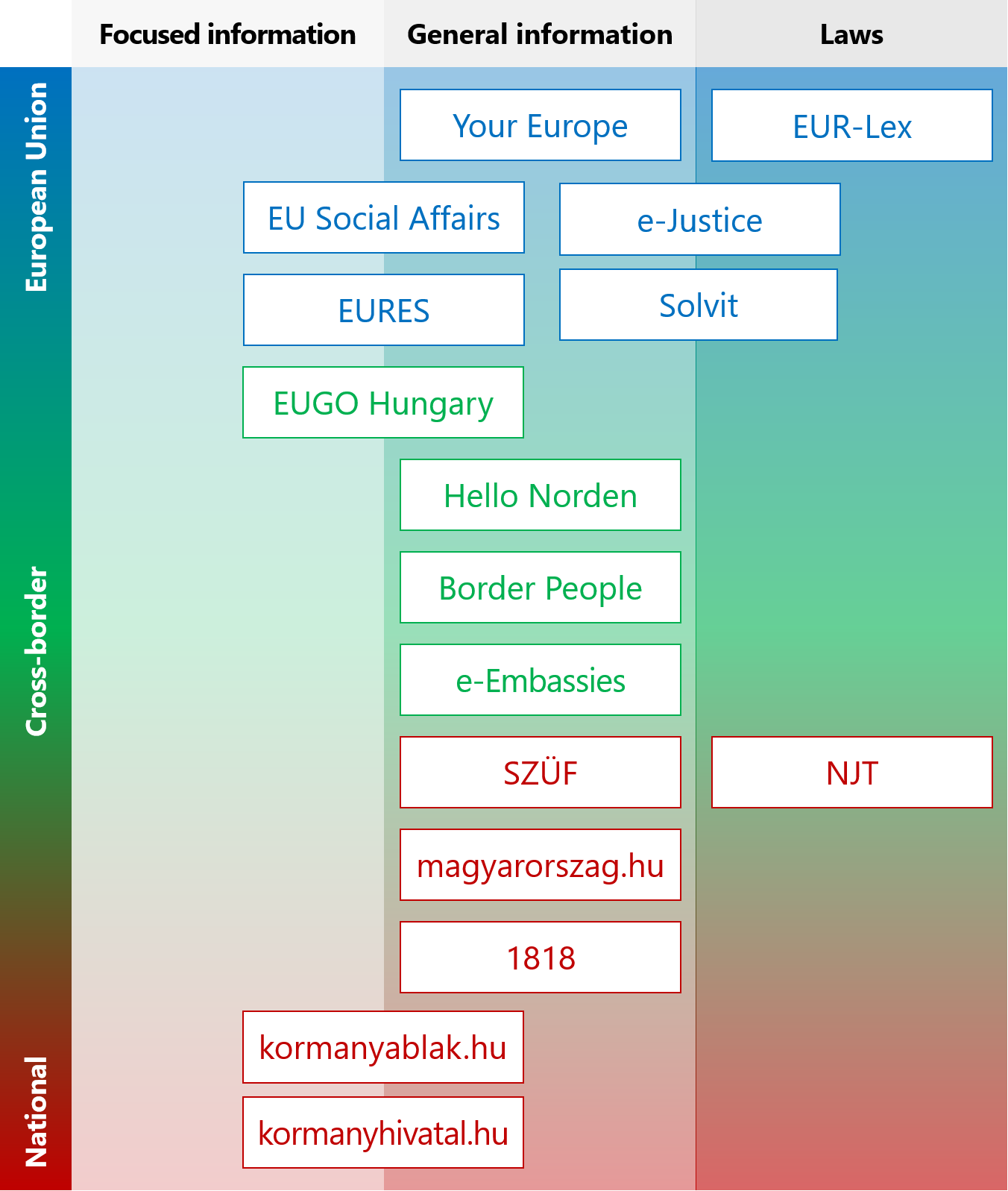
After investigating the regulatory environment, the existing information systems were analysed. Altogether, we analysed 16 information platforms within the study. The narrowly-focused sectoral portals were not subjects of our study. At the same time, the study deals with the official online law directory of the European Union and Hungary. Besides the European Union and domestic platforms, we also reviewed those pages that specifically aim to inform the participants who are involved within cross-border mobility, and they can be only partly identified as EU or national initiatives.
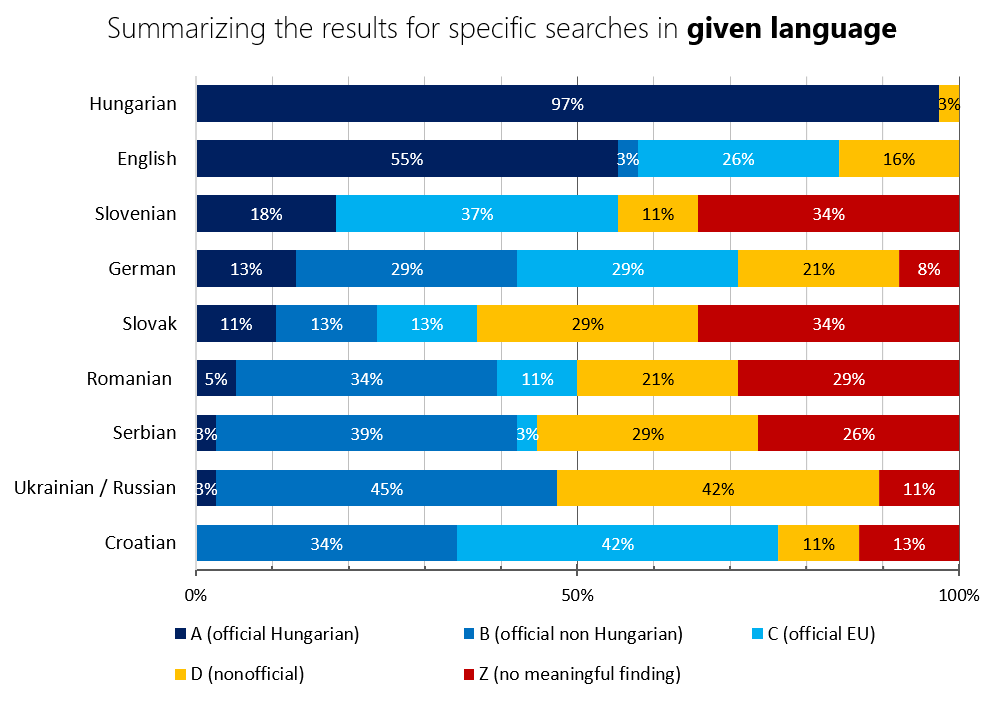
In the second part, based on the experience that was gained during the tasks of the first part, the authors evaluated the existing electronic information systems by two methods. It was common in the two evaluations that both of the methods approached the quality of information from the life situations that are relevant to cross-border mobility. The first (external) evaluation applied the so called mystery shopping. The second (internal) evaluation involved staff of the Ministry of Interior and it surveyed the official Hungarian platforms of general information. Implementation of the internal evaluation, next to the external one, was considered as important by the authors. On the basis of the learned lessons, the authors thought if the information seeker cannot find any information, it does not automatically mean that information is not formally included within the information system. Joint use of both evaluation methods allowed us to explore the language availability of specific life situation and information.
The external method of mystery shopping provides an overview about a citizen of a neighbouring country, whether he wants to engage in certain life situations in Hungary (e.g. participate in the education process, renting a flat), and the level and depth of electronic information that is available about a particular life situation in his own language. The external evaluation was implemented in the following steps:
The main findings of the external mystery shopping were the following ones:
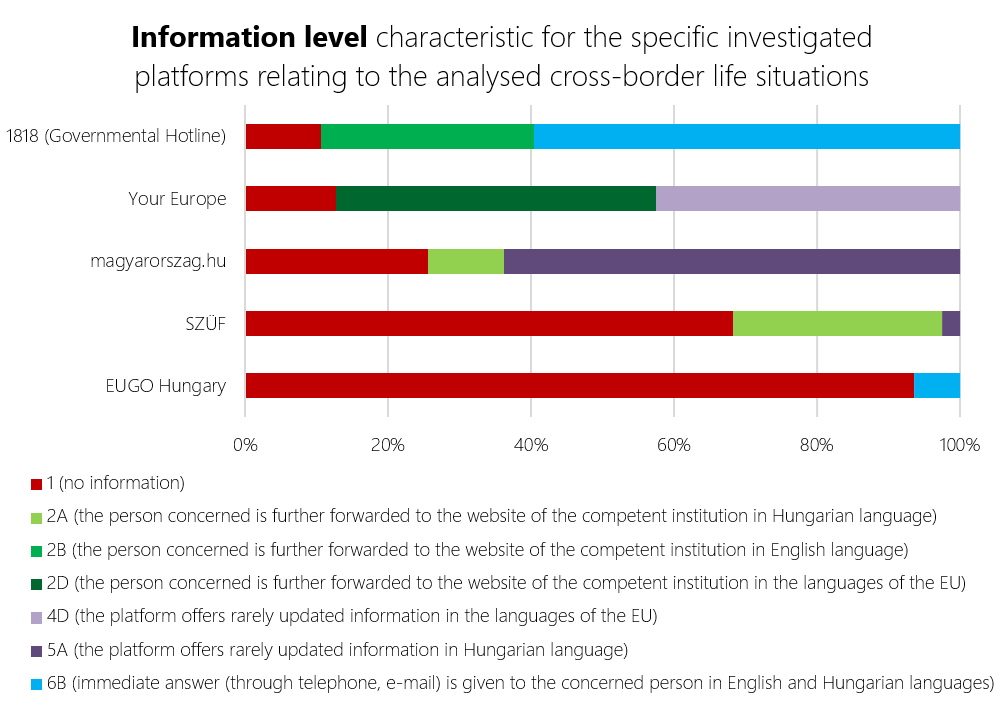
The internal evaluation, implemented by the operators[2], gives information about official Hungarian information platform, namely what kind of information, relating to specific life situations, can be found and language availability of information. The internal evaluation was carried out in the following steps:
The most important conclusions of the internal evaluation:
In the third part, the authors made proposals within the following themes with the aim to overcome the lack of information (detailed description of the proposals see in the “Summary of subproject results”):
[1] In 2017, market share of Google Search exceeded 90% in Europe. Source: http://gs.statcounter.com/search-engine-market-share/all/europe/2016
[2] The possibility of internal evaluation was identified by a consultation with the competent employees of the Deputy Secretary of State for Informatics of the Ministry of Interior, as well as with the employees of the National Infocommunications Service Company.
[3] According to the external evaluation, official information regarding toll system is also available in more languages on other platforms.
The most important result of the subproject was that it empirically revealed that what kind of online information gaps make difficulties in the domain of informing those participants who are involved within cross-border mobility around Hungary. The most serious obstacles, challenges were identified on the basis of evaluation and potential answers and proposals were identified, too. The relationship between the revealed challenges and proposals is summarized in the following figure by the authors:
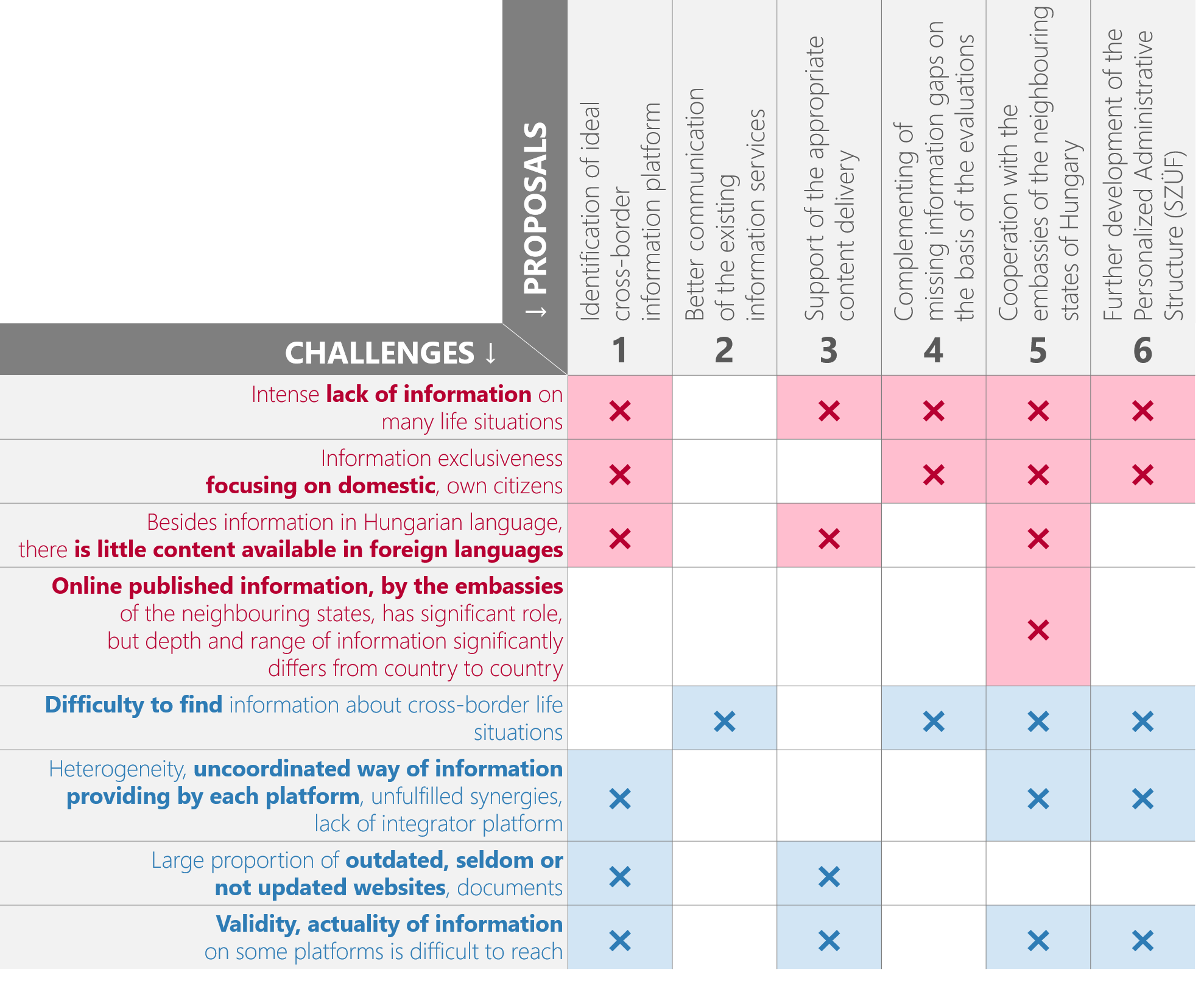
The first group of challenges (marked with claret colour) requires the improvement, strengthening and development of content in different ways. Challenges grouped within the second groups (marked with blue colour) require methodological and practical development. It can be seen from the figure that each proposal can handle multiple challenges at one time, and solution of an obstacle can be brought by different proposals.
For example, proposals may contribute to the solution of the challenge related to major information shortage in the following ways:
As it is visible, individual proposals are useful on their own; however, their best influence can be achieved and expressed through their synergy. Similar logical chains can be formulated in the domains of other challenges, too.
On the basis of the articulated proposals and the identified difficulties, the following continuation option is conceivable.
Completion of indicators (Second milestone)
Harmonization of EGTC-legislation
Healthcare integration
Local products
Information systems
Recent documents (Second milestone)
The following documents were prepared within the framework of the second ‘Legal Accessibility’ project. You can download each document by clicking on its cover.
Harmonization of EGTC-legislation (in English)
Healthcare integration (in Hungarian)
Local products, short supply chains (in Hungarian)
Evaluation and development of information systems (in Hungarian)
The project was funded by the Ministry of Justice.
The project documents and the conclusions and recommendations contained therein do not necessarily reflect the official position of the Promoter.