EGTC-Workshop 2026/1 (Budapest)
EGTC-workshop + Knowledge sharing | 07 April 2026
EGTC-Workshop 2026/1 (Budapest)
Budapest, 30 March 2026
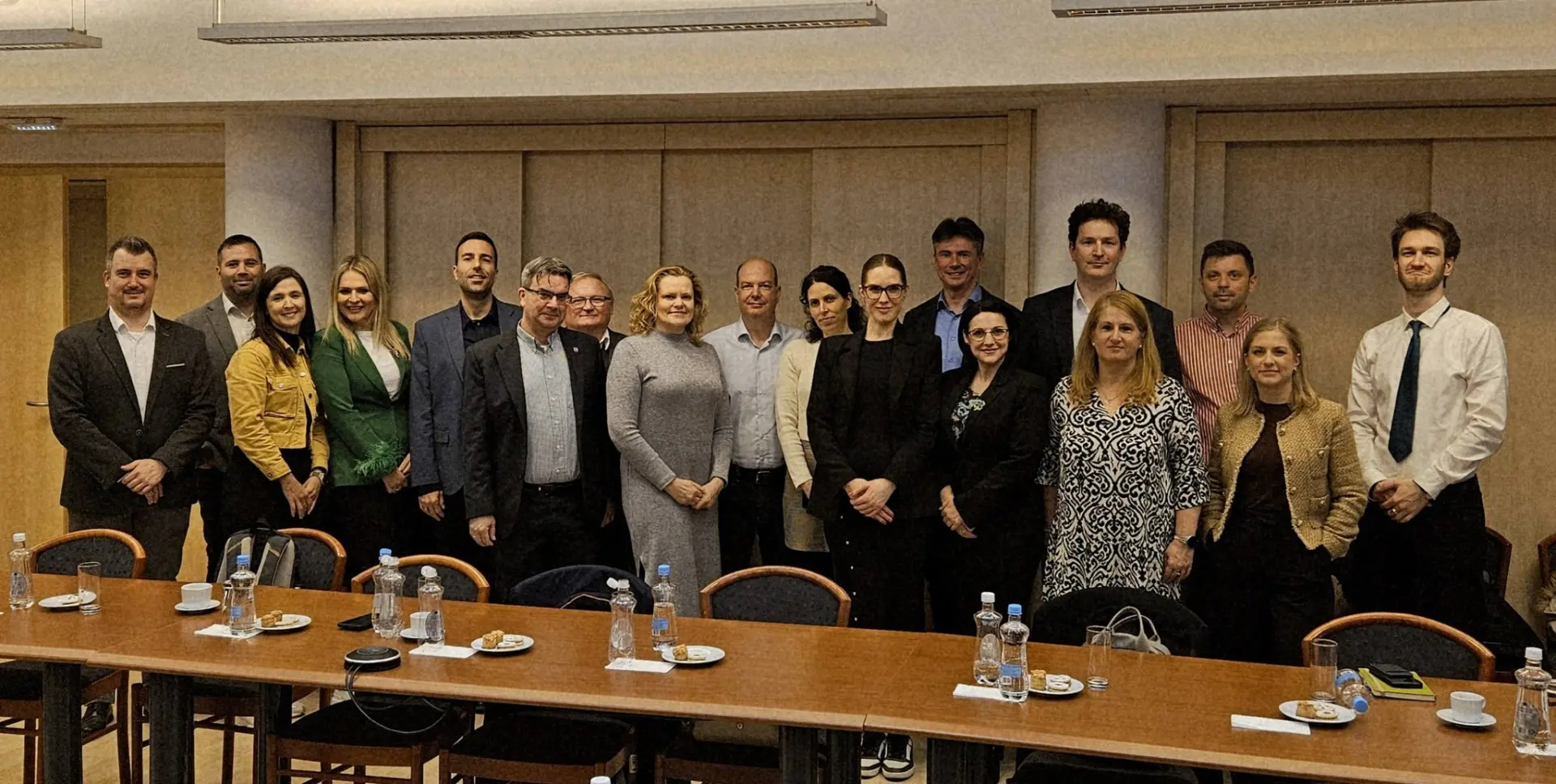
On 30 March 2026, the first EGTC Workshop of 2026 was held at the Ministry of Foreign Affairs and Trade in Budapest. The event focused on an overview of direct EU funding and application opportunities available until the end of the 2021-2027 programming period, as well as on presenting the current negotiation process concerning the future of Interreg.
Participants were welcomed by Péter Kiss-Parciu, Deputy State Secretary for Regional and Border Area Development at the Ministry of Foreign Affairs and Trade, who stressed the importance of cross-border cooperation and the role of EGTCs in strengthening territorial cohesion.
In the opening presentation, Monika Simon (CESCI) gave a detailed overview of the direct EU funding opportunities that remain available to EGTCs during the 2021-2027 programming period. The presentation took an interactive format, during which the participating EGTCs also shared their own experiences. Among others, the expected calls under the European Urban Initiative, the International Visegrad Fund, CERV, Creative Europe, the Single Market Programme, and the LIFE Programme were presented. Based on the discussion, direct EU funding is viewed rather ambivalently among EGTCs: although more and more of them are trying these opportunities, they still tend to regard them primarily as alternative sources of finance, especially in periods when Interreg resources are only available to a limited extent. The most popular programmes include the International Visegrad Fund and CERV; at the same time, two EGTCs indicated that they are preparing an application for the IMPACT call supported by DG REGIO and the OECD, which offers the possibility to develop cross-border development strategies with expert involvement. The tourism call under the Single Market Programme also proved popular.
A detailed presentation on the future of Interreg was delivered by Balázs Zám, Programme Manager at the Department of Cross-Border Interreg Programmes of the Ministry of Foreign Affairs and Trade. He explained that negotiations on the European Union’s 2028-2034 Multiannual Financial Framework (MFF) are currently at an advanced stage, with an agreement expected by the end of 2026. According to current plans, the Interreg programme will remain in place with a budget of approximately EUR 10-10.5 billion, although its operation is expected to become more centralised. Under the European Commission’s proposal, a larger share of cohesion resources would be integrated into the National and Regional Partnership Plans (NRPPs), which may result in stronger centralisation of fund allocation and use. The main policy debate at present revolves around preserving Interreg’s autonomy versus integrating resources. Future priorities are expected to place particular emphasis on the green transition, innovation and competitiveness, and a stronger focus on security and geopolitical considerations. In addition, increasing importance is being attached to the measurable and tangible results of projects.
In the operational part of the programme, Dr Gabriella Solymosi-Dobi, Head of Unit, and Ádám Oszkár Németh, Coordination Officer, from the Ministry of Foreign Affairs and Trade’s Department of Regional and Border Area Development, provided information on the 2026 individual support schemes, the payments for which are expected by the end of April 2026. They also drew attention to the fact that EGTCs have the possibility to initiate procurement procedures for external expert services.
To close the workshop, Mátyás Jaschitz, Director CESCI, moderated a discussion on the EGTCs’ current development and project plans, as well as on the challenges of the funding-scarce period between the two programming periods. EGTCs operating in the Hungarian-Slovak border area are currently implementing tourism action plans, while the evaluation of several Interreg applications is still ongoing. EGTCs also continue to participate actively in various cross-border and transnational programmes (e.g. Interreg Central Europe, Interreg Europe, and the Danube Region Programme), and although they are also trying to make use of direct EU funding, Interreg programmes continue to play a decisive role in their activities. Mátyás Jaschitz pointed out that in the funding-scarce period before the launch of the new Interreg programming period (2028-2034), it is worth considering direct EU funding opportunities as well. The absence of the 2025 calls of the Interreg Hungary-Slovakia Small Project Fund, managed by Via Carpatia EGTC and RDV EGTC, has significantly increased interest in alternative funding opportunities, especially the International Visegrad Fund and the CERV programme. New small-project calls are expected in autumn 2026.
Previous
EGTC-workshops


Honlapunk a Külgazdasági és Külügyminisztérium támogatásával készült.