CESCI has begun developing a territorial analysis of three cross-border programmes
Planning + Programming | 2026. March 31.
Planning + Programming | 2026. March 31.
In CESCI’s planning activities for 2026, a prominent role will be played by the preparation of territorial analyses for three of the cross-border cooperation programmes for the 2028–2034 period. In connection with these tasks, the inception reports were presented at the Programming Committee meetings in March 2026.
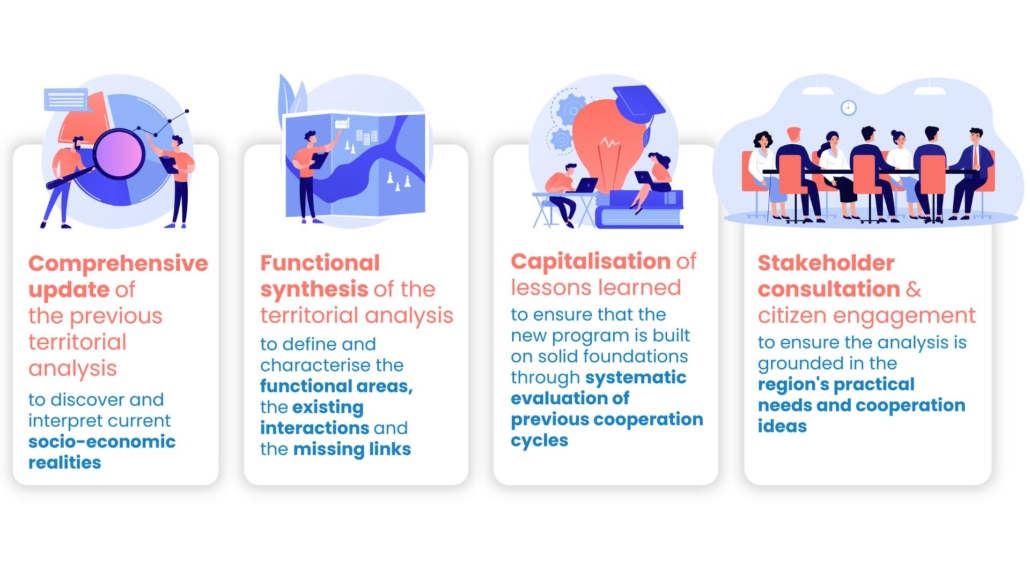
At the beginning of 2026, CESCI started preparing the territorial analyses of three Interreg programmes: Hungary–Serbia, Hungary–Slovakia, and Hungary–Slovakia–Romania–Ukraine. Following the request from the programme authorities, CESCI first compiled the so-called inception reports in the first month of the year. The analytical work will be greatly supported by the fact that CESCI had also prepared the previous territorial analyses of these programmes. In the planned methodology, particular emphasis will be placed on stakeholder involvement and engagement, the analysis of functional areas and processes shaped by cross-border interactions, and the capitalisation of lessons learned from previous programmes. By the end of March 2026, all three programmes held their first Programming Committee meetings, where CESCI presented the respective inception reports. With the approval of these reports, work on all three programmes has officially started and will continue throughout 2026.
The draft EU regulation package determining the financial framework of the cooperation programmes was published in the summer of 2025 and has since received significant criticism from both Member States and professional stakeholders. Consultations are expected to continue over the next 1–2 years, and the final version of the regulation package is likely to be adopted at the end of 2027 or the beginning of 2028. The preparation of the territorial analyses will proceed in parallel with this process.

 Uniwersytet @Przyrodniczy we Wrocławiu
 EGTC-Workshop 2026/1 (Budapest)