EGTC-Workshop 2025/3 (Villánykövesd)
EGTC-workshop + Knowledge sharing | 11 November 2025
EGTC-Workshop 2025/3 (Villánykövesd)
Villánykövesd, 4-5 November 2025.
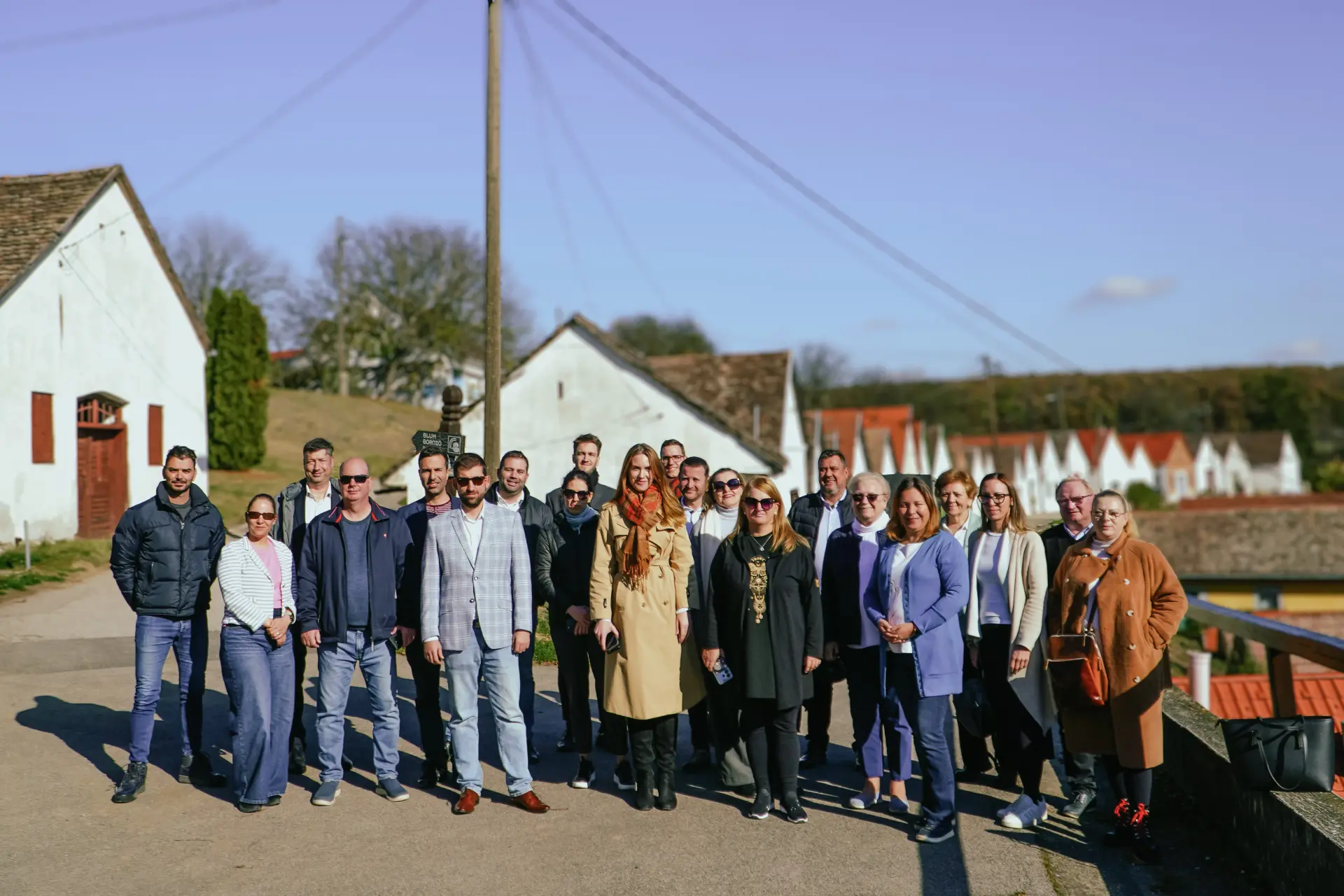
Organized by the Ministry of Foreign Affairs and Trade, the last EGTC workshop of 2025 took place between November 4 and 5 in Villánykövesd. The host of the EGTC workshop was Pannon EGTC, which is celebrating its 15th anniversary this year and, in addition to its successful international projects, has been increasingly active in the Western Balkans in recent years.
The professional program was opened by dr. Gabriella Solymosi-Dobi, head of the Regional and Cross-Border Development Department of the Ministry of Foreign Affairs and Trade. After her welcoming remarks, the director of the host, Pannon EGTC, dr. Péter Merza, gave a presentation on the current activities of the EGTC, with a special focus on the four universities that recently joined the grouping, three of which are located outside of the European Union, in Bosnia and Herzegovina. Dr. Ágnes Tóthné Gróf joined the discussion on EGTC members from third countries and presented the new b-solutions pilot project of the Banat-Triplex Confinium EGTC, which aims to include Serbian members in an EGTC. In connection with the Pannon EGTC’s project implemented as part of the Resilient Borders initiative, Kitti Dubniczki and Mátyás Jaschitz, directors of CESCI, moderated a short discussion on the scope of action available to EGTCs in areas of development where national authorities have primary jurisdiction. To conclude the first professional block, Dániel Ablonczy, director, presented the newly formed BOTILA EGTC. He also briefly introduced two future EGTCs currently in the process of being established, one in the Slovak and one in the Romanian border region.
After a short coffee break, the workshop program continued with the presentation of territorial action plans that received funding under the Interreg Hungary-Slovakia (HUSK) Program. Within the framework of the call for proposals aimed at the integrated development of tourism in the Slovak-Hungarian border region, nine action plans received funding, with seven EGTCs participating in their implementation. Both the development tool and the active involvement of the EGTCs can serve as examples for other border sections.
In keeping with the tradition of EGTC workshops, the first day of the event ended with a team-building dinner and a special wine tasting.
The second day of the workshop began with an operational meeting moderated by colleagues from the Ministry of Foreign Affairs and Trade, followed by a presentation by Nikoletta Horváth, Head of the ministry’s Cross-Border Interreg Programs Department, on the regulatory environment for Interreg programs after 2027, which is currently being developed. Although the Interreg budget has increased modestly, the drafts contain several elements that are subject to further lengthy negotiations in the interests of simplification and integrity. The online presentation was followed by a roundtable discussion among the EGTCs, where all participants had the opportunity to report on their current initiatives and projects.
To conclude the two-day EGTC workshop, the EGTCs visited István Mayer, mayor of Villány, who gave a detailed presentation of the town’s current developments during a guided walk.
Program
November 4:
- 11:30 – 12:30 Arrival, registration
- 12:30 – 13:30 Lunch
- 13:45 – 14:00 Opening remarks
- Péter Kiss-Parciu, Deputy State Secretary, Ministry of Foreign Affairs and Trade
- 2:00 PM – 3:00 PM Presentation
- Péter János Merza, Director, Pannon ETT – On possible directions for engagement related to the Western Balkans regio
- Ágnes Tóthné Gróf, Project Manager, BTC EGTC – Presentation of the B-solutions project
- Mátyás Jaschitz, Director, and Kitti Dubniczki, Director, CESCI – On certain challenges of climate change in the context of the Resilient Borders project
- 3:00 PM – 3:15 PM Dániel Ablonczy, Director, BOTILA ETT – Introduction to BOTILA ETT
- 3:15 PM – 3:45 PM Coffee break
- 3:45 PM – 6:00 PM Roundtable discussion and presentations by EGTCs
- Introduction to TAP – EGTCs’ plans and projects for the future – Q&A
- Julianna Máté, Director, Via Carpatia EGTC
- Tamás Zoltán Németh, Director, Arrabona EGTC
- Emma Vasiová, Director, and Henrieta Hubertová, Project Manager, Rába-Duna-Vág EGTC
- Attila Polák, Project Manager, PONTIBUS EGTC
- Zoltán Bara, Executive Director, Pons Danubii EGTC
- 6:00 PM Workshop closing
- 6:30 PM Dinner
November 5:
- 10:00 – 10:30 Presentation: Nikoletta Horváth, Head of Department, Ministry of Foreign Affairs and Trade – The post-2027 situation of Interreg (and programs with Hungarian participation)
- 10:30 – 11:00 Presentation: Gabriella Solymosi-Dobi and Ádám Oszkár Németh, ETT Department, Ministry of Foreign Affairs and Trade – Current developments, the ETT-26 call for proposals, and legal oversight
- 11:00 – 13:00 Visit to Villány Town Hall, tour of the Cultural Center and Diófás Square
- 12:00 Workshop concludes
A legutóbbi
ETT-műhelyek


Honlapunk a Külgazdasági és Külügyminisztérium támogatásával készült.


