The results of the CROSSGOV ESPON project have been published
Governance + Knowledge sharing + Planning + Policy-making | 2026. March 10.
Governance + Knowledge sharing + Planning + Policy-making | 2026. March 10.
A noteworthy milestone in the life of CESCI is that our first significant partnership participation in a project implemented within the framework of an ESPON programme has been successfully completed. The aim of the CROSSGOV project is to develop a new analytical approach and measures that help unlock the development potential of cross-border regions. This work is carried out in light of the recurring need to establish effective governance mechanisms for emerging cross-border functional areas, while recognizing that the available research background on this topic remains limited.
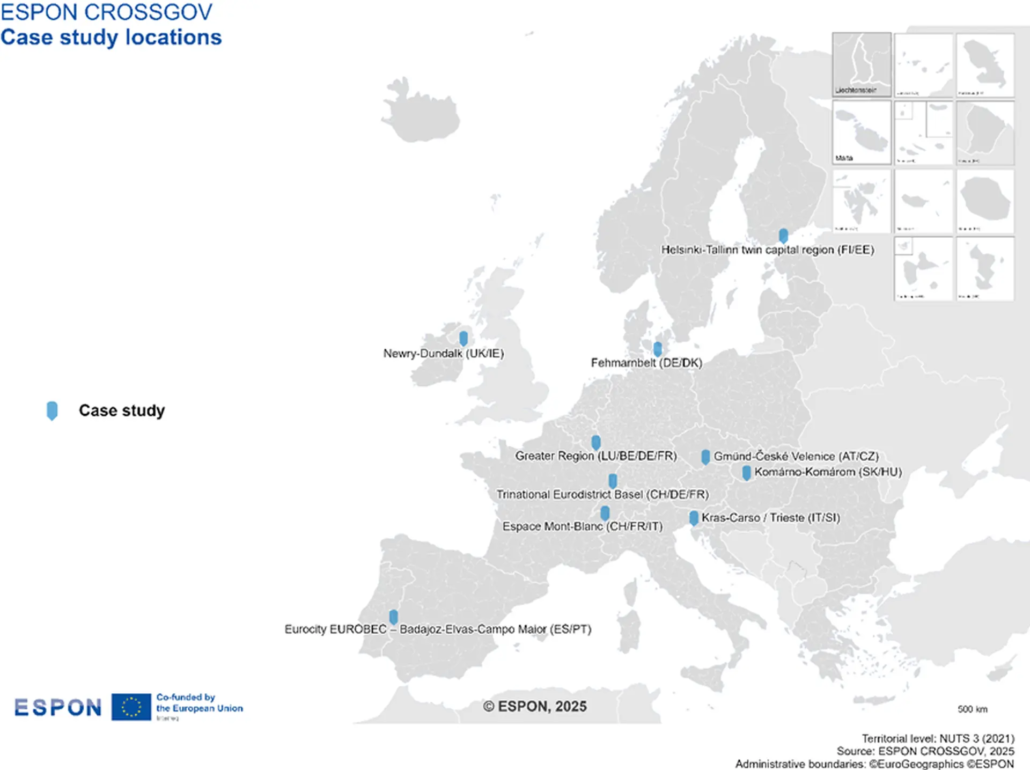
The ESPON project, implemented between July 2024 and January 2026 with a total budget of €725,130, was structured into three work packages. These simultaneously support the analysis of cross-border functional areas and their governance: 1. conceptualisation, 2. database and atlas, and 3. case studies and recommendations. In addition to contributing to the collection of indicators, CESCI primarily acted as the leader of the third work package and played an active role in the extensive professional work carried out within the project. As part of this effort, ten case studies examining different European border regions were developed, alongside a synthesising analysis summarising the findings of these studies.
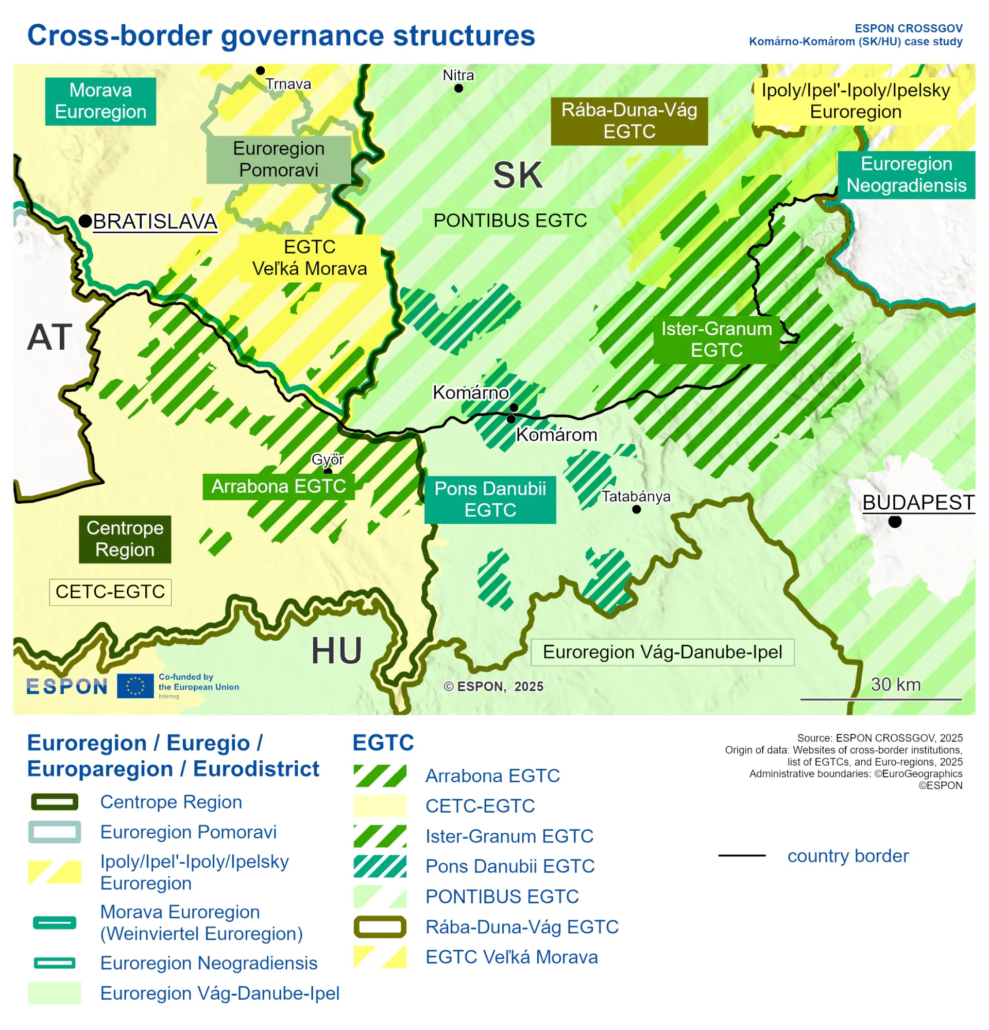
Within the framework of the case study preparation, CESCI was entirely responsible for mapping the indicators, including the creation of so-called “zoom-ins” from the selected indicators, resulting in the production of a total of 57 maps. CESCI also authored the case study focusing on the twin cities of Komárom and Komárno. In addition, the association provided professional coordination by developing the methodology used for the studies, organising workshops with regional stakeholders (11 workshops with 132 participants), conducting interviews (3–6 per case), and analysing spatial and urban development documents (on average 4–11 per case study). Thanks to these tasks, a total of 256 pages of analytical material were produced to support a better understanding of the functional relations and governance frameworks of different border regions.
Furthermore, CESCI contributed to the Final Report by formulating several policy recommendations in cooperation with the lead partner, Friedrich-Alexander University Erlangen-Nuremberg.
The related publications have now become available on the relevant ESPON subportal. In addition, the CROSSGOV Hub has been launched, serving as a central access point to the interactive tools developed within the project.


 CESCI’s participation in the CROSUSMOB project