The Frontem project continues on the French-German border
Knowledge sharing | 11 October 2021
Knowledge sharing | 11 October 2021
On 6 and 7 October 2021, Strasbourg and Kehl hosted the subsequent seminar of the Frontem: Frontiers in Motion network project, supported by the Jean Monnet programme. The event was also used by the initiators to adopt a manifesto for the revitalisation of cross-border cooperation.
Frontem is a network cooperation project funded by the Jean Monnet sub-programme of Erasmus+, aiming to observe changes in border regimes and in the views and perceptions of borders among residents living in such an area in 5 European border regions. The project is led by the University of Strasbourg, and involves the University of Southern Denmark, the University of Louvain, the University of Artois, the Euro-Institut in Kehl and the Babeş-Bolyai University of Cluj-Napoca. The partnership also includes the University of Victoria in Canada, which provides an external perspective on European issues. CESCI is involved in the collaboration as an outside expert.
The first (online) seminar of the project dedicated to the Hungarian-Romanian border was organised by our association, in cooperation with partners from Cluj-Napoca. The second seminar took place in Strasbourg and Kehl between 6 and 7 October 2021, and it was preceded by a doctoral seminar on 5 and 6 October.
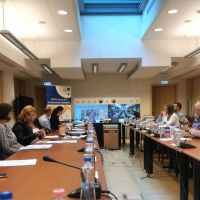
On the first two days, PhD students from the universities participating in the network presented the results of their research, which were then reviewed by professors who were present or joined the network online. One panel was moderated by the Secretary General of our association. The second day involved a round table discussion in the evening, which focused on the impact of the public measures on border areas in the wake of the COVID pandemic. In addition to the French, German, Irish and American experiences, the audience learnt about the consequences of the partial closure of the Hungarian borders too.
The third day was specifically dedicated to the German-French border region. The region, which has experienced several conflicts over the centuries, is regarded as a model not only for reconciliation but also for European integration. This interpretation may further be supported by the Treaty of Aachen, signed by Angela Merkel and Emmanuel Macron in 2019, which has deepened cooperation between the two countries. This topic was discussed by Jean Peyrony, Director General of MOT. However, it became clear not only from the previous evening’s round table discussion, but also from the presentations of Fabrice Larat (École Nationale d’Administration, ENA) and Jacob Ross (German Council on Foreign Relations) that the closure of the border was again carried out in an uncoordinated way, without listening to the local population, producing a number of negative effects, including long-term ones.
During the seminar, two of the most integrated cross-border co-operations in Europe, namely the Greater Region and the Upper Rhine model, were presented in detail by local experts, and the programme was concluded by another round table moderated by Joachim Beck, Rector of Kehl College and Anne Thevenet, Deputy Director of the Euro-Institut Kehl. All the invited speakers (Karl-Heinz Lambertz, President of the AEBR, Anne Sander, Member of the European Parliament, Philipp Voiry, French Ambassador for Cross-Border Affairs and Klaus Schüle, Head of the government office in Freiburg) praised and supported the manifesto developed by regional actors and Birte Wassenberg, professor of history at the University of Strasbourg, the manager of the project, which calls for comprehensive interventions at regional, state and EU levels to avoid situations similar to those in 2020.


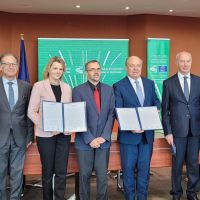 An even closer alliance is being built, the Strasbourg Declaration was sign...