- Author: CESCI
- Territory: Carpathian space
- Year of publication: 2023
- Language: English
- Number of pages: 450
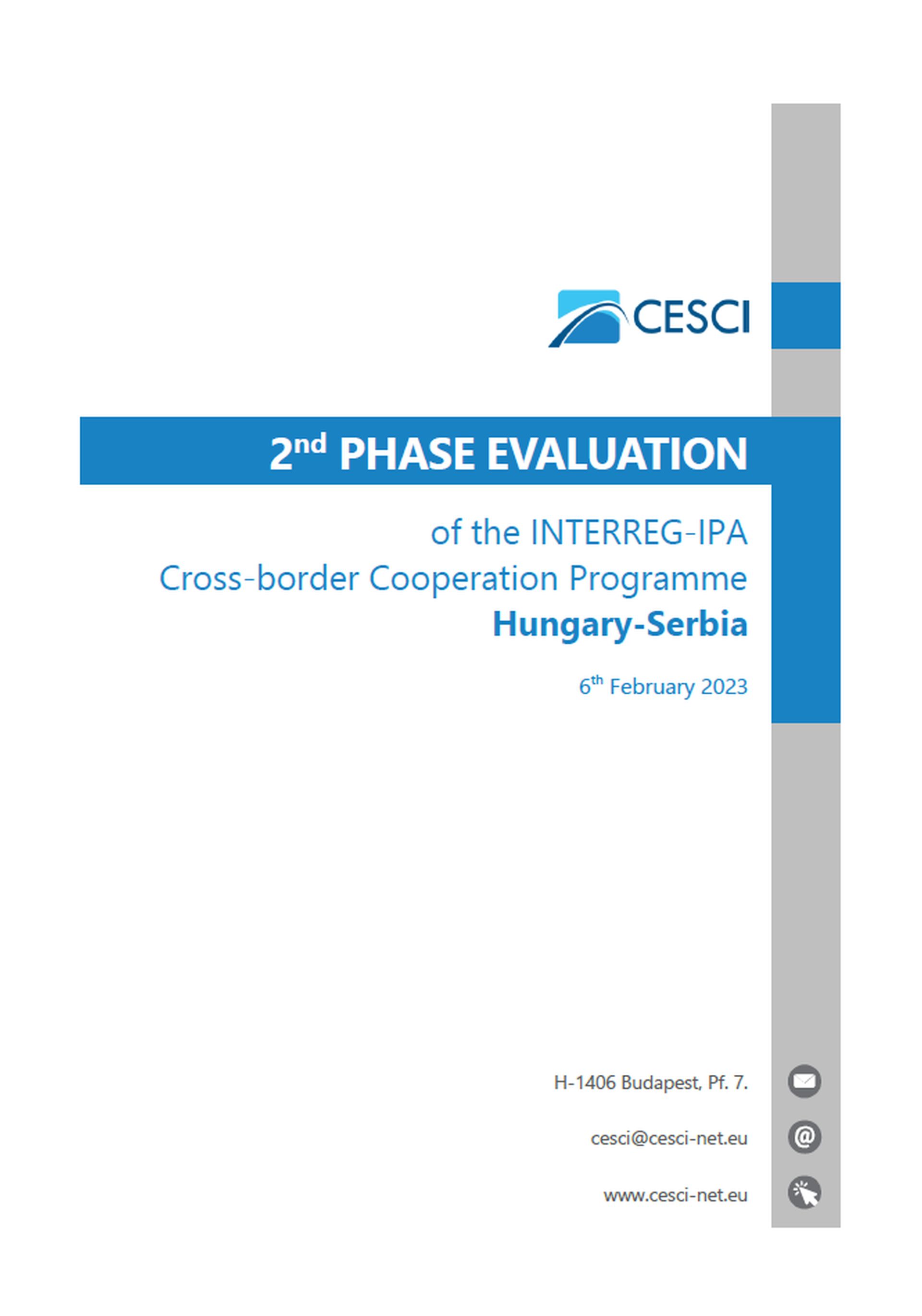
Second Phase Evaluation of the INTERREG IPA Cross-border Cooperation Programme Hungary–Serbia (2014–2020)
Second Phase Evaluation of the INTERREG IPA Cross-border Cooperation Programme Hungary–Serbia (2014–2020)
The Ministry of Foreign Affairs and Trade of Hungary, acting as the Managing Authority, and the Ministry for European Integration of the Government of the Republic of Serbia, acting as the National Authority, scheduled the second phase evaluation of the INTERREG IPA Cross-border Cooperation Programme Hungary–Serbia 2014–2020 for 2022. As with the mid-term evaluation adopted by the Joint Monitoring Committee in 2019, the second phase evaluation was also carried out by CESCI. The final report was submitted to the programme authorities on 6 February 2023.
The evaluation focused on the following thematic areas:
- the programme structure and priorities;
- programme implementation and the factors influencing it;
- the management structure;
- implementation support procedures and methods;
- the promotion of cohesion and joint development;
- communication and visibility of the programme and its projects.
The key findings of the evaluation
- The external EU border character of the programme area has a negative impact on the level of cross-border integration.
- The programme’s greatest impact is reflected in the strengthening of social ties, while improvements in cross-border services, mobility, and economic cooperation have been only partial.
- The cross-border character of projects has improved.
- Strategic projects have successfully contributed to strengthening cohesion in the border region.
- Programme funding was used primarily within a 50–60 km strip along the border.
- Greater efforts should be made to involve new partners in order to achieve better territorial coverage across the programme area.
- Most programme bodies possessed adequate capacity for successful programme implementation. Capacity constraints created significant challenges only in the case of the Serbian First Level Control system.
- Simplification measures contributed successfully to the smooth implementation of the programme and reduced the administrative burden on beneficiaries.
Through a set of recommendations, CESCI sought to support the future development of the programme and enhance the effectiveness of its implementation practices. The evaluation also incorporated a borderscape perspective, examining the cross-border social and economic dynamics of the Hungarian–Serbian border region.