CESCI at the general assembly and annual conference of AEBR
Knowledge sharing + Policy-making | 2026. November 11.
Knowledge sharing + Policy-making | 2026. November 11.
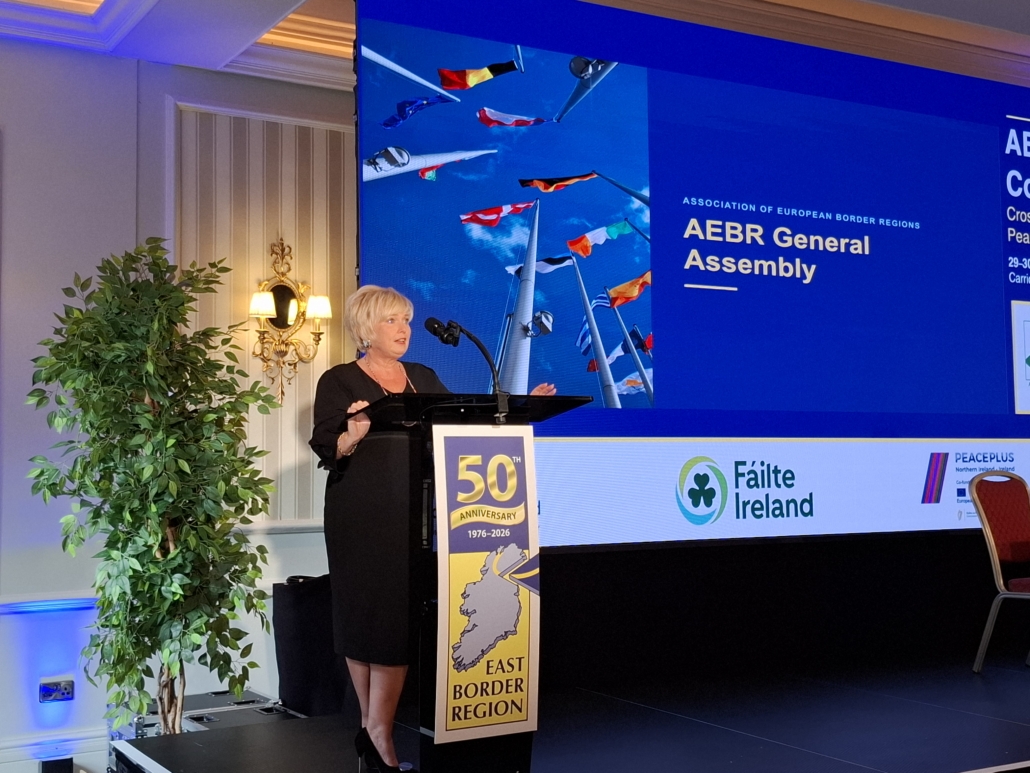
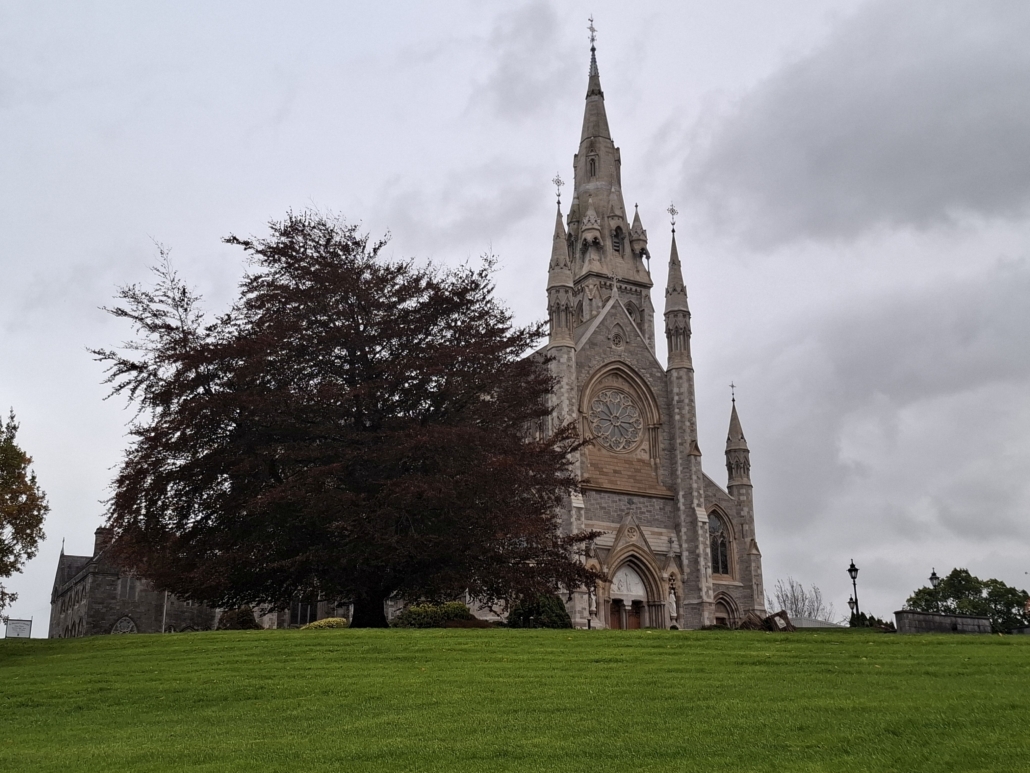
The 55-year old Association of European Border Regions (AEBR) held its Cross-Border School, General Assembly and Annual Conference in Carrickmacross, Ireland, enjoying the hospitality of East Border Region turning 50 this year, between 28 and 31 October. CESCI was also actively present at the event series.
CESCI became a member of AEBR in 2013. In 2015, the two associations opened a joint office in Novi Sad, Serbia. In 2023, CESCI and CESCI Carpathia organised the annual events of the AEBR in Košice (Slovakia) and Uzhhorod (Ukraine). In 2025, the head of the External Borders Task Force of AEBR, Johannes Moisio, resigned, and Martín Guillermo-Ramírez, secretary general, asked the representatives of CESCI if they would undertake the role. The General Assembly of 2026 took place in Carrickmacross, where CESCI presented its application for the position. The application received positive feedback. From 2027, the Budapest-based organisation will coordinate the related activities of the AEBR.
The General Assembly adopted the professional and financial reports, supported the membership application of the Government of Navarra (ES), Øsfold County Council (NO), the Region East Macedonia and Thrace (GR), and the ARKO Cross-border Committee (NO/SE), and approved the activities foreseen for 2027. Among others, the participants supported the position paper on the Territorial Futures Forum compiled by CESCI, but the document will still be open for comments for one month. Equally, based on the initiative of the Mayor of Görlitz (Germany), the GA adopted a position paper on the border controls at the internal Schengen borders.
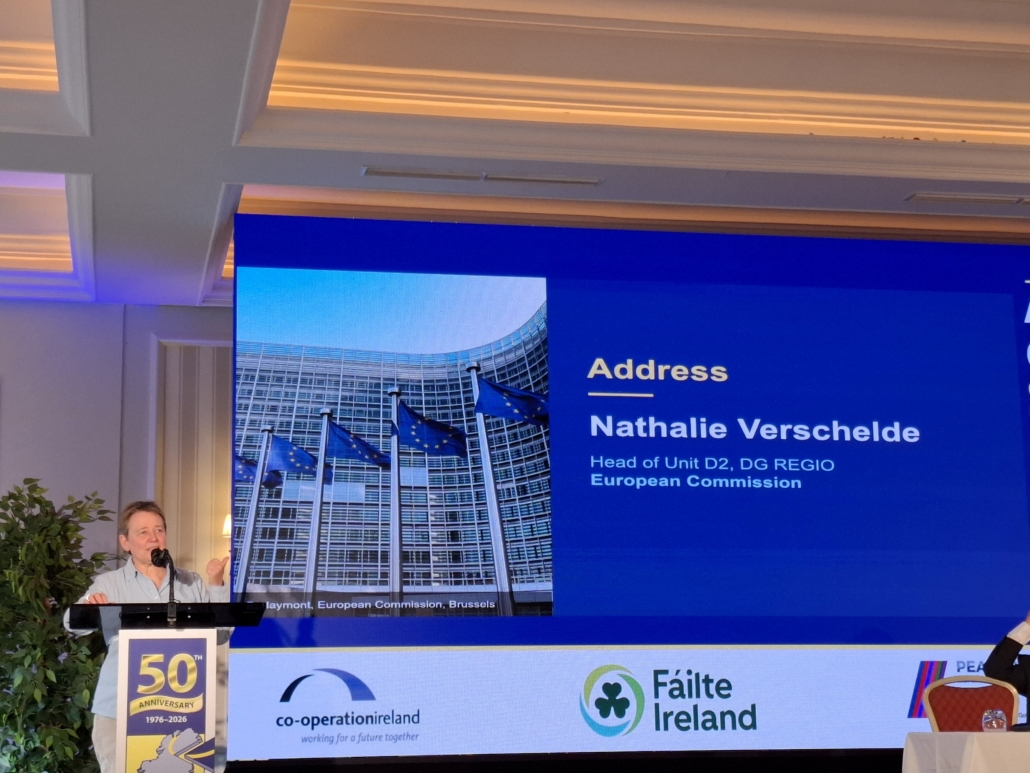
The annual conference, following the GA, was dedicated to the topics of peace-building and stability, and the role cross-border regions play in those. The participants were welcomed by Aldan Campbell, President of Monaghan County Council (where Carrickmacross is located), Thomas Byrne, Minister of European Affairs and Defence, Richard Hill, representing the North-South Ministerial Council, Niam Smith, Minister of Trade Promotion, AI and Digital Transformation, Joris Bengevoord, President of AEBR, Nathalie Verschelde, Head of Unit of the European Commission, and PJ O’Hanlon, Chairman of East Border Region.
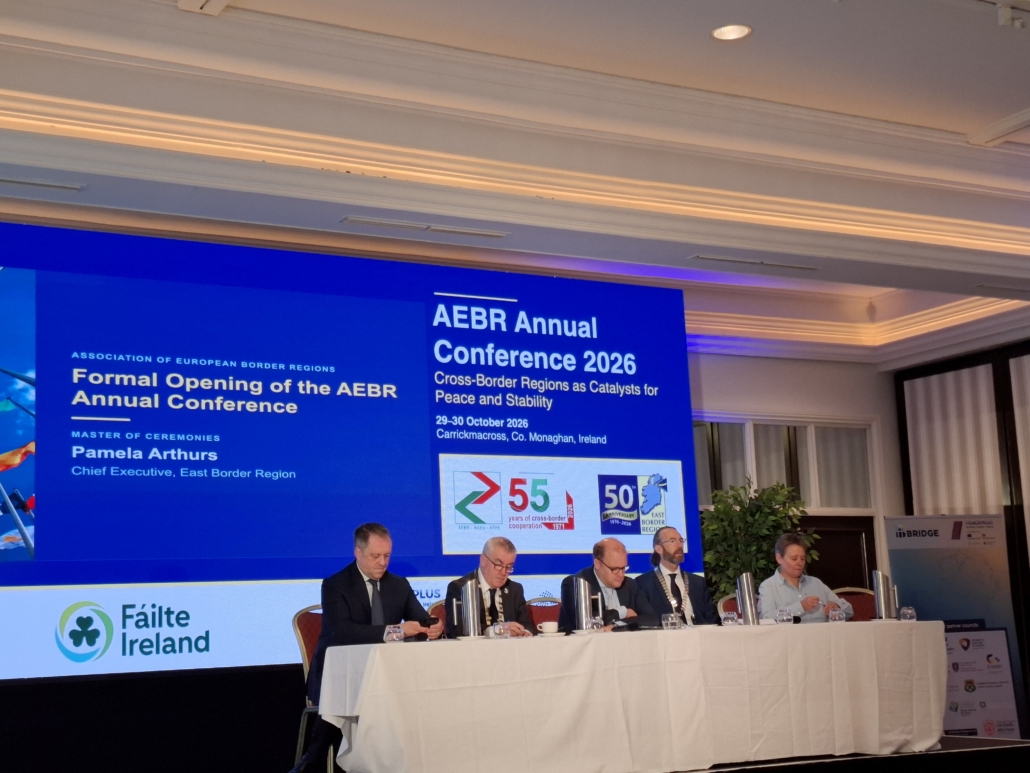
The first panel introduced the East Border Region (EBR). Pamela Arthurs, Chief Executive of EBR (and main organiser of the event), Gina McIntyre, Chief Executive of the Managing Authority of the PeacePlus Programme, Dette Hughes, Programme Manager (EBR), John O’Hagan, Senior Engineer, and Paul Boylan, Director of Programmes at Cooperation Ireland pinpointed that 50 years ago, the atmosphere was far from being friendly on the Island of Ireland: the initiators of the EBR had a vision, which became reality decades later. The regional cooperation has not only generated tangible results through investments, but it has also been playing a key role in peace-building.
The second panel, moderated by Ana Nikolov (AEBR Balkans), was dedicated to the Resilient Borders programme and topic. Emmanuel Brunet-Jailly (University of Victoria) compared the American and European practices of cross-border collaboration, with a special focus on access to funding. Gyula Ocskay, Secretary General of CESCI, criticised both the name of the programme (instead of borders, cross-border regions should be resilient, if any) and the buzzword of resilience, and suggested returning to a clearer terminology of solidarity. Finn Olavs Sveinall introduced the Grensestatistik portal, and Hanne Alstrup Velure, Deputy Mayor of Innlandet (Norway), advocated for the concept of resilience.
The third panel, moderated by Dirk Peters, Head of AEBR’s Advisory Committee, discussed the results of the Common Ground project financed by the Robert Bosch Foundation around Germany. Sylvia Hirsch, Project Manager of the Foundation, Carsten Jacob, Manager of the Euroregion Spree-Neisse-Bober, Florence Guillemin, Manager of the Eurodistrict Saar-Moselle, spoke about the citizen-oriented interventions of the programme, which were subsequently evaluated by David Farrell, Professor at the University College Dublin, Anthony Soares, Director of the Centre for Cross-Border Studies, and Luka Čavdek, Representative of the Interreg Volunteer Youth programme.
On the 29th October, the first panel focused on the enlargement issue, involving Nikoletta Horváth, Head of the Interreg Managing Authority of Hungary, Ionuţ Raita, Head of Unit of the Romania-Ukraine Office for Cross-border Cooperation, Sanda Šimić, Policy Expert of the NALED (Serbia), Eveliina Lohko, 2nd Vice Chair of the Board of South Karelia Region (Finland), and Martin McDermott, Head of the Scottish Government Office in Ireland. The conditions for cooperation are different in each case. Serbia has been waiting for a long time now at the gate of the EU. As Ms Šimić put it: “We are not sure that you want us.” The hermetic closure of the Russian-Finnish border due to the war in Ukraine generates a EUR 1 million loss every day to South Karelia. For Ukraine, the war is not only a devastating conflict, but it also requires the review of the priorities of the CBC Programmes. Hungary works together with Serbia and Ukraine, and tries to adapt the EU policy tools to the different conditions. For Scotland, Brexit has created barriers to cooperation.
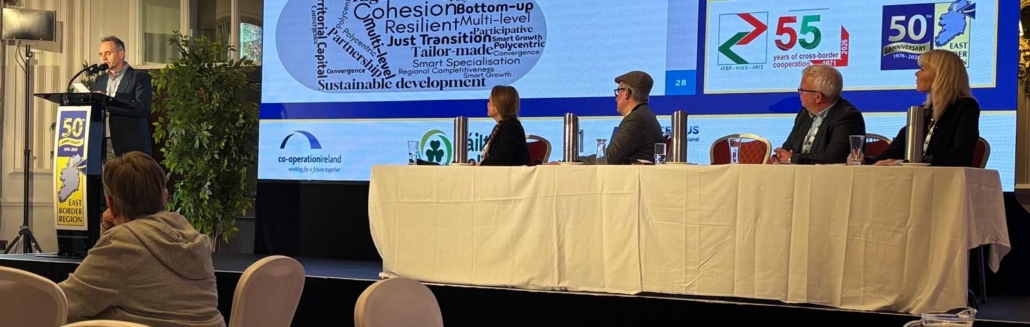
The final panel considered the future of Cohesion Policy. After watching Ana Ollo Hualde’s (Government of Navarra) video message on peace-building, Nathalie Verschelde summarised the information about the future Interreg. Andrew Condon, Principal Officer, completed the picture from the Irish Presidency’s perspective. Pavel Branda, Chairman of the European Cross-Border Platform, nuanced the information based on the contributions of the Committee of the Regions to the future Cohesion Policy. Arola Urdangarin (Basque Government) evaluated the proposals from a regional perspective, and Michael Dejozé (EUregio Meuse-Rhine EGTC) from a stakeholder point of view. Martín Guillermo-Ramírez gave a comprehensive overview based on the contributions arriving from different levels.
Afterwards, the participants had the opportunity to visit project sites on both sides of the Irish – Northern-Irish border.